

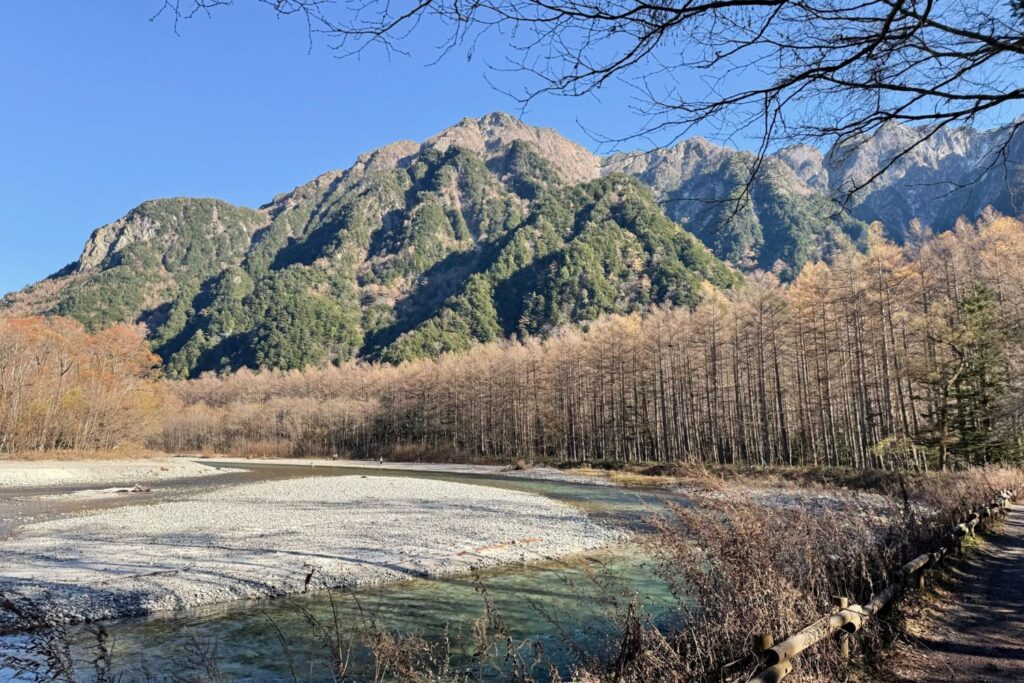
In this journal, we will take you along our recommended route in Kamikochi, starting from Taisho Pond and ending at Kappa Bridge, before sharing some practical information about parking, taxi fares, and getting around.
This is a route we would recommend throughout Kamikochi’s open season, from April to November. If you are visiting towards the end of the season, you may be fortunate enough to see snow on the mountain range, as we did. Otherwise, we hope this journal will help you prepare for your next visit.
A Quick Glance at Our Kamikochi Day Trip:
- Starting Point: Matsumoto City, Nagano Prefecture
- Parking: Sawando Ohashi Parking (¥800 per day)
- Transportation into Kamikochi: Taxi or shuttle bus
- Walking Route: Taisho Pond → Tashiro Pond → Tashiro Bridge → Kappa Bridge → Kamikochi Bus Terminal
- Walking Distance: Approximately 4 km
- Walking Time: Around 75–80 minutes, excluding stops
- Difficulty: Easy, suitable for most visitors comfortable with walking on natural trails
- Best For: Nature, mountain scenery, photography, and a short day hike
- Visiting Season: Mid-April to November 15 (check annual dates)
Quick Navigation:
Dear travellers,
This year, we returned to Kamikochi, this time at a different point in the season from our previous visit. We went in November, just a week before the annual closure on November 15.
This time, the weather was exceptionally nice that day, and with the snow beginning to settle on the surrounding mountain peaks, we decided to spend more time walking through Kamikochi instead of visiting only the popular viewpoints, compared to when we visited last year in summer, when it was raining.
Getting to Kamikochi from Matsumoto
Let us begin with how we reached Kamikochi.
We started our journey by driving from Matsumoto City towards the Sawando Parking Area, where visitors arriving from the Matsumoto side need to leave their cars before continuing into Kamikochi.
Private vehicles, including rental cars, are not permitted to enter Kamikochi. Visitors must instead use a shuttle bus or taxi from one of the designated parking areas.
For those arriving from Matsumoto, Sawando is the most convenient area to park. If you are coming from Takayama in Gifu Prefecture, the closer option is Akandana Parking near Hirayu Onsen.
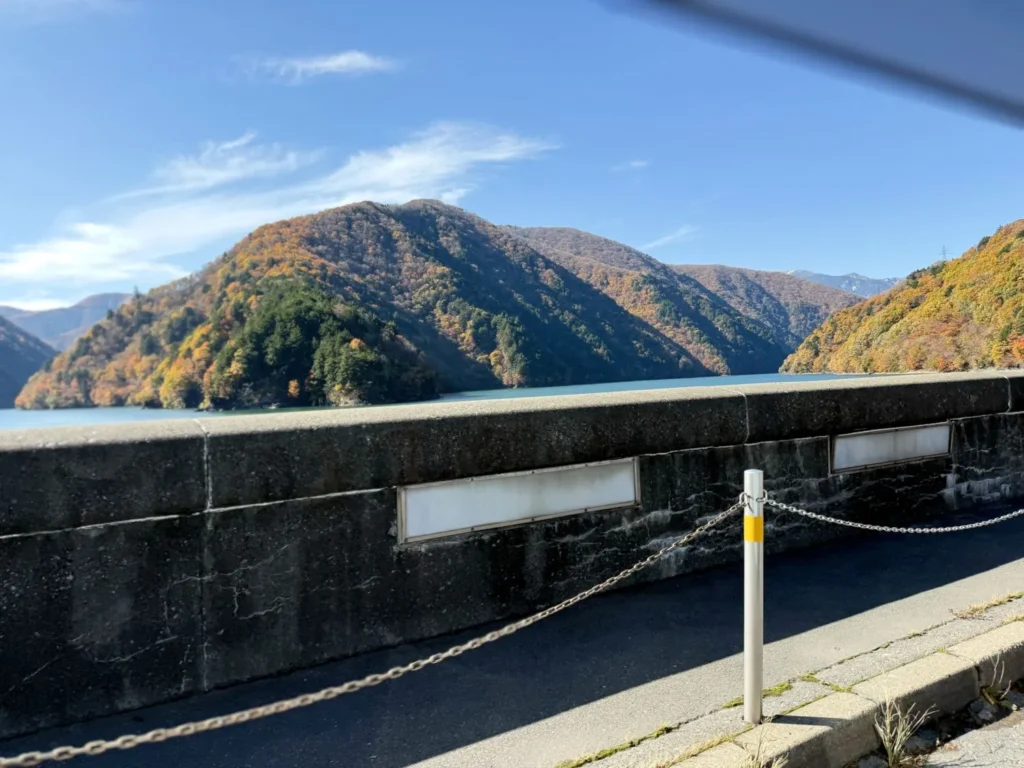
Parking at Sawando Ohashi
Our parking location: Sawando Ohashi Parking
Parking Fee: ¥800 per day
We chose Sawando Ohashi Parking (さわんど大橋駐車場), which costs ¥800 per day.
The parking area has a toilet for visitors to use, and the staff can also help arrange a taxi to pick you up directly from the parking lot.
There are several parking areas around Sawando, so you do not necessarily have to use the same one as us. However, we found this particular parking lot convenient for taking a taxi into Kamikochi.
Taking a Taxi Instead of the Shuttle Bus
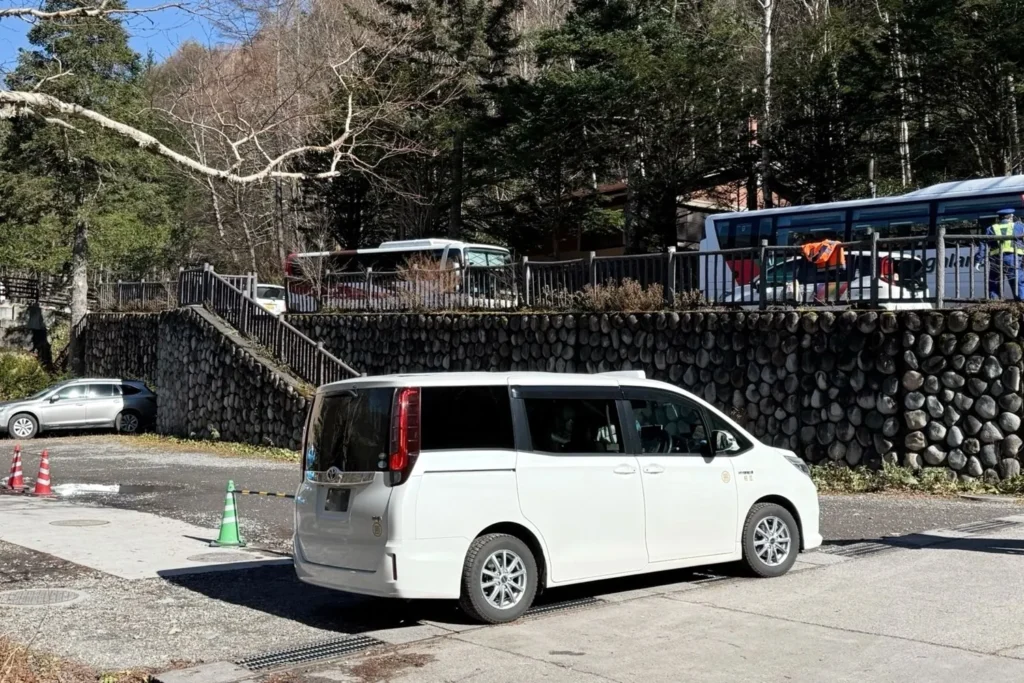
Taxi to Taisho Pond: ¥4,900 per vehicle
Although shuttle buses are available, we decided to take a taxi.
There were three of us travelling together, and the price difference between taking a taxi and paying individually for the shuttle bus was relatively small.
For our journey, the taxi from Sawando Ohashi Parking to Taisho Pond cost ¥4,900 in total, compared with approximately ¥4,800 for three adults travelling by bus.
The taxi also allowed us to leave without waiting for the next bus and travel directly to our chosen starting point.
For a group of three or more, we would recommend considering the taxi, especially if you want a more convenient journey. For solo travellers or couples, the shuttle bus will generally be the more economical choice.
Our Taxi Ride to Taisho Pond
One of the things we enjoyed on this visit was our taxi driver, who was very friendly and talkative throughout the journey.
If you know a little Japanese, you may have an opportunity to learn something interesting about the area from your driver.
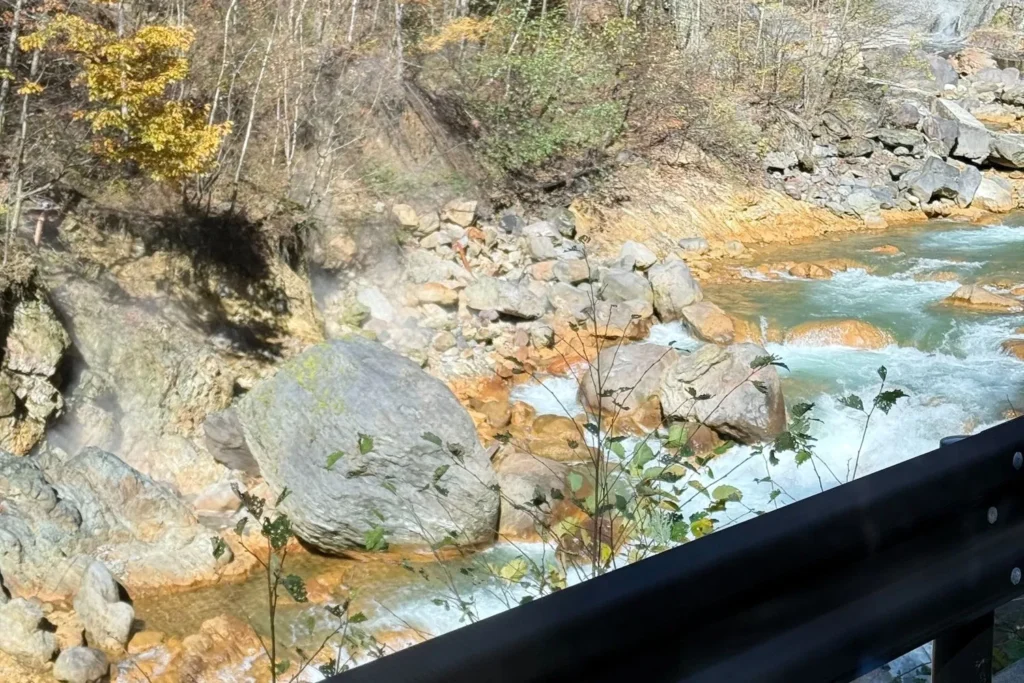
At one point, he was particularly eager for us to see a natural hot spring area along the river. He told us to look towards the left, where we could spot steam rising from the ground near the riverbank. Despite the steam, the river water itself remained cold.
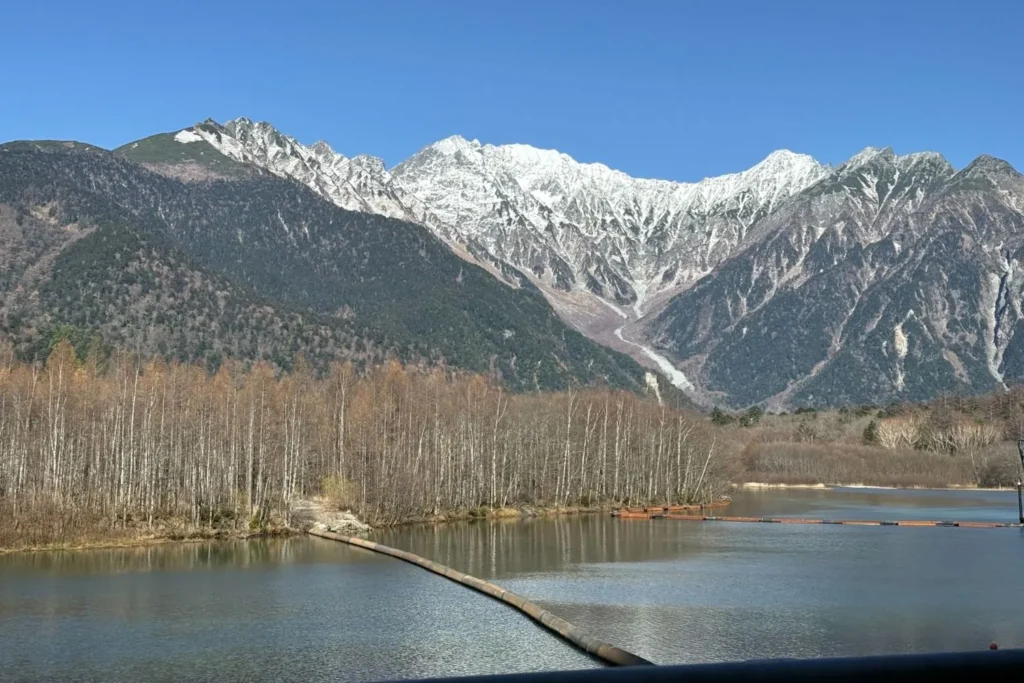
Later along the drive, he told us to prepare our cameras as he was about to slow down at a particularly scenic section of the road. It was worth having the cameras ready. We could see the mountains rising ahead, with snow covering parts of the upper peaks.
In a way, it felt like receiving a small tour during the ride.
The journey from Sawando to Taisho Pond generally takes around 20–30 minutes, depending on the starting parking area and traffic conditions.
Our Recommended Kamikochi Walking Route
For those who are visiting Kamikochi for the first time, Kappa Bridge is probably the place you have seen most often in photographs.
However, we would recommend starting your visit earlier along the route, at Taisho Pond, before gradually making your way towards Kappa Bridge on foot.
The walking trail gives you a chance to see different sides of Kamikochi, from the ponds and forest to the open river scenery and mountain views.
The route is approximately four kilometres long and generally takes around 75–80 minutes to complete without extended stops. We would recommend allowing more time if you enjoy photography or prefer walking at a relaxed pace.
Starting at Taisho Pond
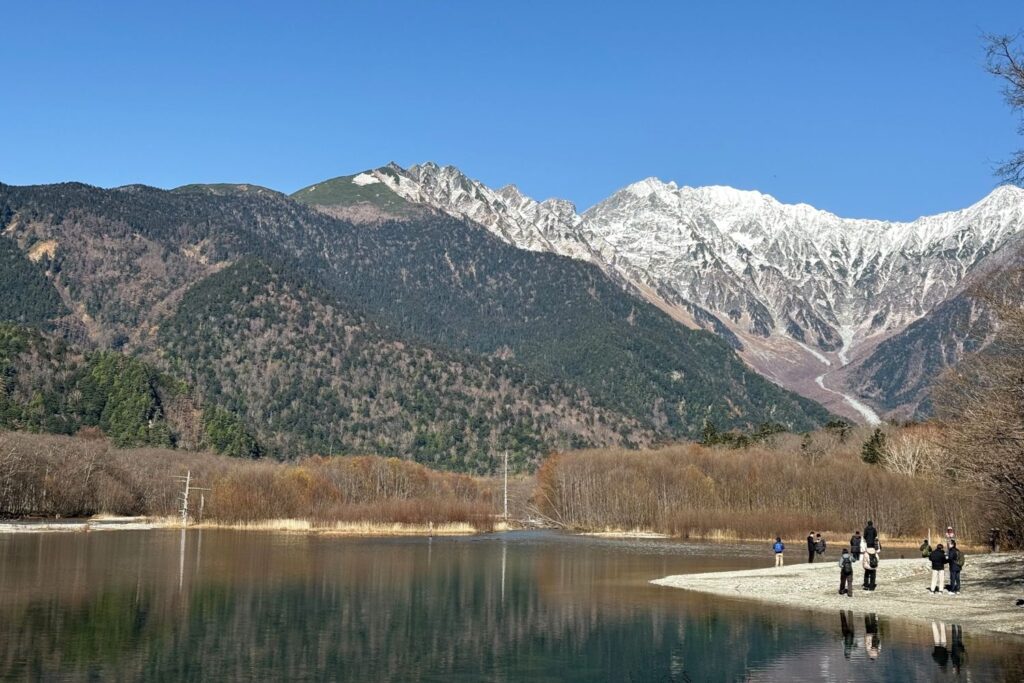
Our taxi dropped us off at Taisho Pond, or Taisho-ike. This is where we began our walk. Taisho Pond was formed in 1915 following an eruption of Mount Yakedake, which blocked the flow of the Azusa River. Today, the pond is known for its scenery, particularly the surrounding mountains and the trees standing in the water.
It is a worthwhile place to stop for photographs before continuing along the trail.
There is also a public toilet near Taisho Pond, which we highly recommend using before starting your walk.
Although you will find other toilets further along the route, there are stretches of the trail where you will not have immediate access to one. Depending on your walking speed, you may be walking for another 30–40 minutes before reaching a convenient facility.
Walking Through the Forest and Along the River
From Taisho Pond, we continued along the nature trail towards Tashiro Pond and Kappa Bridge.
The walk itself was very enjoyable. There were not too many people on the trail during our visit, which made it a pleasant change from some of Kamikochi’s busier areas. We still came across other visitors occasionally, so the trail did not feel entirely deserted.
The walking path changes throughout the journey. Some sections have wooden boardwalks, while others are natural ground paths. Certain areas were wet and slightly muddy during our visit, so we would recommend wearing comfortable walking shoes that you would not mind getting a little dirty.
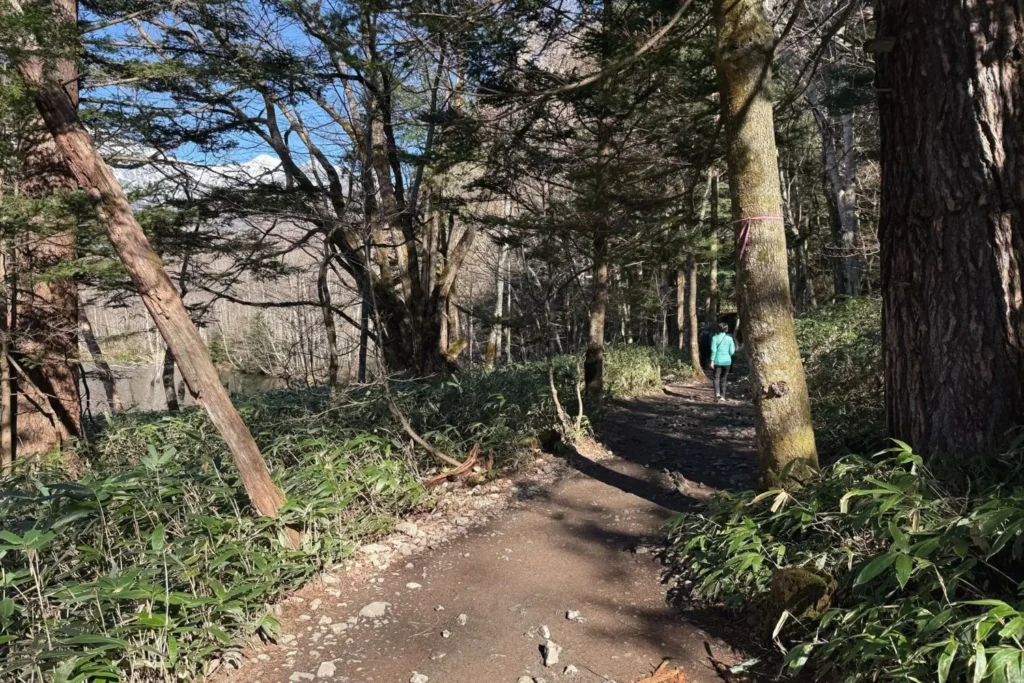
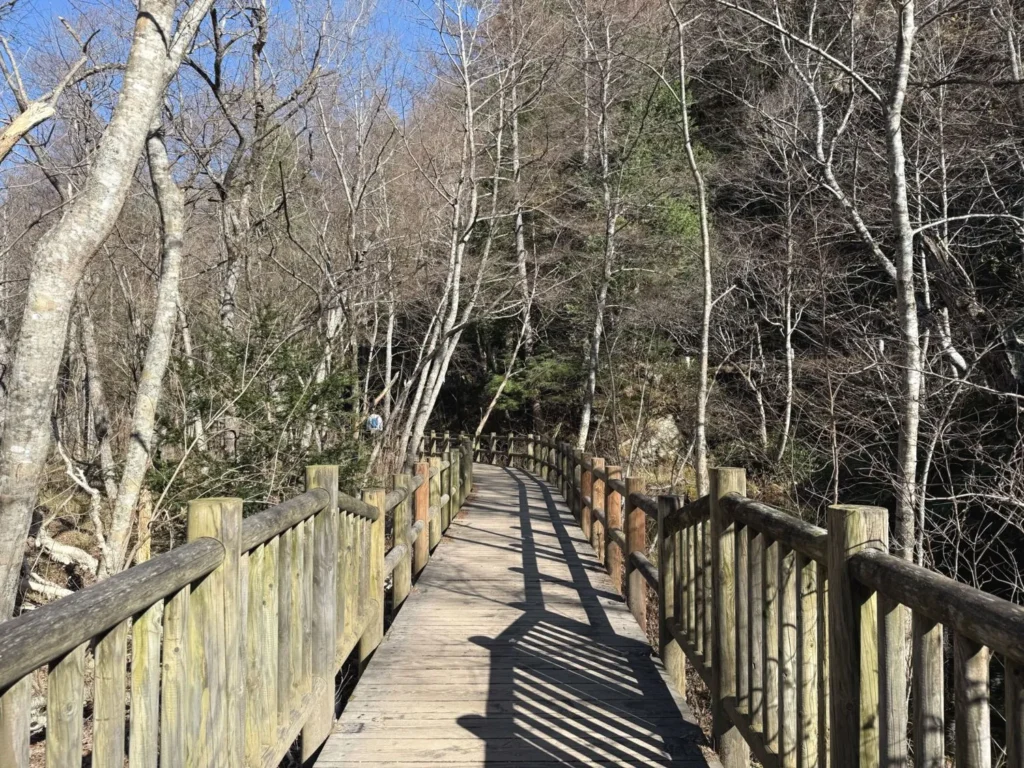
You do not need specialised hiking boots for this particular route in normal conditions, but footwear with a good grip is preferable to ordinary flat-soled shoes.
Along the way, you will pass through forested sections before reaching more open areas with views of the Azusa River and the surrounding mountains.
One of the advantages of walking this route is that the scenery changes as you go.
The Mountain Views: Mount Yakedake and the Hotaka Range
As we continued walking, we could see several mountains from different points along the trail.
One of them was Mount Yakedake, an active volcano that also played a part in the formation of Taisho Pond.
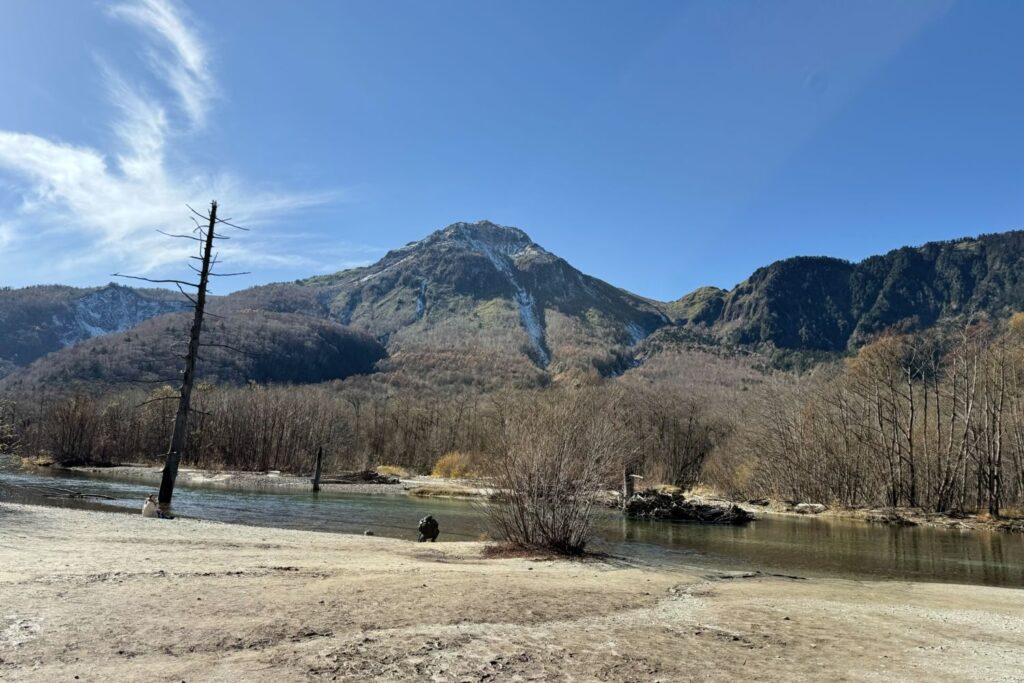
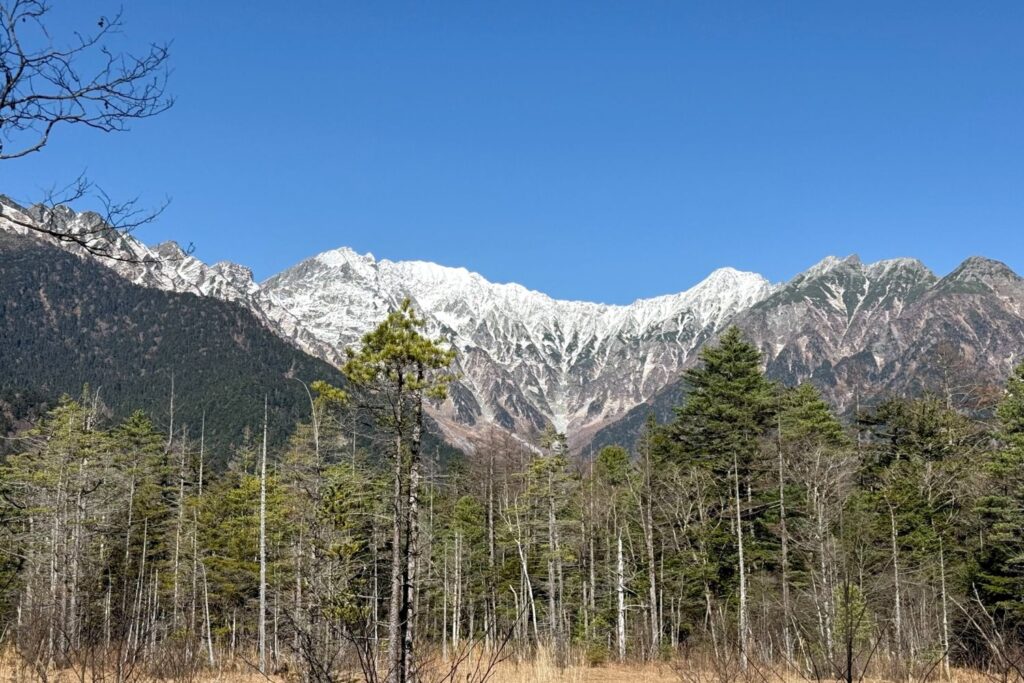
Further along the route, the Hotaka mountain range becomes one of the main features of the landscape.
During our November visit, snow had already begun covering the higher peaks, while the lower areas around the river remained mostly free of snow.
With the clear weather that day, we had a particularly good view of the mountains. This was one of the reasons we were glad to have chosen the walking route rather than travelling directly to Kappa Bridge.
You can enjoy the scenery at a slower pace and stop whenever you find a view you like.
The Monkeys Along the Trail
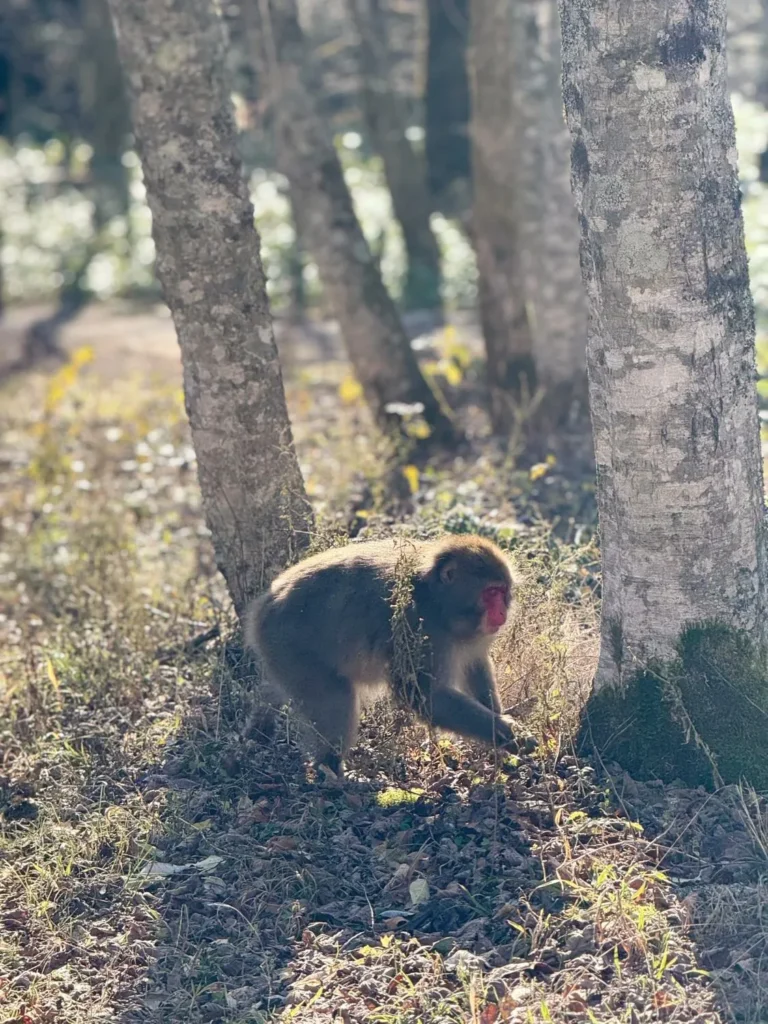
Another highlight of our walk was coming across wild Japanese macaques.
We were fortunate enough to see a few monkeys during our visit to Kamikochi, which was a nice addition to the walk. We would say we saw even more during our summer visit, when we also saw the babies come out to play.
Japanese macaques live naturally in Kamikochi, and you may see them around the forest or along the walking trails. However, seeing them is not guaranteed, so consider it a little bonus if you do encounter them.
A note on wildlife: Please do not feed, touch, or approach the monkeys. They are wild animals, and visitors should maintain a safe distance, even if they seem comfortable around people.
Tashiro Bridge and Hotaka Bridge
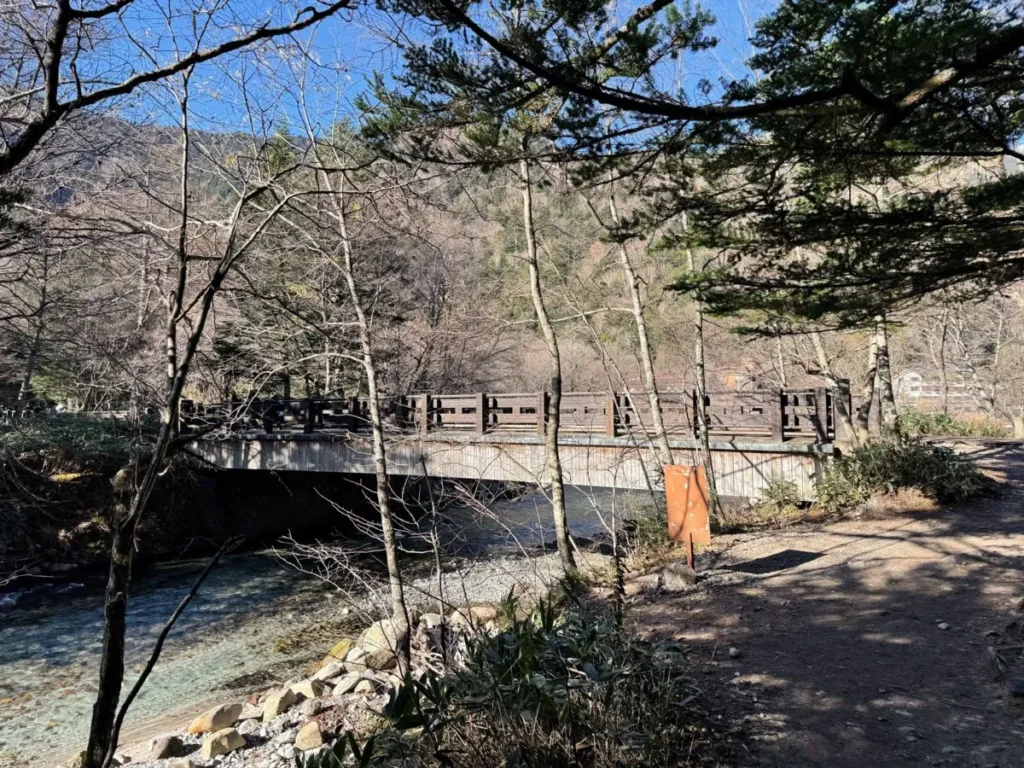
As you approach the bridge area, the surroundings begin to open up, and you will find more opportunities to enjoy views across the river. This is also the point where you can cross towards the hotel area and continue along a different section of the walking route.
If you need a toilet, check the facilities marked on the official park map around the Tashiro Bridge and Weston area before continuing.
From here, you can choose to walk towards Kappa Bridge along the riverside route or follow the paths leading through the more developed part of Kamikochi. We recommend taking your time around this section, particularly if the weather is good, as there are several places where you can stop to enjoy the river and mountains.
The Walk Towards Kappa Bridge
After the bridge area, we continued towards Kappa Bridge, one of the most recognisable landmarks in Kamikochi.
Until this point, we had not encountered particularly large crowds along the walking trail.
However, as we approached Kappa Bridge, there were noticeably more visitors.
This is understandable, as the bridge is one of the main attractions and is within easy walking distance of the bus terminal.
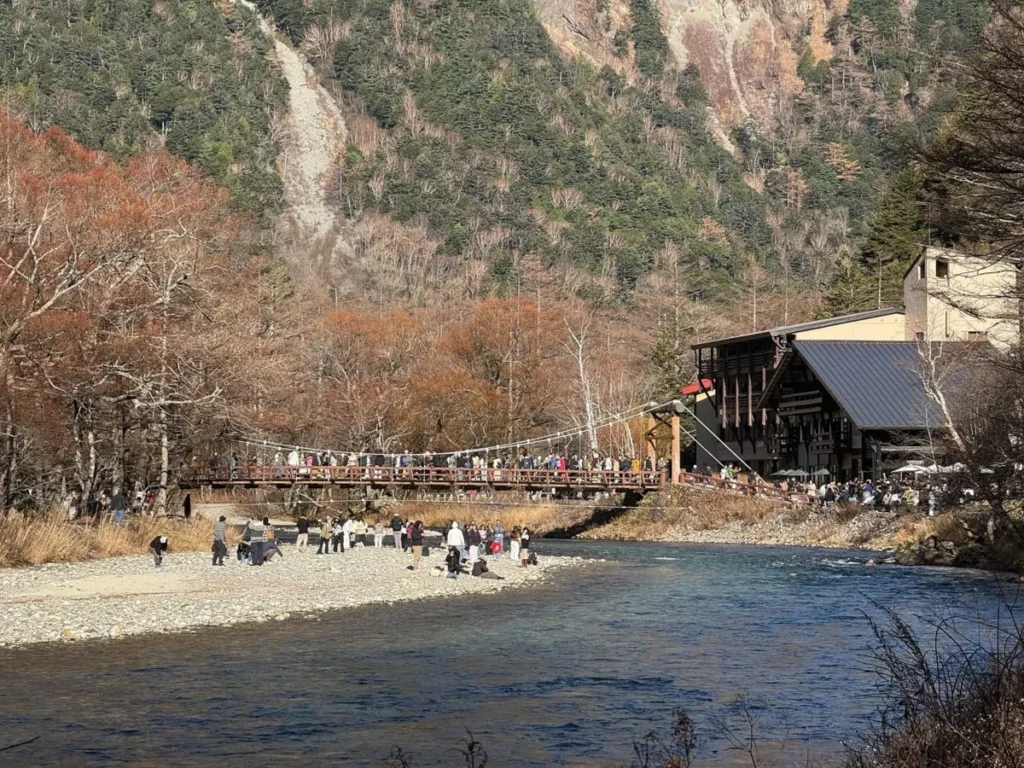
The view from Kappa Bridge is certainly worth seeing, especially on a clear day when the Hotaka mountain range is visible behind the Azusa River. Even so, we personally preferred some of the quieter sections of the walking trail.
For those who enjoy taking photographs without too many people around, starting at Taisho Pond gives you several opportunities before arriving at the busiest part of Kamikochi.
A Short Stop at Kappa Bridge
We did not spend too long at Kappa Bridge because of the crowds.
However, if this is your first time visiting, we would still recommend making a stop here.
There are shops around the area where you can buy souvenirs, snacks, and some of Kamikochi’s popular food items.
One of the classic things to eat is the Kamikochi soft serve ice cream, which many visitors enjoy during their stop.
If you have more time, you can also explore the nearby area or find somewhere to sit and enjoy the scenery. For us, after spending time walking and taking photographs along the trail, we were ready to head back.
Returning to Sawando Parking from Kamikochi
From Kappa Bridge, we walked to Kamikochi Bus Terminal, which is only a short walk away.
This is where visitors can take the shuttle bus or taxi back to the parking areas.
When we arrived, the queue for the shuttle bus was very long.
Fortunately, we had already planned to take a taxi, and there was no queue at the taxi stand during our visit.
The taxi driver on our return journey was also very friendly, making both of our taxi rides in Kamikochi pleasant experiences.
Our return taxi from Kamikochi Bus Terminal to Sawando Ohashi Parking cost ¥6,000.
Once again, we found the taxi convenient, particularly because we did not have to wait in the long bus queue.
Of course, taxi availability can vary throughout the day and between seasons, so we would not expect there to be no queue every time.
Our Transportation Cost
For reference, this was what we paid for three people during our November 2026 visit.
Expense Total
Sawando Ohashi Parking: ¥800
Taxi: Parking → Taisho Pond: ¥4,900
Taxi: Bus Terminal → Parking: ¥6,000
Total for 3 people: ¥11,700
Per person: ¥3,900
These are the rates from our visit and may change in future seasons. For the latest fares, we recommend checking the official Kamikochi website before travelling.
A Few Things to Know Before Walking in Kamikochi
Do You Need Hiking Shoes?
For the Taisho Pond to Kappa Bridge route, we would not consider specialised hiking equipment necessary under normal trail conditions. The route is relatively easy, with mostly flat walking paths and wooden boardwalks.
However, we would recommend comfortable walking shoes with a good grip, especially after rainy weather. Some parts of the ground were wet and muddy during our visit, and the wooden boardwalks may also become slippery.
What About Bears?
Kamikochi is a natural habitat for Asiatic black bears, so visitors should take the possibility of an encounter seriously. We recommend carrying a bear bell while walking, even on the more popular trails. During our visit, we noticed that several other hikers were also carrying bells.
Although walking near other visitors may make you feel more comfortable, you should not rely on their bells as your only precaution. Before setting off, check any recent bear sightings or trail advisories, stay on designated paths, and avoid approaching wildlife.
Where Are the Toilets?
One important thing to consider before walking in Kamikochi is the availability of toilets. You will find facilities at Taisho Pond, around the Weston area, near Kappa Bridge, and at Kamikochi Bus Terminal, among other locations. However, the distance between facilities can be quite long depending on your chosen walking route.
Our recommendation is to use the toilet at Taisho Pond before beginning the walk rather than assuming you will find another one shortly afterwards. At the beginning and end of the season, some public facilities may also be closed, so check the official announcements before visiting.
When Is the Best Time to Visit Kamikochi?
Kamikochi is generally accessible by public transport from mid-April until November 15, although exact opening dates and the availability of facilities can differ each year. Each part of the season offers a different experience.
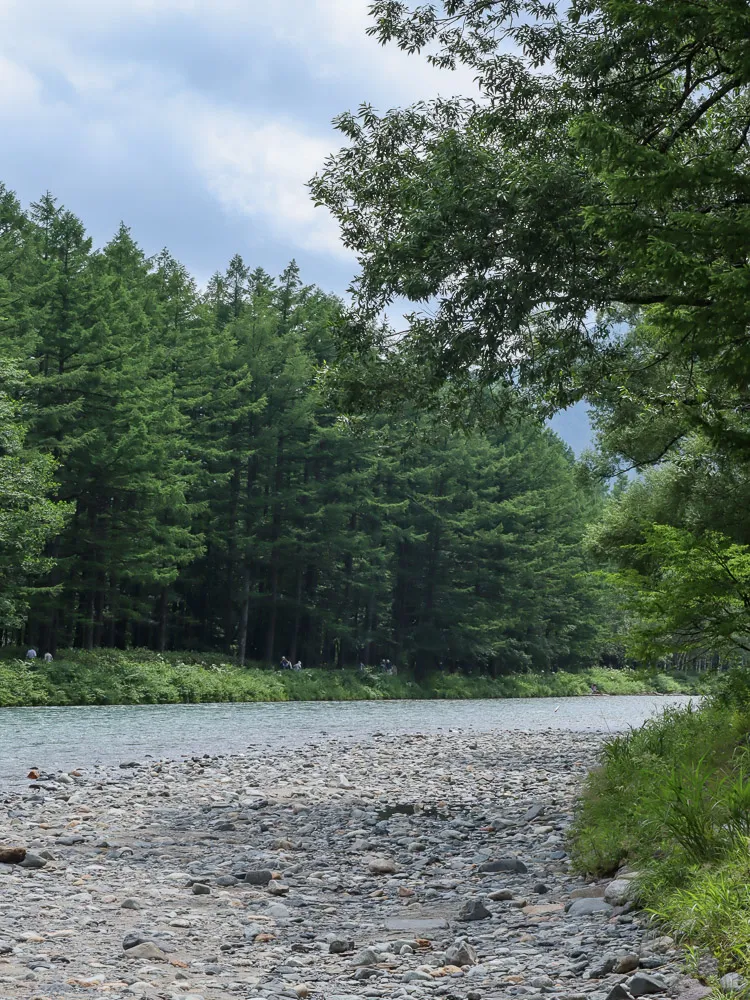
In spring, the mountains may still be covered with snow while greenery begins to return to the valley. Summer brings greener forests and a pleasant escape from the heat in Japan’s cities. Autumn is well known for its foliage, with October generally being one of the more popular months.
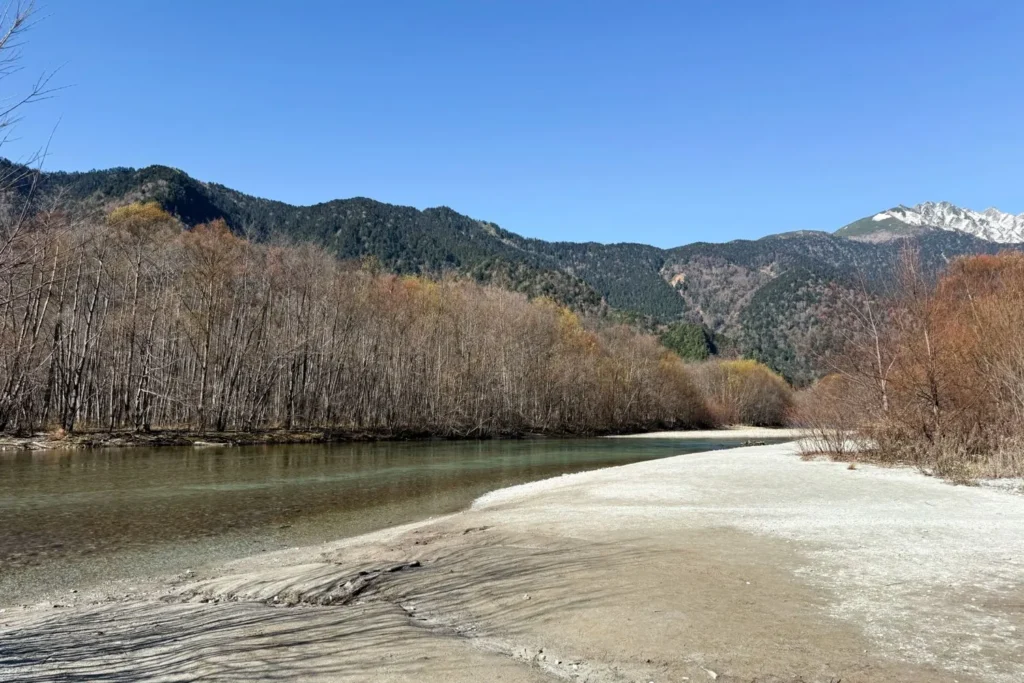
Our latest visit this November was already towards the end of the season, after much of the autumn colour had passed. However, we had the opportunity to see snow beginning to cover the mountain peaks, which was something we particularly enjoyed.
Our other visit during the summer was a little quieter, but still had a considerable number of tourists; the weather was pleasant for walking around, and every tree was growing luscious green; however, during that visit it unfortunately rained. You can also see what to expect in our article on Kamikochi in the rain.
If you are planning to visit in November, make sure to dress warmly, check the weather and trail conditions, and confirm which facilities remain open.
For another seasonal comparison, we recommend Shirakawa-go in Gifu Prefecture, just next to Nagano. In our Shirakawa-go in Summer vs Winter guide, we compare what the village is like across the two seasons and how the experience changes throughout the year.
Ending Our Day Back in Matsumoto
After returning to Sawando Ohashi Parking, we drove back towards Matsumoto and our accommodation. We wanted to reach the hotel in time to enjoy the onsen before sunset.
One thing we would recommend, if you are also staying around Matsumoto, is to make the drive back before it gets dark. There are some beautiful views of the surrounding mountains along the way, which you would otherwise miss when driving after sunset. It was a nice way to end our Kamikochi day trip, followed by some time relaxing in the onsen.
For those planning their first visit, we would recommend giving the Taisho Pond to Kappa Bridge walking route a try. It is not a difficult walk, yet it allows you to experience more of Kamikochi than simply visiting the most popular bridge. And if you are lucky enough to visit on a clear day, the mountain scenery along the way can be just as enjoyable as the view from Kappa Bridge itself.
For more to see in Nagano, we recommend Narai-juku and Magome-juku for a walk through the old towns; we also had a pleasant encounter during our time there.
May you enjoy Kamikochi as much as we did,
Travel Tegami