
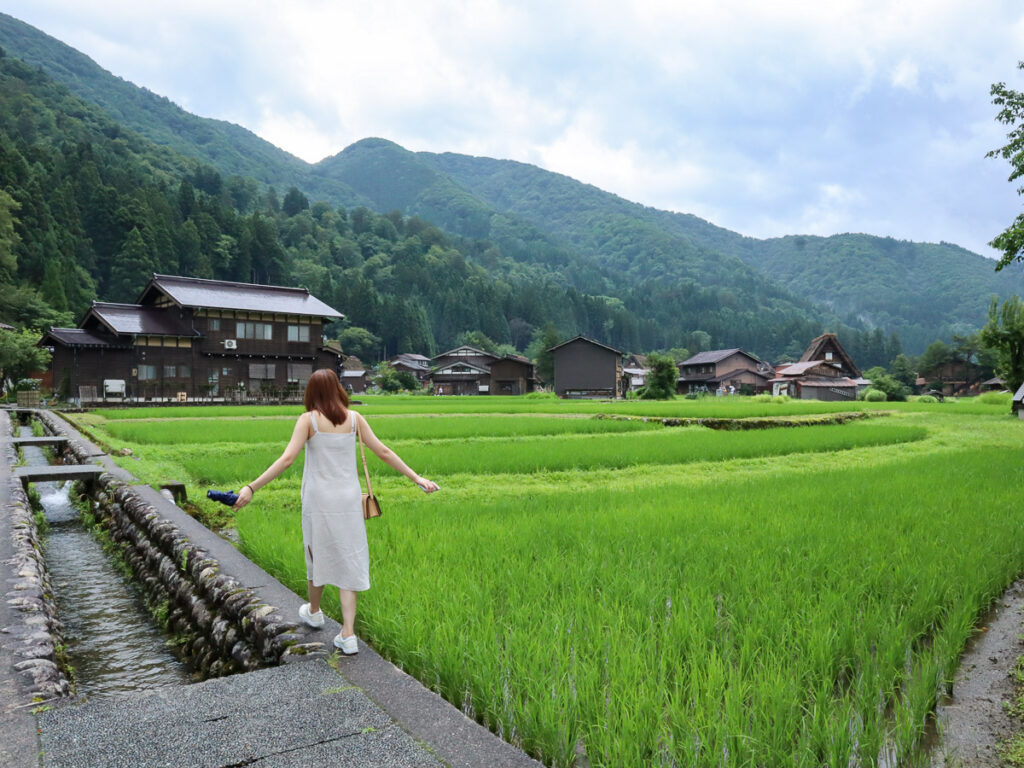
Shirakawa-go is probably one of the most iconic locations people choose to visit in Gifu. We, too, have visited the historical village on multiple occasions, during a rainy day in summer and amidst heavy snowfall in winter.
In this blog, we will compare the two seasons in Shirakawa-go, help you decide when to visit, and provide other options for a similar experience.
Quick Navigation (Table of Contents):
Winter at Shirakawa-go
Dear Travellers,
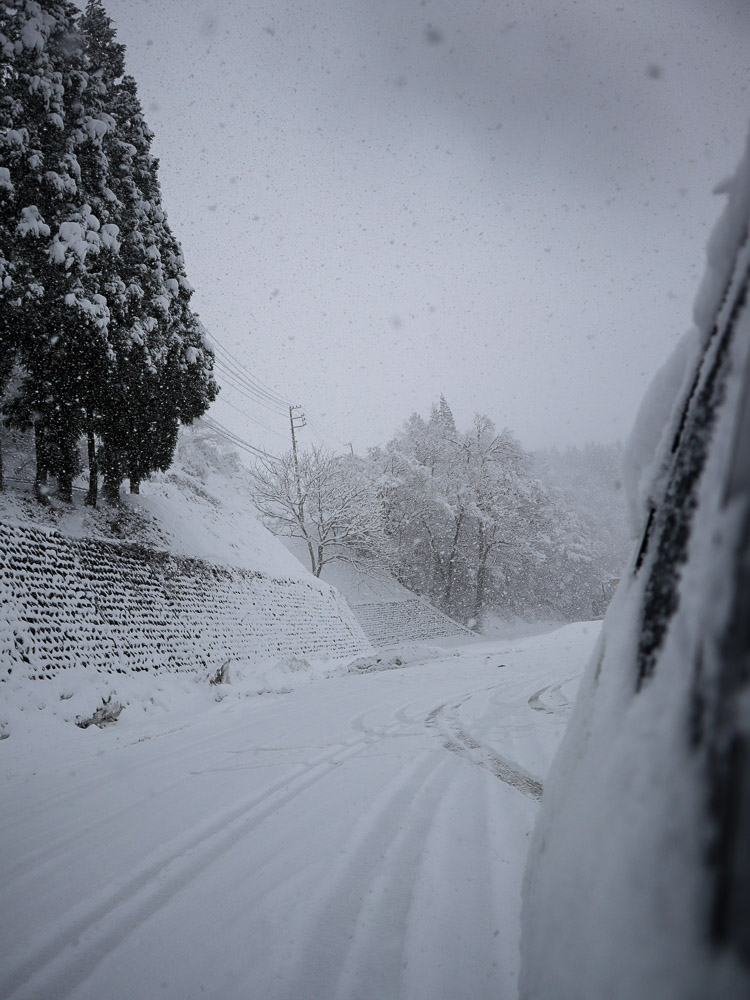
Snow hit my rental car’s windshield, melting as it touched the glass, and was swiftly wiped away by the windshield wipers. I was in the driver’s seat, focusing on the road; snow piled up beside the street, and everywhere I looked was white.
Coming from a hot-climate country, snow was always something that felt unreal and not something we were used to at all. My hands gripped the steering wheel tightly, my eyes focused on the road, being careful of where my car was heading. Videos online of cars slipping on ice have left quite an impression on me; it was all I could think of.
A lady’s voice occasionally sounds, telling me where to turn, reminding me to keep going straight, and how far each turn is ahead, guiding me through the countryside of Gifu, Japan.
Note: A normal compact car with snow tires is suitable for the road conditions.
Arriving at Shirakawa-go for the first time
We drove up to the spot marked on our map, the main entrance of the village. A glimpse of one of the gassho-zukuri farmhouses was visible in the distance, ensuring us that we are at the right place.
Before we could drive any further, we were stopped by a few people that was stationed there to block off visitor traffic. The guy instructed us that visitors cannot enter by car beyond this point and gave us directions to the parking area. Although our Japanese was not good enough to completely understand him, we were able to get the general direction of where to go.
As I made a turn back around, my passenger started looking for a parking area. Driving back out a little to the intersection, we follow what the guy had directed us earlier and turn left to cross Ogimachi Bridge. A bridge that is immediately followed by a tunnel through the mountain. We took the first left after exiting the tunnel.
The parking lot is down that road, on the opposite side of the river that flows through the village. After parking our car, we started walking on foot, not too far away, crossing back by Deai Bridge, also a famous photo spot for many.
The First Impression
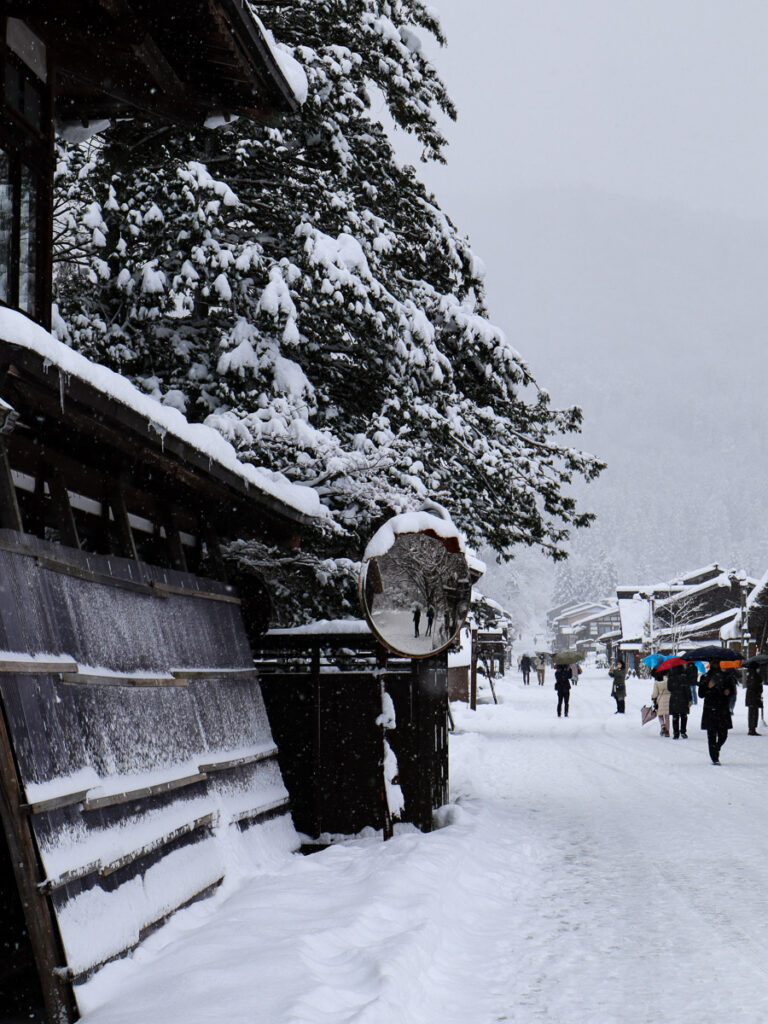
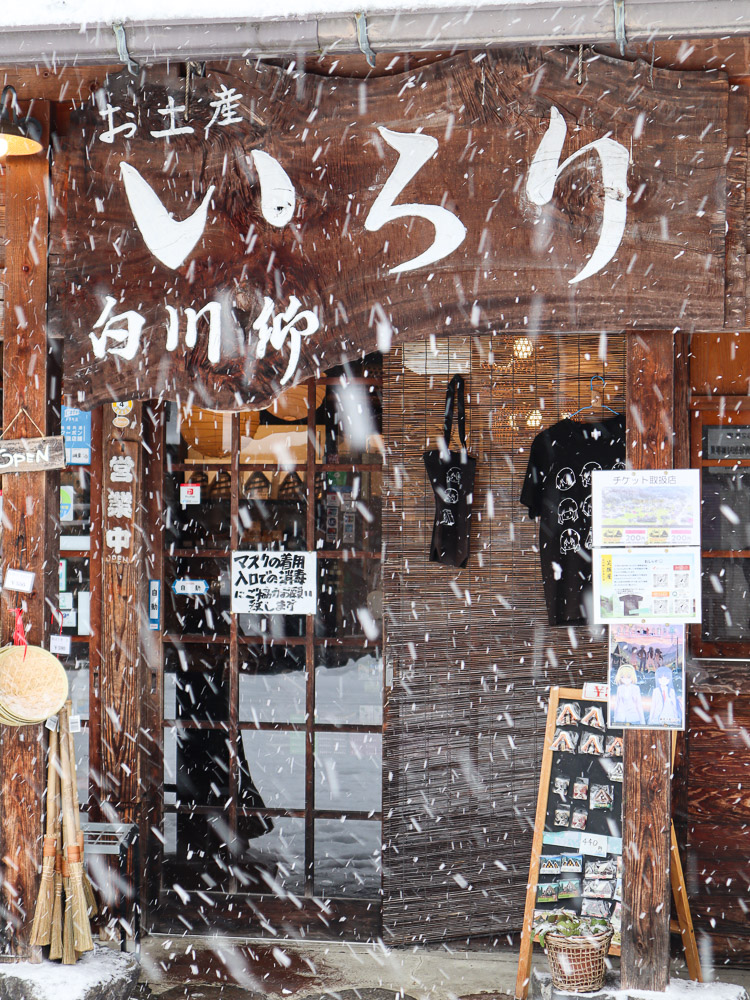
We arrived back at the Shirakawa-go village. The winter was not so kind; the sunlight we saw earlier disappeared again, leaving only the continuous fall of snow that had been going on for a while.
Many of the buildings functioned as stores, selling small items and souvenirs, from local food in packages to the usual magnet and other stuff with the village name written on it. It was a good place to seek shelter from the strong wind that was blowing, so we hid there for a little while and bought some gifts for ourselves, which included some of the ‘stuff’ we mentioned.
We soon realized that this was one of the rare moments when a heavier snowfall turned out to be a good thing.
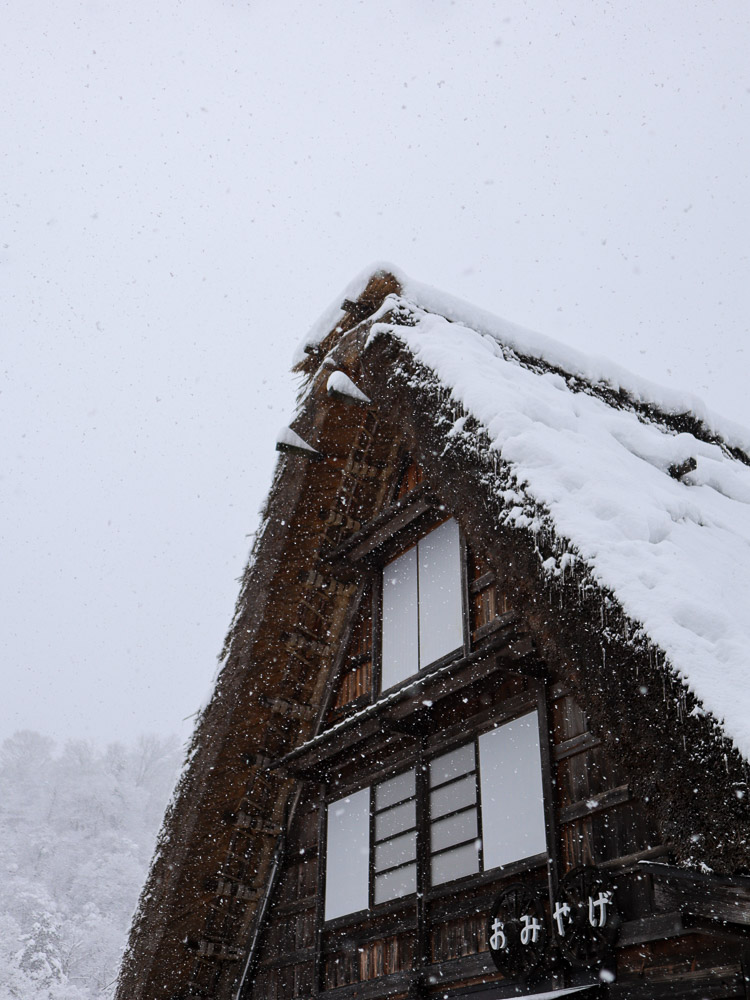
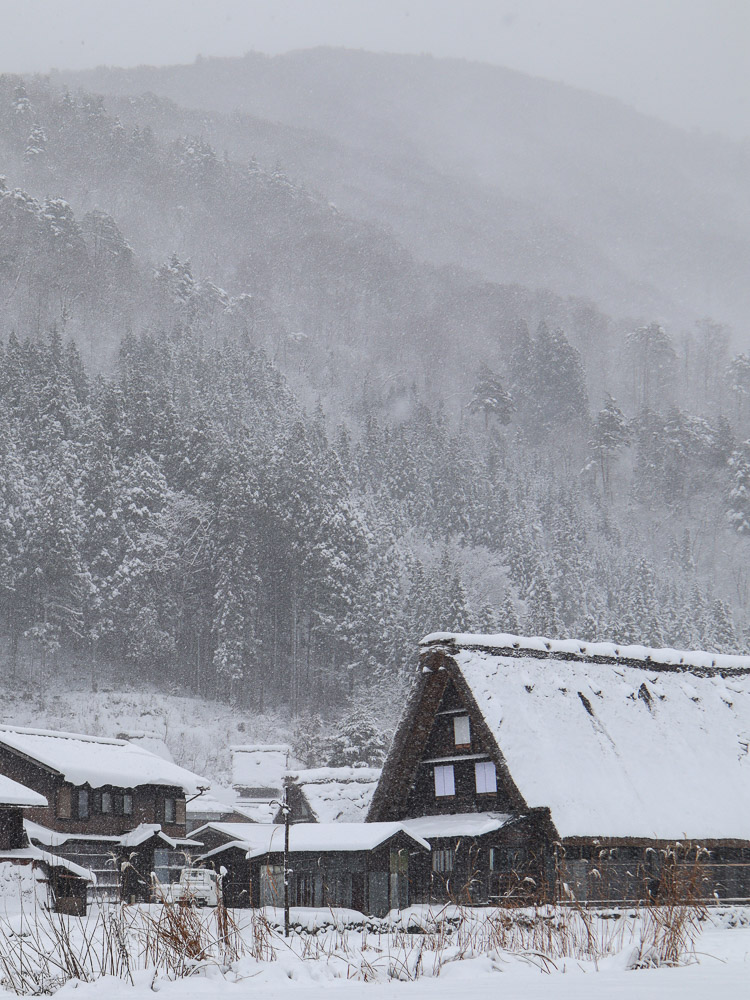
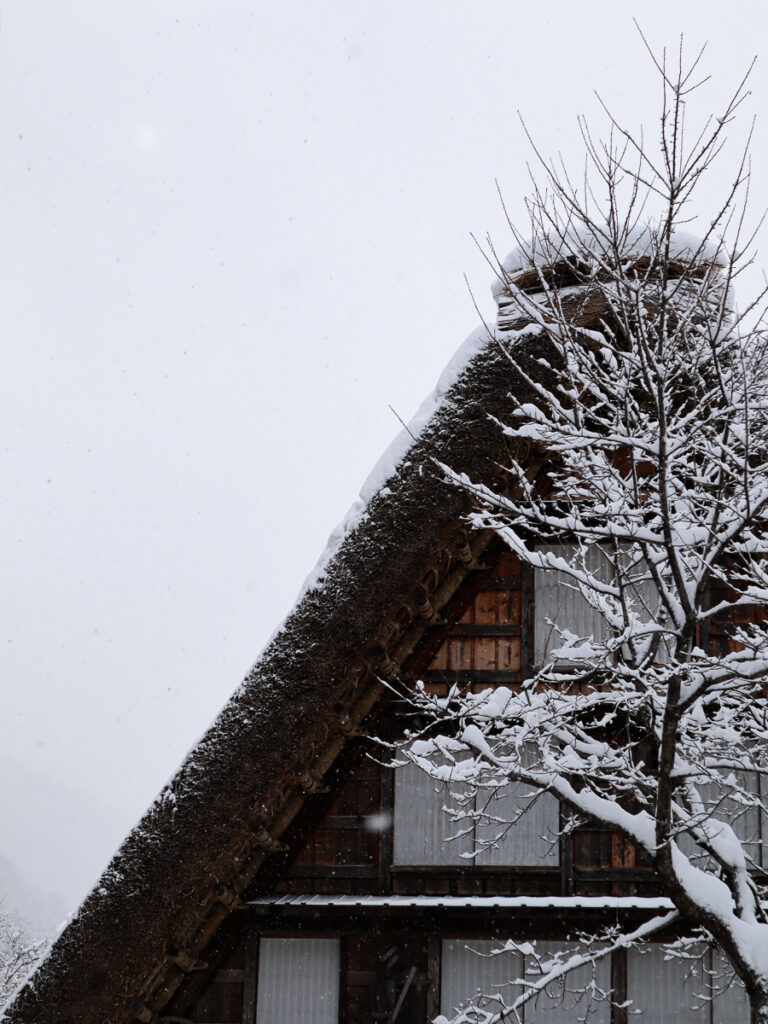
A layer of snow covered the whole village in pure white. A good layer of snow formed on top of the Kirizuma (the roof) amidst the snowstorm, creating a uniquely cinematic view. The thick, tall roof that is designed to endure and prevent the piling up of the snowfall somehow invokes the feeling of coziness within me.
“Being inside one of those houses would feel so comfortable right now,” was all I could think about when the strong wind hit my face, forcing me to duck down a little.
We spent a bit of time strolling along the village, not venturing too far inside. Not long after, the cold was getting unbearable for us, and we decided to head back to our car.
Our thoughts on winter at Shirakawa-go
The snow created a memorable experience for us and also added a touch of character and contrast to the farmhouses. It was a sight that left quite an impression even after a while had passed.
To this day, I can still remember quite clearly the structure of the building and the village covered in white snow. For us, it is not one of those places you forget having ever visited, but something that stood out enough for it to be ingrained in our minds.
The only downside of it was, of course, the cold and the strong wind that prevented us from exploring around for too long.
Summer in Shirakawa-Go
Summer in Japan is brutal, an honest opinion from a Thai person, where it is hot and humid all year round in Thailand. It really is hot, and that is why we chose to visit Shirakawa-go again.
To escape the summer’s heat, we decided to spend as much of our time during this Japanese summer trip in the mountains. We embarked on a journey in Gifu and Nagano, where we also visited Magome-juku and Narai-juku, old towns located in the prefectures mentioned, respectively. When you are in Nagano, a good time to visit Kamikochi is in summer, as the temperature will be just right!
Looking back to my past visit, I feel something was still left to see in Shirakawa-go, as the last time it was simply too cold.
We chose the same hotel to stay in (Onyado Yui no Sho), drove through the same road, and headed to the same destination we had been to not too long ago during November in winter. Driving here during late June to early July, it felt like a completely different place.
Shirakawa-go in Summer
The village was covered in white; everywhere I looked was almost a monochrome contrast, as if the color of the world was stripped away. That was what I remember of this place during my visit in mid-December.
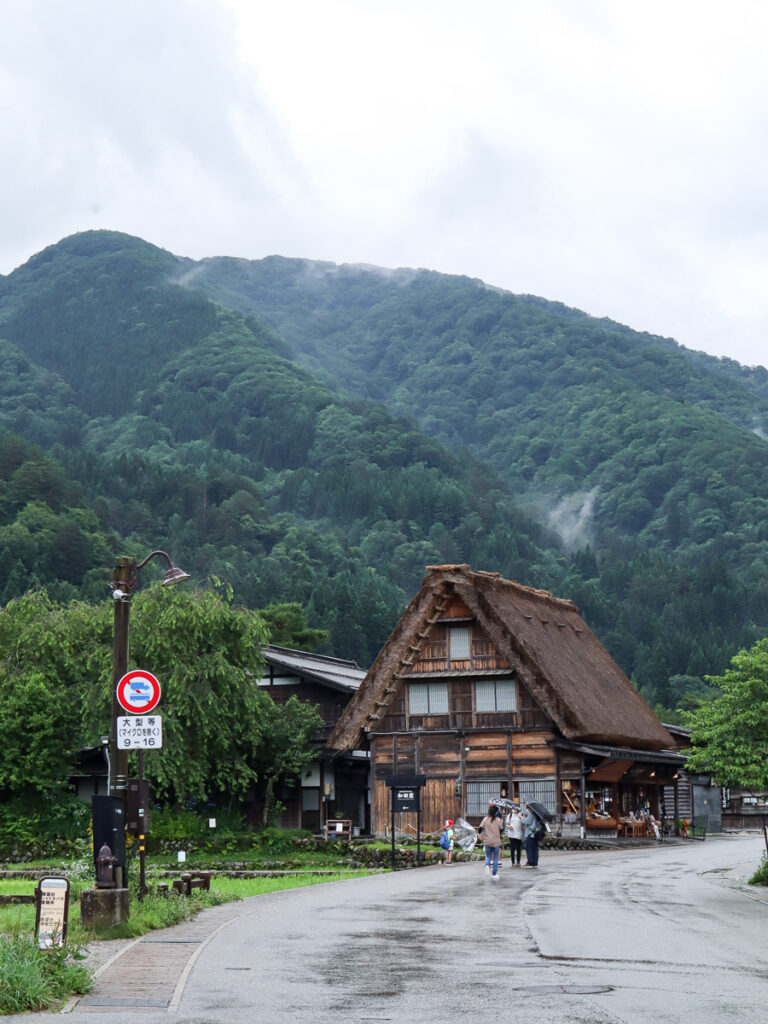
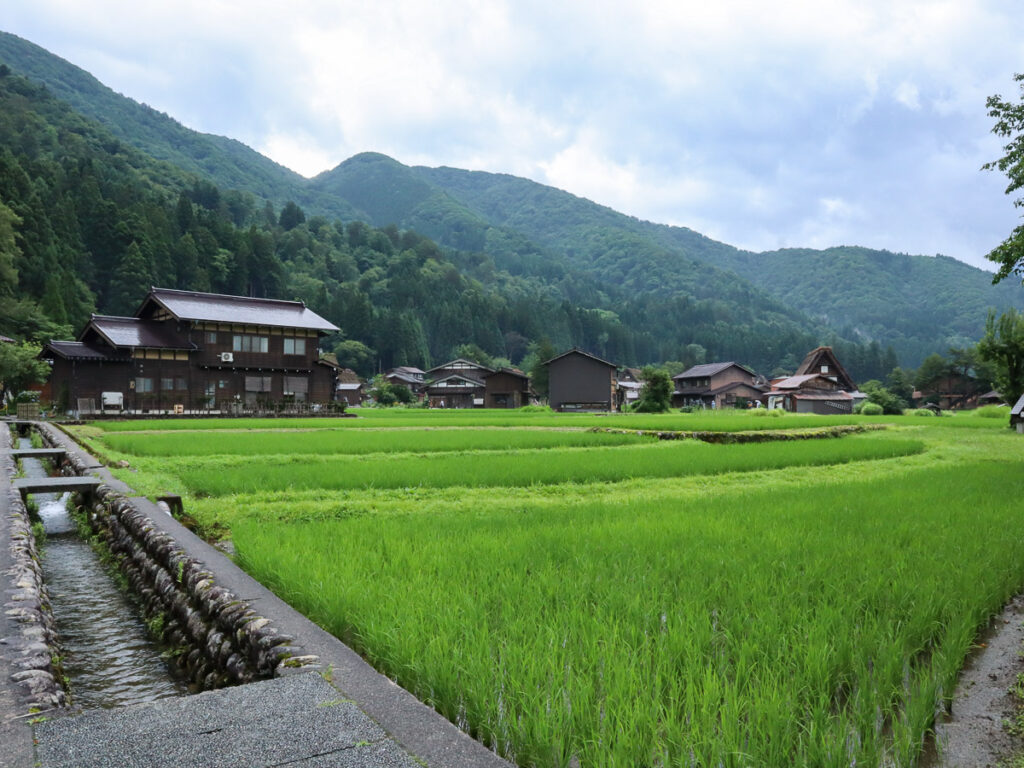
This time, the snow turned into a light rain; it was green wherever I looked; the natural brown color of gassho-zukuri farmhouses now stood out more than ever, while also blending in well with the landscape. The trees were green, and the rice paddies were covered with thriving sprouts.
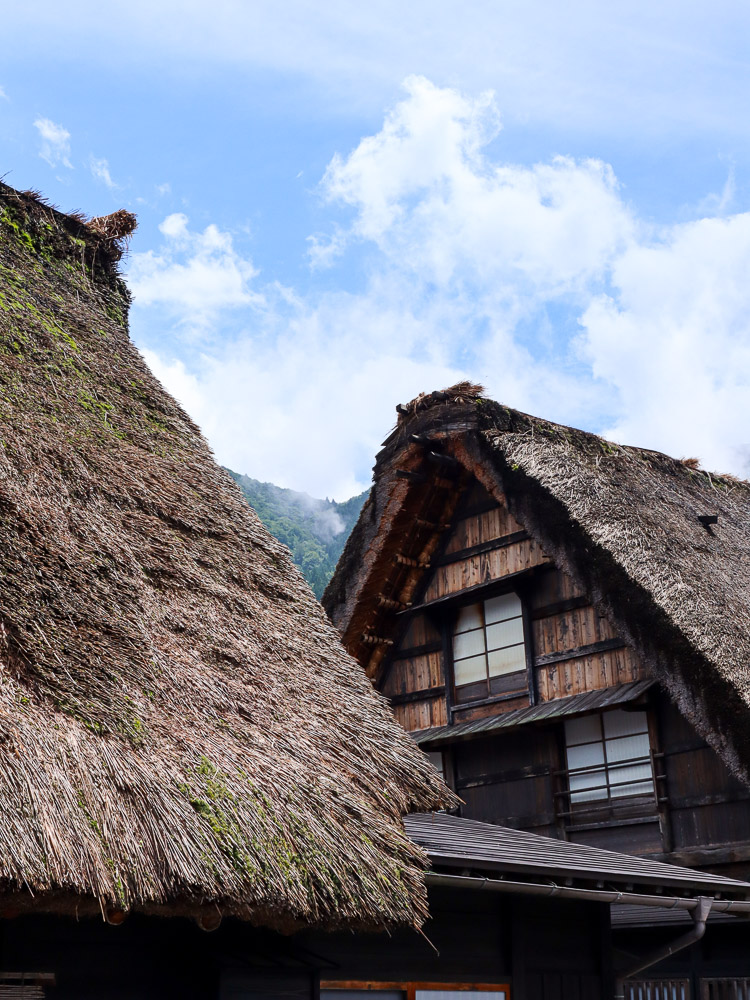
The Kayabuki (the thick layer on the roof) is visible in detail. The Kiriyasu, which is the kind of grass that is used to make the roof, can be seen almost as individual strands on top; some even spots of moss growing on top. If you look closely, each strand is also hollow in the middle; this makes it perfect for a roof because it allows the layers to ‘breathe’ and dry out faster after rain.
The temperature was also not too hot, a relaxing condition to walk around in. This time, we were able to take a stroll along the village comfortably, allowing us to enjoy the scenery more.
Our thoughts on Summer at Shirakawa-go
The village now feels fresh; the green around it gives it a breath of liveliness. “This truly felt like summer,” I said as we leisurely walked around. Being a low season for Japan, there are also fewer tourists there.
Visibility is also better, making observation of the whole village a bit more perceivable. Nothing was hidden in a pile of snow.
If the snow covering the village in winter was a dramatic scene, the green and clear sky in summer in Shirakawa-go was a short break between the intense acts. If Shirakawa-go were a drama, then this summer would be a slow and happy episode, or even a scene that evokes nostalgia.
Summer or Winter in Shirakawa-go: when is best to visit?
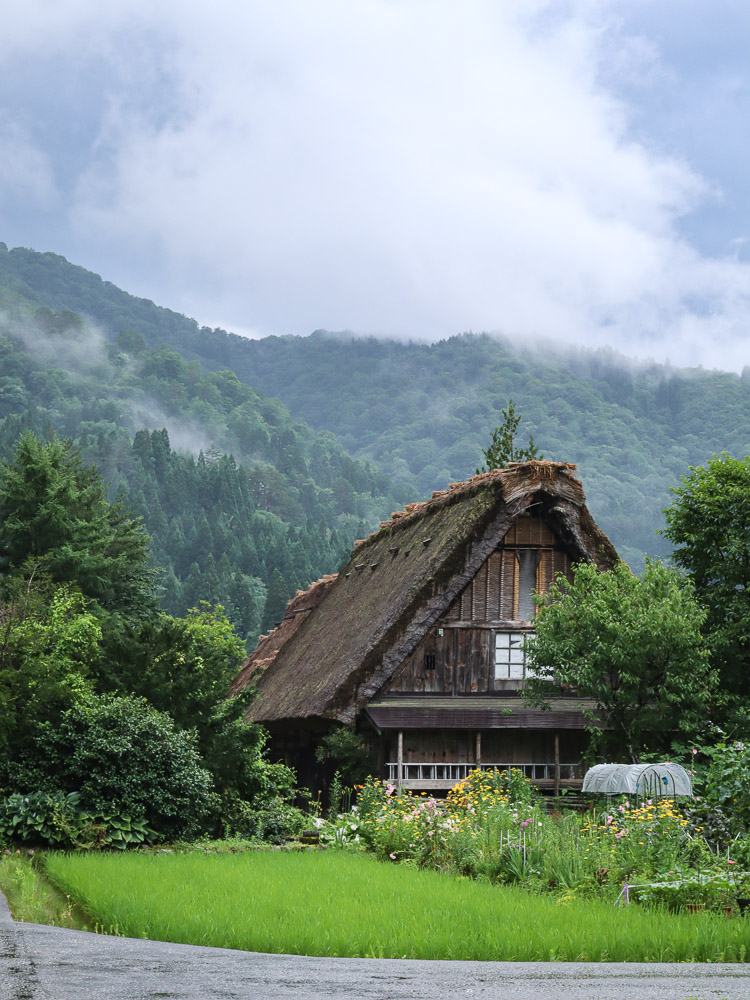
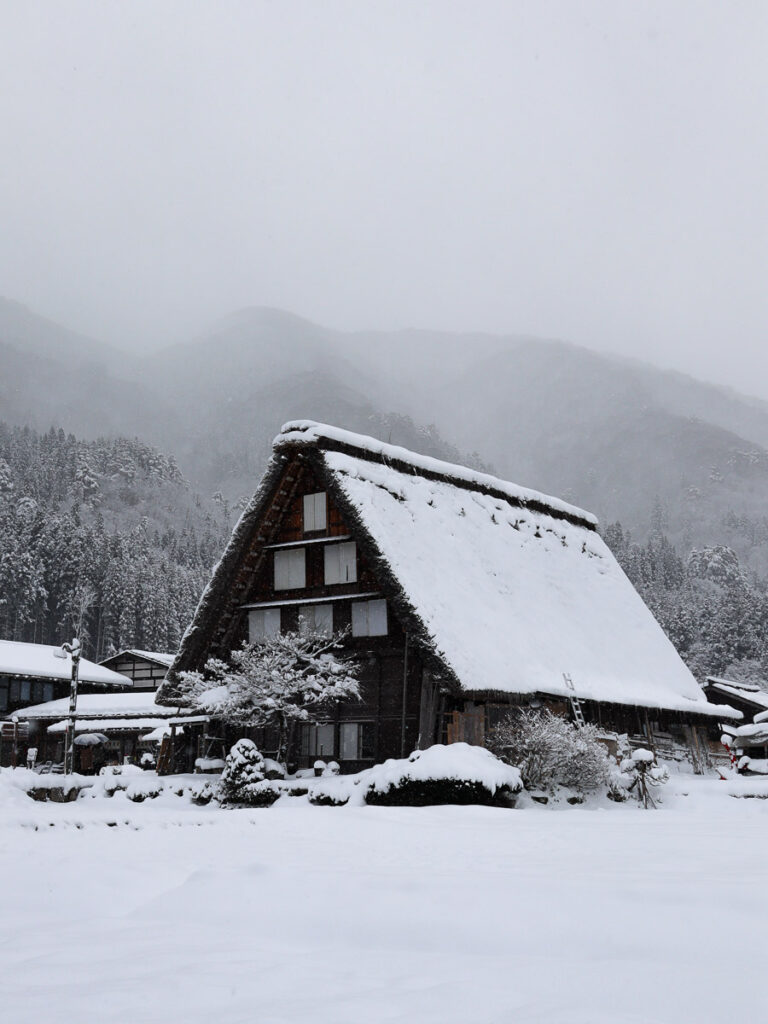
They say the roof looks like a hand during prayer, which is also where its name (gassho-zukuri) is derived from. If that is the case, the roofs in summer were like calm monks praying in peace and completely becoming one with nature, while in the winter, it was a prayer for the cold to pass by quickly.
For the ‘best time’ to visit Shirakawa-go, we would say:
- Visit the village in winter if you are looking for a scene that would impress.
- Visit the village in summer if you want to enjoy the place slowly.
In both seasons, the village is beautiful; it depends on what kind of beauty you are looking for. We can recommend a visit during both seasons as the best times. However, if you do not like the cold or are not very tolerant of it, we would suggest summer as the best time for you; this way, you can also observe it slowly if you are interested in the history and the tradition of the village.
To answer the question of whether you should visit it during both winter and summer. The simple answer is that there is no need. Shirakawa-go is a place you have to plan specifically to visit, as it is located deeper in the mountains and is not somewhere you would usually pass on the way. Seeing it once is enough, unless you really love the first visit; in that case, then by all means visit it again.
We also did a comparison like this for Lake Tekapo in summer vs. autumn, for you to determine which time is best for your visit.
Shirakawa-go Alternatives We’ve Visited
Similar-looking places to Shirakawa-go do exist around Japan, and you do not have to visit Ogimachi exclusively. These are the three other spots we have personally visited around Japan that feature a similar style and feel to Shirakawa-go.
Ainokura Gassho-zukuri Village
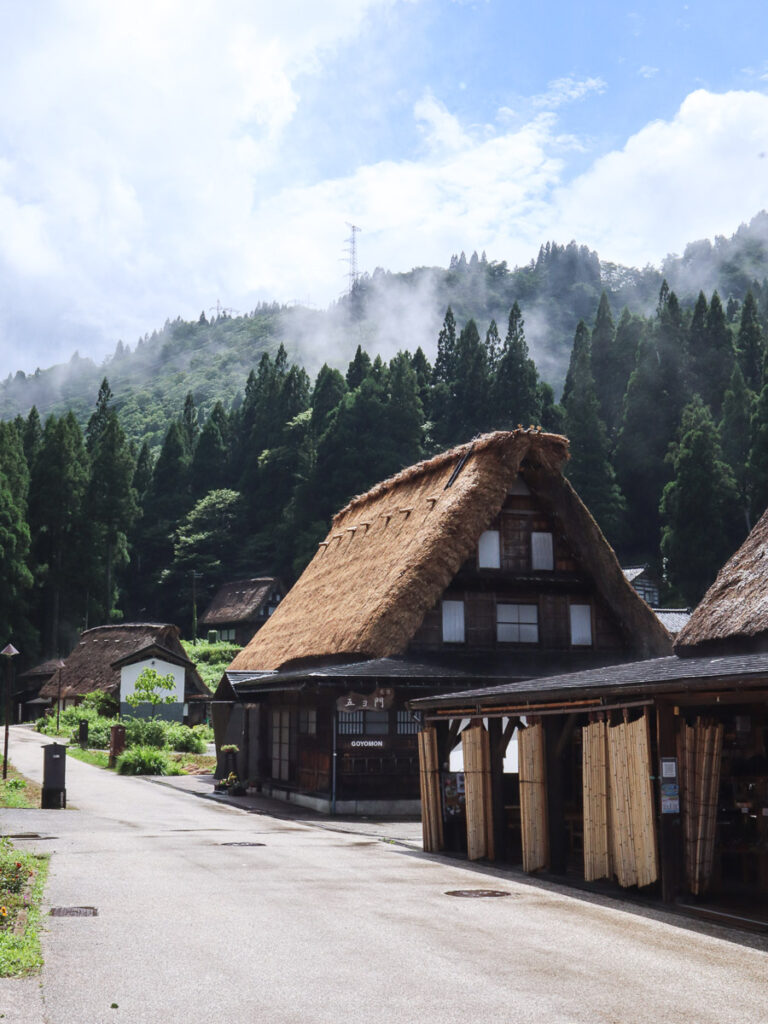
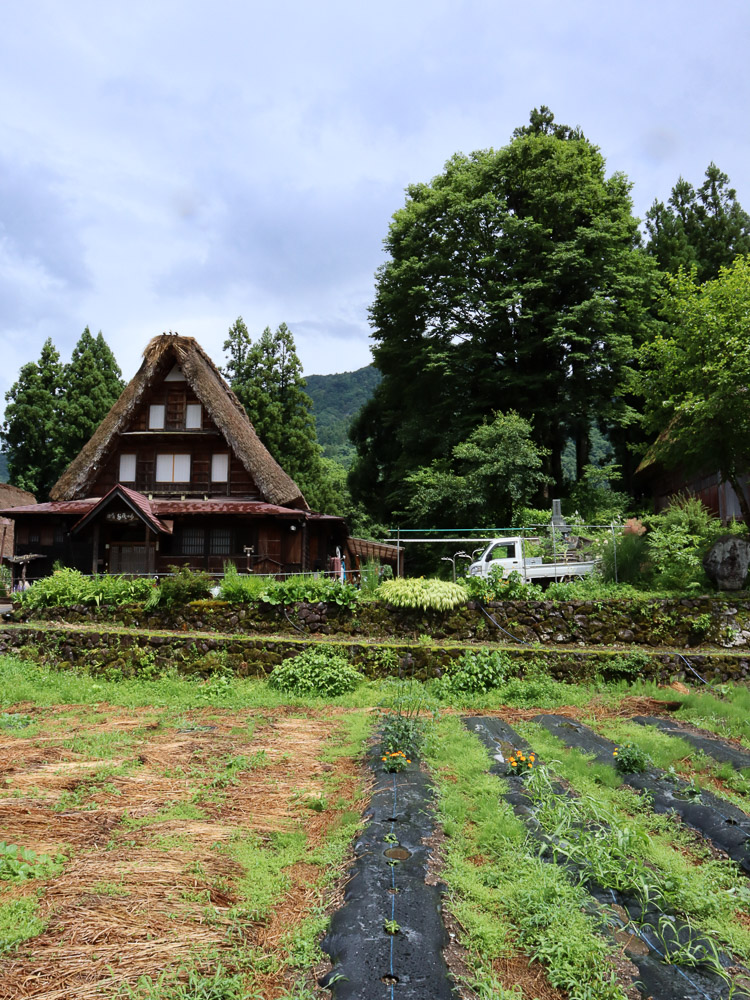
This place is located in Gokayama in Toyama Prefecture. It is very close to Shirakawa-go, in Gifu, as both places are located right on the edge of their respective prefectures.
Even though they are so close together, Ainokura is a lot less well-known, and there are a lot fewer tourists there. But fewer tourists also mean fewer shops and places to eat or drink, and the village is a lot smaller. If you are looking to see the Gassho-zukuri architecture, though, this place is perfect.
We went there around June or July in the summer season, and we were almost the only two people there for the entire duration of our stay; the other people we encountered can be counted on two hands. This reminded us of our visit to the quiet old town of Kumagawa.
With that said, there were a few tour buses that arrived when we were leaving, and it suddenly became quite packed, considering that the village is not that big.
Hida No Sato Museum
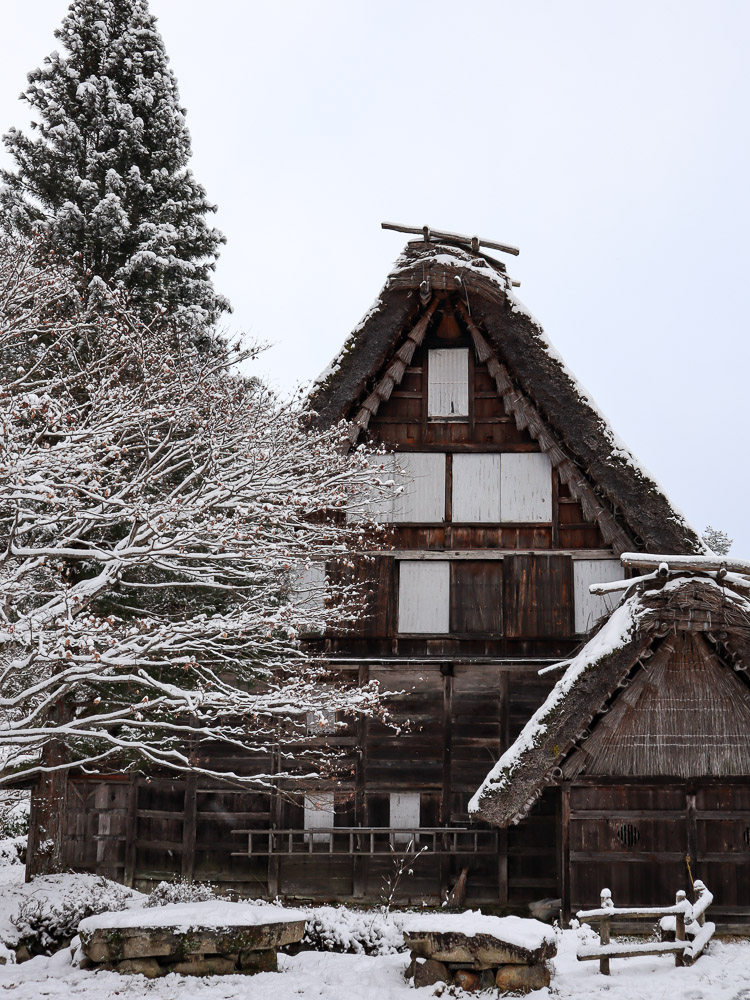
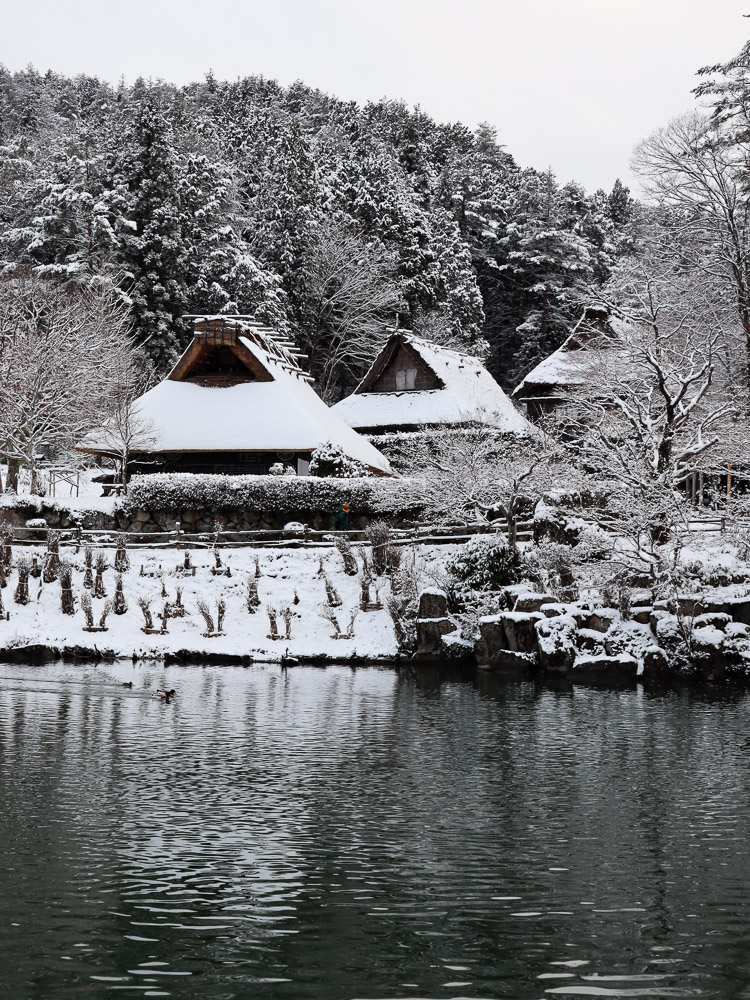
For those who may not want to visit a heavily touristy location, Hida no Sato Museum will offer a look at the village and its iconic architecture in a setting with fewer people. The open-air museum features real-life-sized buildings and their history, perfect for cultural studies.
Located a 45-minute drive away from Shirakawa-go, the museum’s architecture and the real village are of the same kind.
Kayabuki No Sato
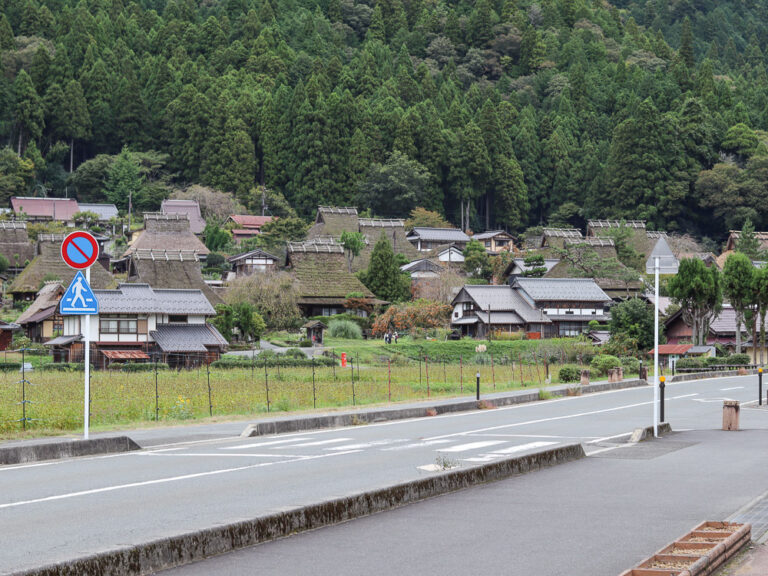
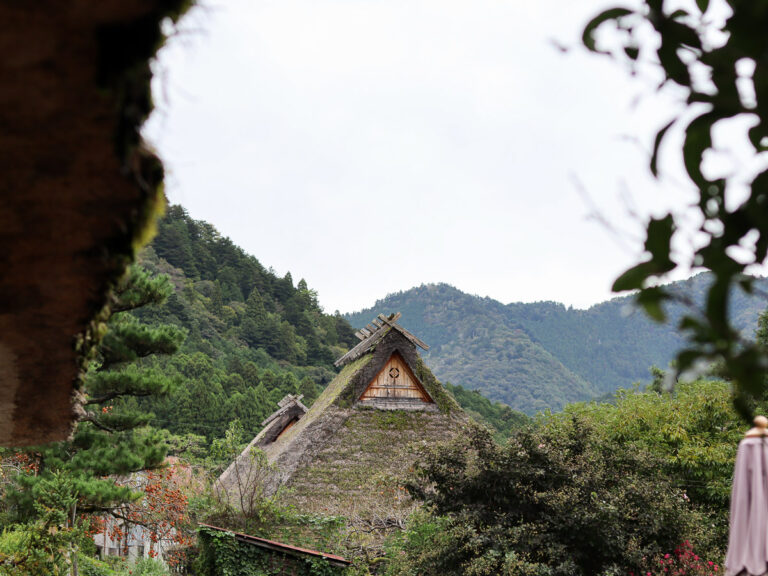
This place is located on the outskirts of Kyoto, a quieter, albeit famous spot in the area. The architectural style of the House is a little different, called Kitayama-type Irimoya-zukuri. For those looking for the picturesque aspect of travel and not for the cultural purpose exclusively of Shirakawa-go, this place offers a similar feel to the famous spot.
We also have a post that covers our journey from Toyooka to the area around there. If you are interested in that region, be sure to check it out.
For more places to visit in summer, escaping the heat to Kamikochi is also a great choice.
We hope you enjoy our recommendation,
Travel Tegami