
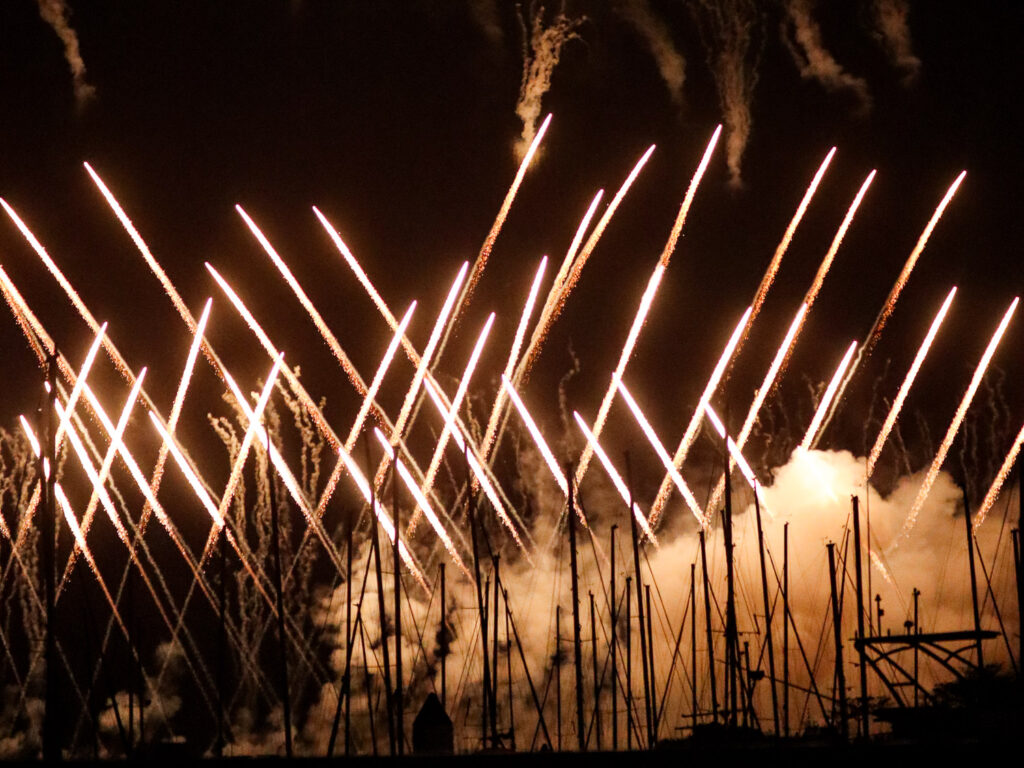
We will be introducing you to the Japanese fireworks festival as an idea for one of the activities you can do during your visit around the country. We will also share our personal experience and some tips, so you can get an idea of what to expect.
Dear Travellers,
We had the chance to go to some Japanese fireworks festival during the time we spent travelling in Japan, and we will show you why it is a good activity to do if you have the opportunity.
We will be using a specific festival, the Ryukyu Kaiensai Fireworks Festival, in Okinawa as an example of what to expect.
The Before : Preparing for a Firework Festival
As you may have expected, Japanese fireworks festivals starts at later evening, and the show begins when it actually gets dark. However, for the best experience, we recommend you go before it begins to choose your place and secure a good spot. For us, we went there around two hours before it actually started.
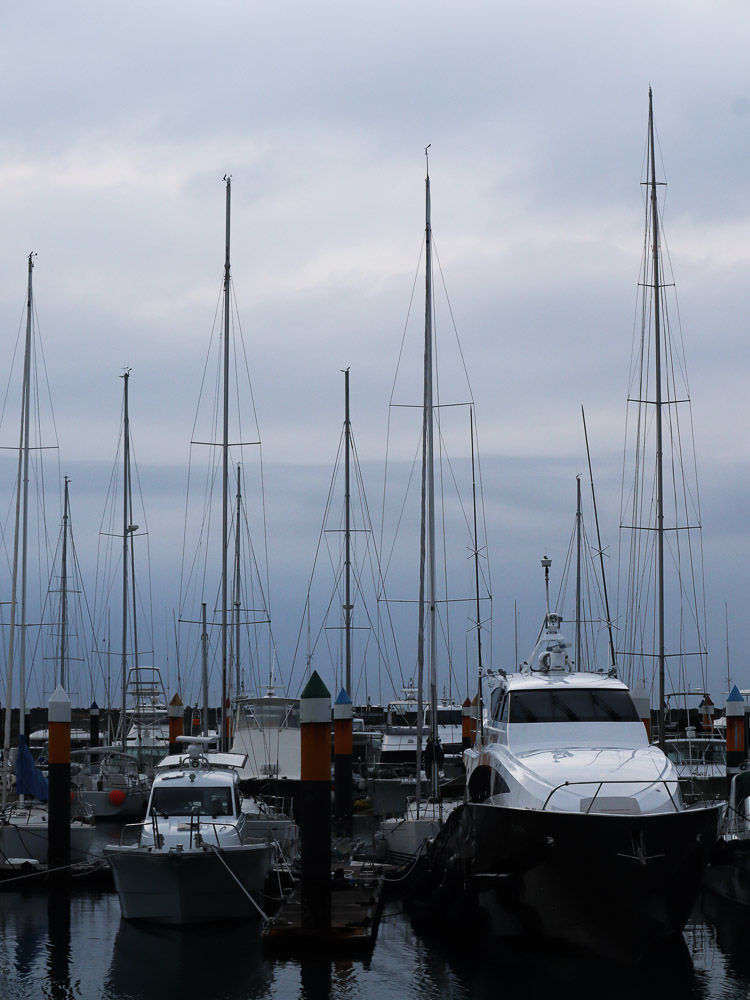
As fireworks can be easily visible from afar, you do not need to exclusively go to the spot where they are being held, and instead choose a spot nearby that offers a good view. For us, when we were in Okinawa, we chose to go a little further away in Ginowan Marina Park, which is not too far away and is actually a spot many cameramen go to set up their gear. The firework itself is held at Ginowan Seaside Park.
For the Ryukyu Kaiensai Fireworks Festival, there is actually a special zone close to the firework you can purchase a ticket to sit in the area. Here are some upsides and downsides of each option.
Sitting at the actual dedicated spots
The Upside: Hear the music better (synchronized with the firework show), the fireworks appear more ‘grand’ as you are closer and as it is intended to be seen.
The Downside: A lot of looking up from being close to it, Significantly Louder, additional price (only depending on the specific festivals, many do not have this).
Sitting at the other locations nearby
The Upside: Getting the full, wider view, not as loud, may be a bit less crowded (depending on whether the spot you choose is popular or not)
The Downside: If there is music as a part of the show, you may not hear it very well. It can be a bit of a gamble, as you do not know what to actually see from your chosen spot, and food stalls may be further away
We divided our group into two, one sitting at the special spot and the other at a popular place further away. What you see in the above comparison is from our real experiences.
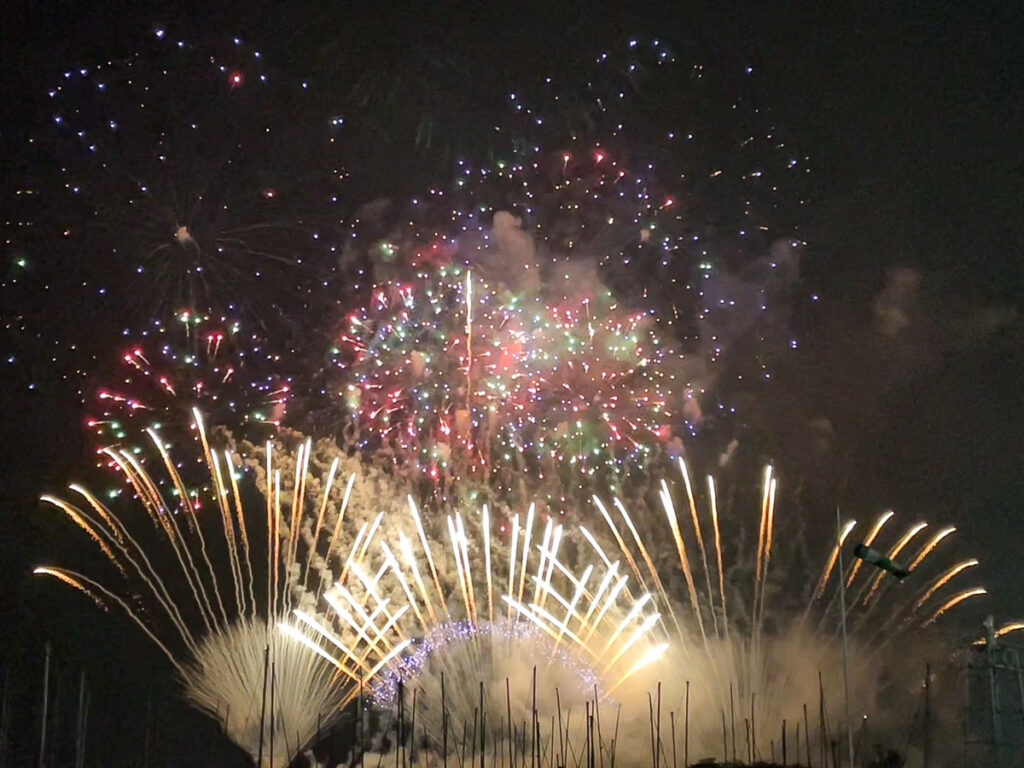
The firework show: Star of the Event
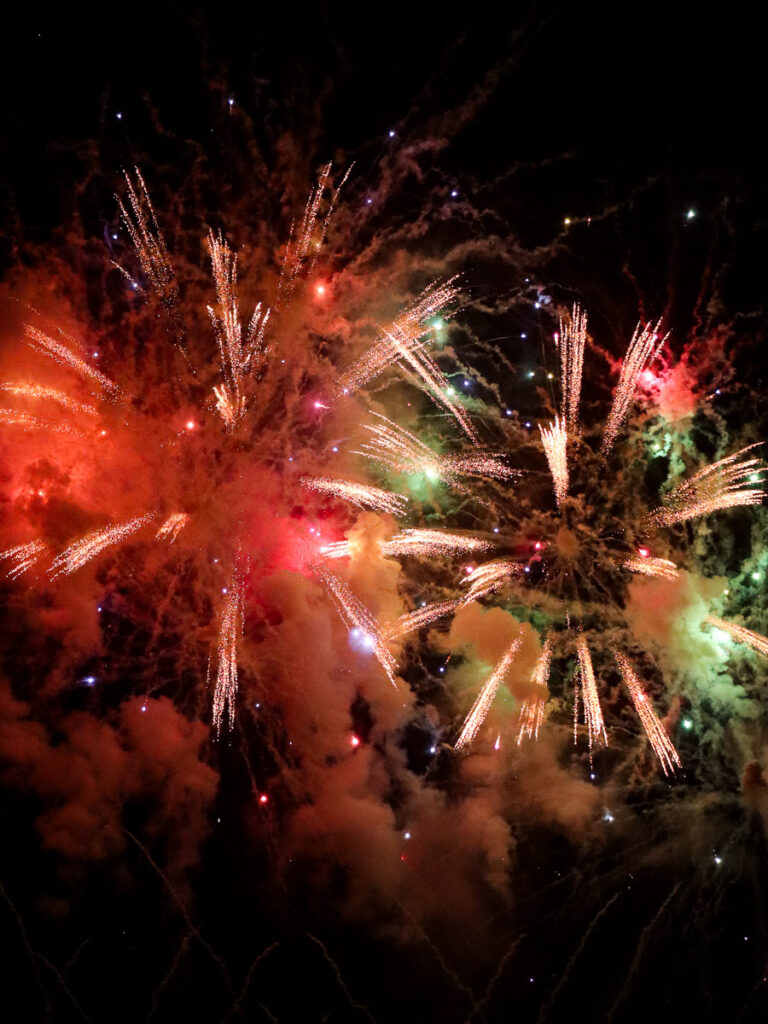
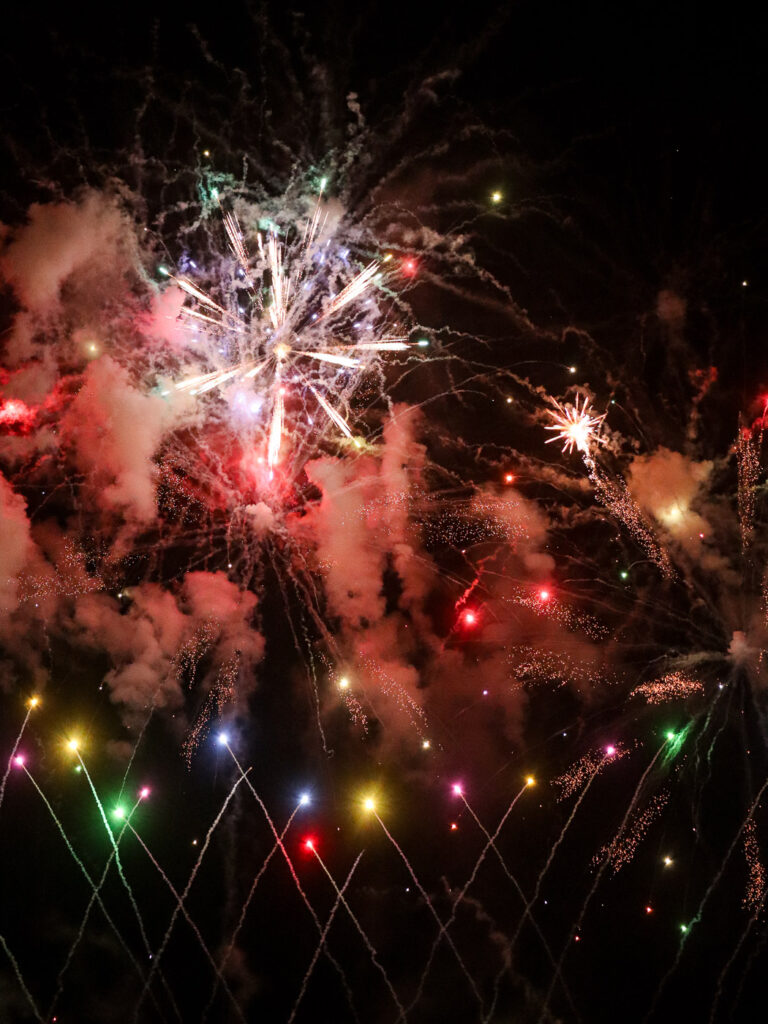
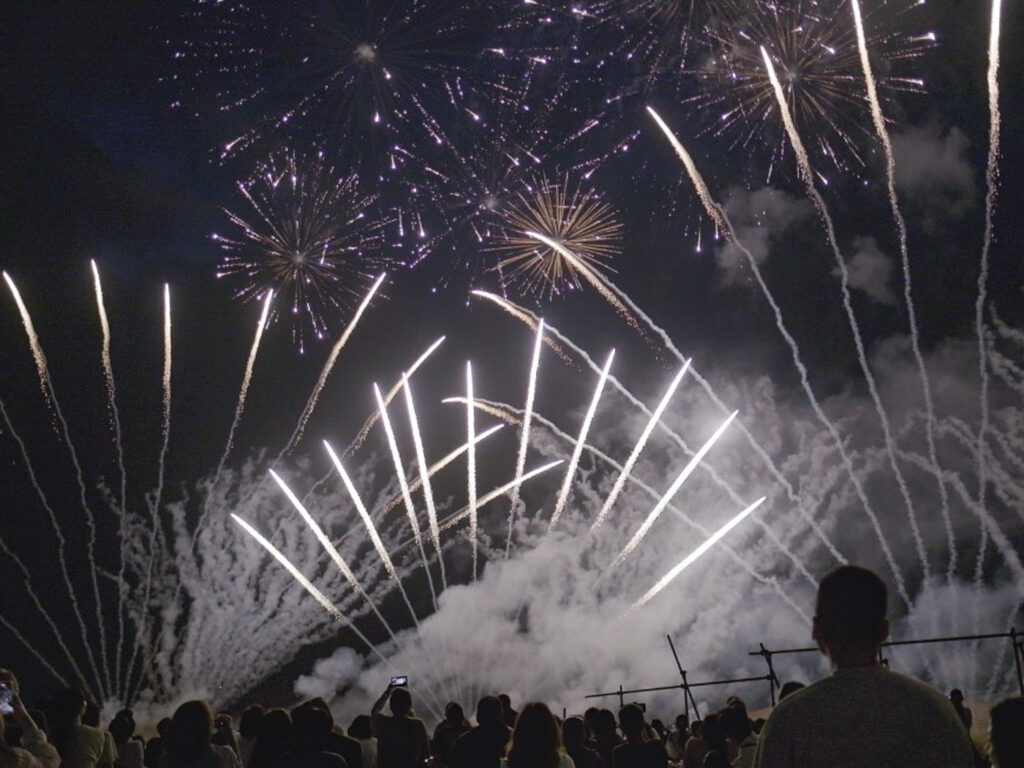
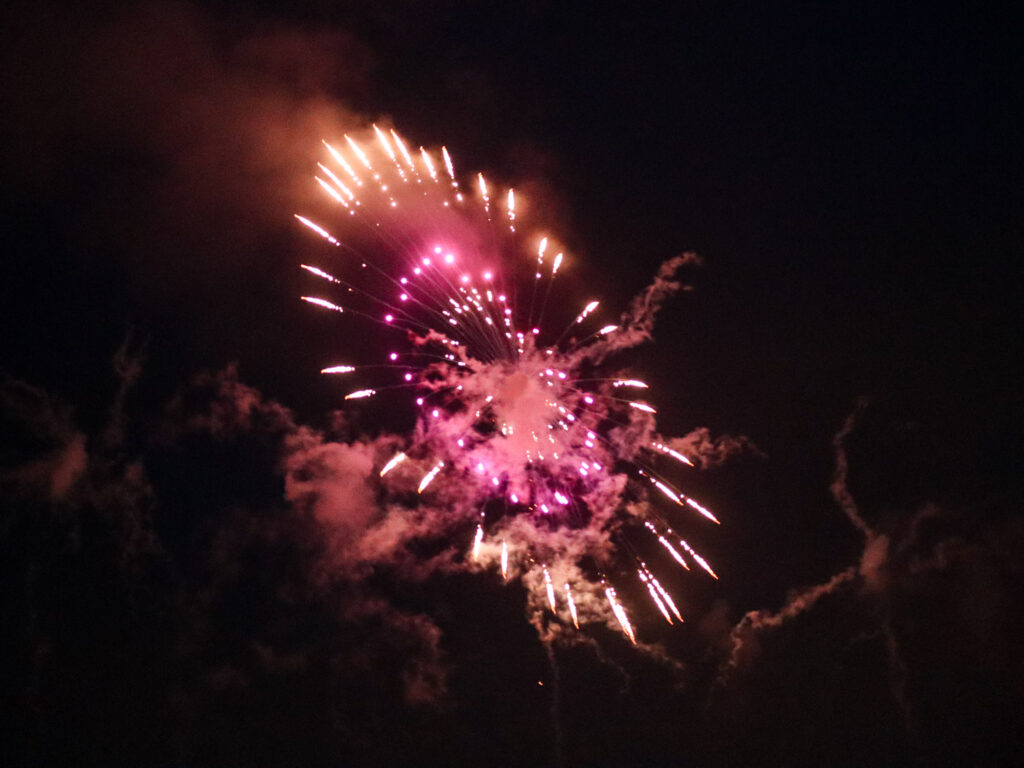
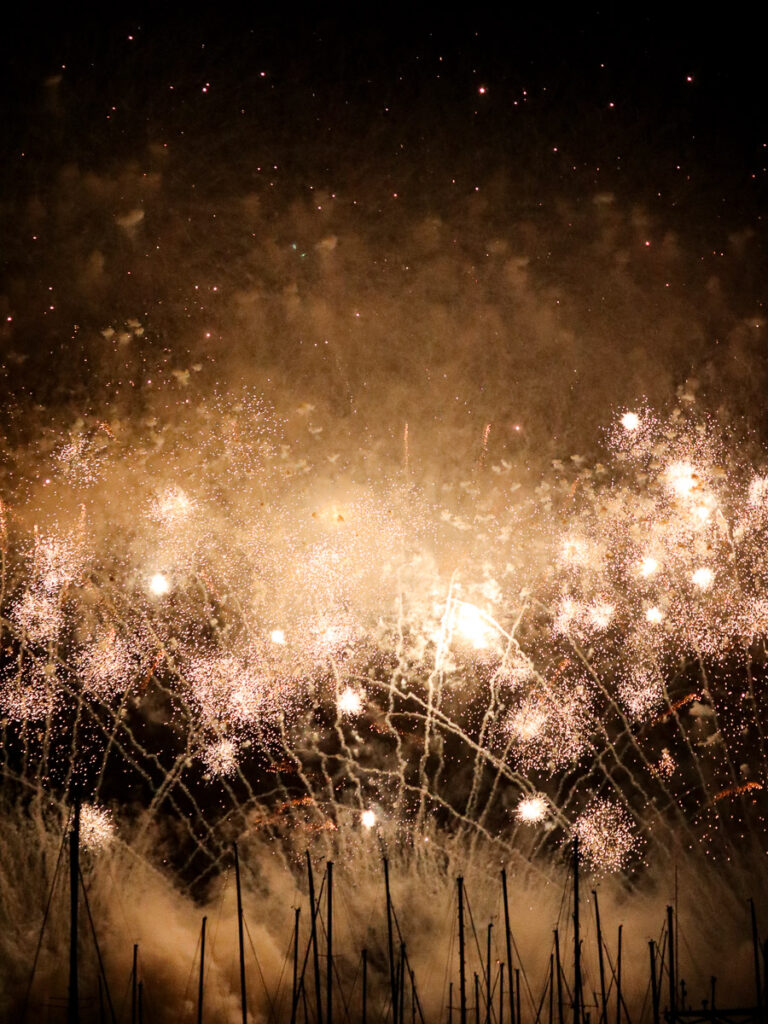
Now, for the actual show. It is simply impressive; of course, it depends on the individual shows as well, but Japanese fireworks festivals are likely on a different level than your home country’s (depending on the scale).
If you cannot really compare, think of a New Year’s firework. For us, the two places we are comparing to are Queenstown and Bangkok. The major firework festivals in Japan are more impressive if you consider the fireworks alone, removing things like the vibe, the other shows or concerts, etc., that usually come along with New Year festivals.
The Ryukyu Kaiensai Fireworks Festival in Okinawa, which we visited, includes a choreographed music program, like most other major festivals, providing a more tailored experience. You can expect the mainstream J-pop songs, ones that you might have heard, to be played; if we remember correctly, one of the songs at Ryukyu Kaiensai that year was from YOASOBI.
The amount of fireworks, again depending on the scale of the show, at Okinawa Ryukyu Kaiensai was 10,000, which is A LOT. The event was one of the biggest on the island and is considered one of the major shows; it is also known as “Japan’s earliest summer firework festival.” With this number, the firework lasts for a good one full hour of dazzling spark and music.
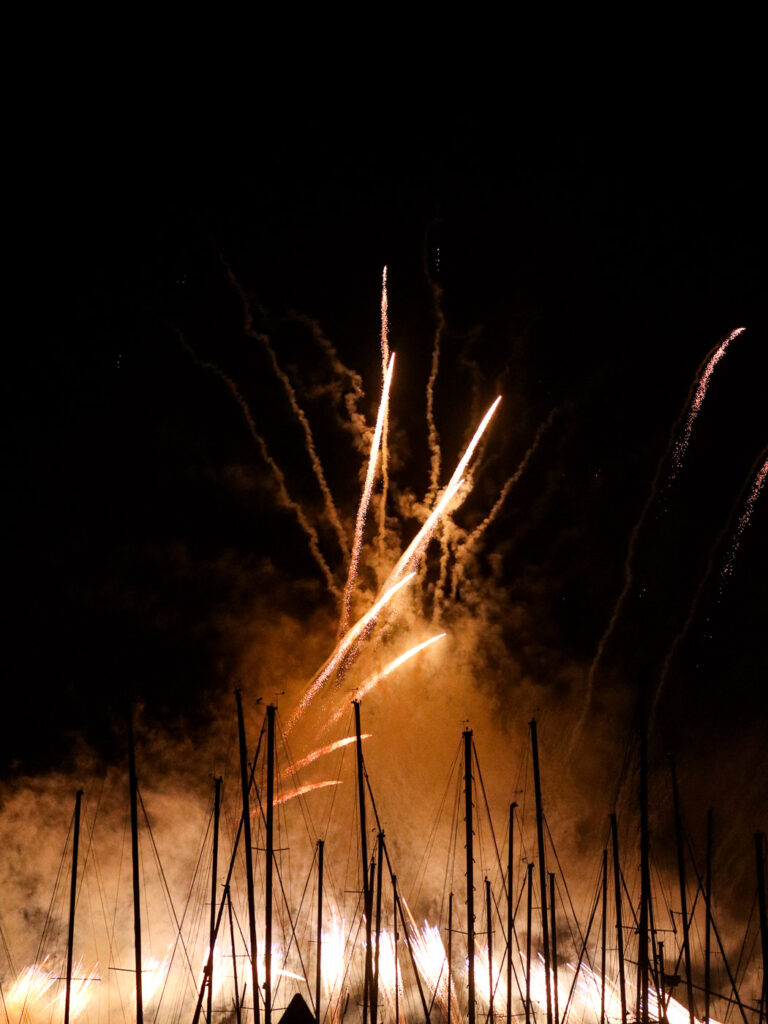
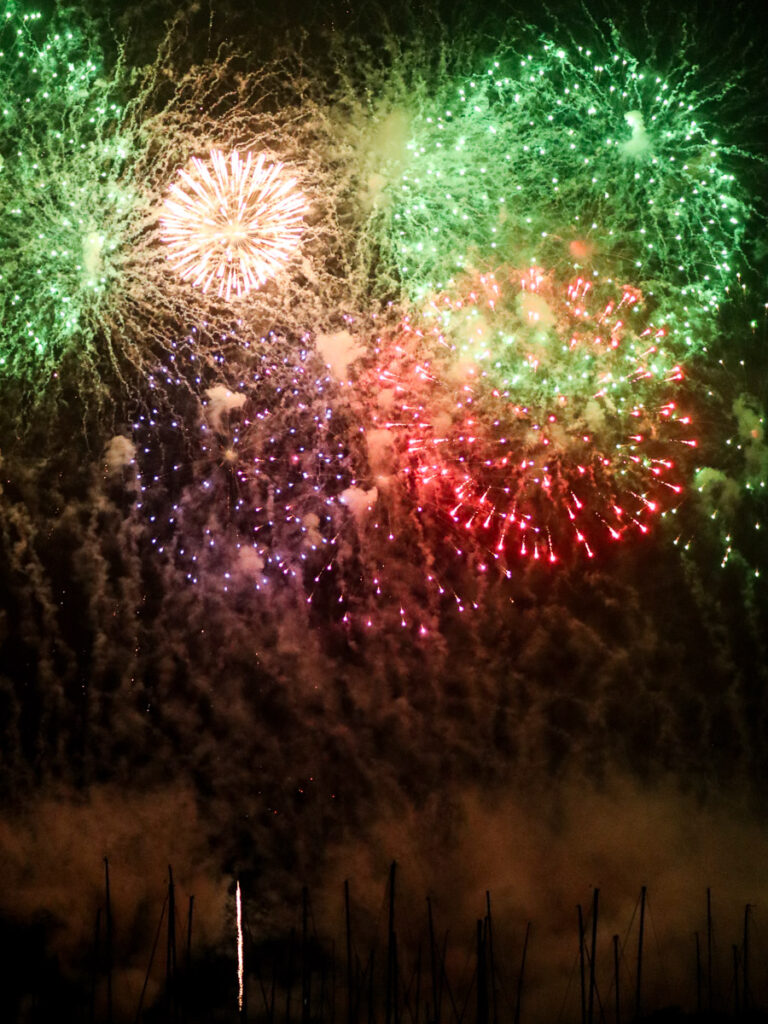
The surrounding: The Food, The Crowd, and The Culture
Do expect the area to be flooded with people, large crowds will be gathering both at the actual spot and the more popular locations to see the festival. The atmosphere will be lively, with lighting, the crowd’s voices, and the busy food stalls set alongside the show. Even at the popular places that people like to go to can be some vendors, not limited to only the spot (depending on each festival).
The food you can expect at the Japanese fireworks festival is things like yakisoba, hamburger, rice bowls (donburi), skewer meats, and more. You can actually fill your stomach there. Along with the main dishes, festival foods like ame ringo (sugar apple), cotton candy, chocolate bananas, and other small snacks and beverages will also be available.
Yukata are a major part of the culture; if you want to wear one, this is the perfect occasion. Although we would have to note that the one in Okinawa we are using as an example has fewer people who wear them, many other festivals do have more.
The Important Tips and Things You Should Know
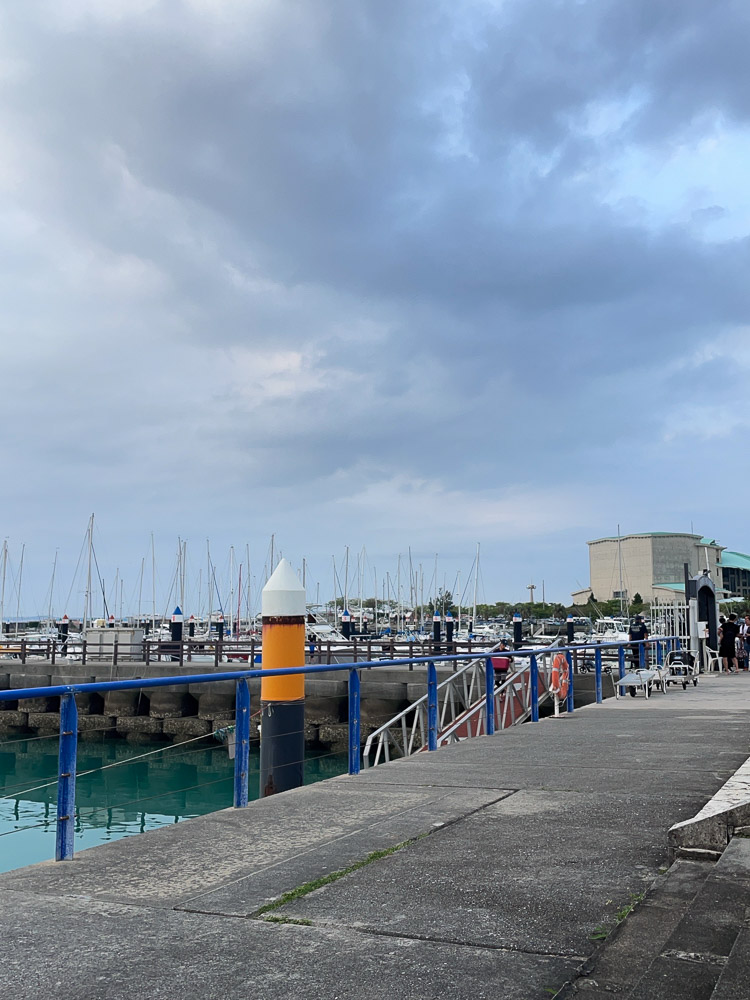
With a lot of people, crowded public transportation follows, as well as packed nearby carparks. Both before and after the show, there will be a lot of people rushing to get there and get home. They would likely provide extra services like buses, but it will still be tight. We recommend the solutions and tips below.
Arriving early to the festival
It does not have to be two hours early like we normally do, but earlier is better. Securing a good spot to sit, like a small step that does not block a path, or on some slope, is better than standing for an hour.
Leaving early before everyone does
Look up how long the festival you are going to is going to last, or what time it usually ends, and leave a few minutes before. We do actually see quite a group of people start leaving around 10 minutes before it ends.
For the best result, try to leave even earlier. Of course, you will miss some of the show, but it might be better for you if you do need to use public transport.
Staying the night at a walkable distance
This is probably one of the best decisions we made: Booking a hotel or an Airbnb around the area is a great choice for avoiding the crowd, which is also our preferred option.
We would sometimes walk 20 minutes or more to our accommodation instead of squeezing into a train or bus. It is not the most pleasant thing to walk in the summer’s heat, but at night, we would say it is normally quite comfortable at a slower pace.
Try not to drink too much water
Walking around, finding a toilet in the crowd, or queuing for one is never the best scenario. Try to go to the toilet a good amount of time before and, if you really need to, before the fireworks show ends.
Our recommendation
If you are looking for things to do in Japan, we can simply say that going to a Japanese fireworks festival is very well worth it, and we recommend you try to go to one. If you are going to Okinawa during the day when the festival is held, we would also recommend that you go to the Ryukyu Kaiensai Fireworks Festival.
We do not normally plan our trips specifically for a Japanese fireworks festival, but we can even recommend it if you want to see a certain event, and book your trip specifically to accommodate it. For us, we simply look up afterwards if there are any festivals being held during our stay.
We also provide our full itinerary in Okinawa, where we visit in the suburb of the prefecture. Our own way of travelling, Airbnb and hotel stays, and more.
If you are interested in other activities or places we do or go to, you can explore a perfect travel day in Toyooka to Kyotamba, see what to do in Obama, how to plan a visit to Kobe from Osaka, or a quiet visit to an Old Town at Kumagawa.
With love for travelling,
Travel Tegami