

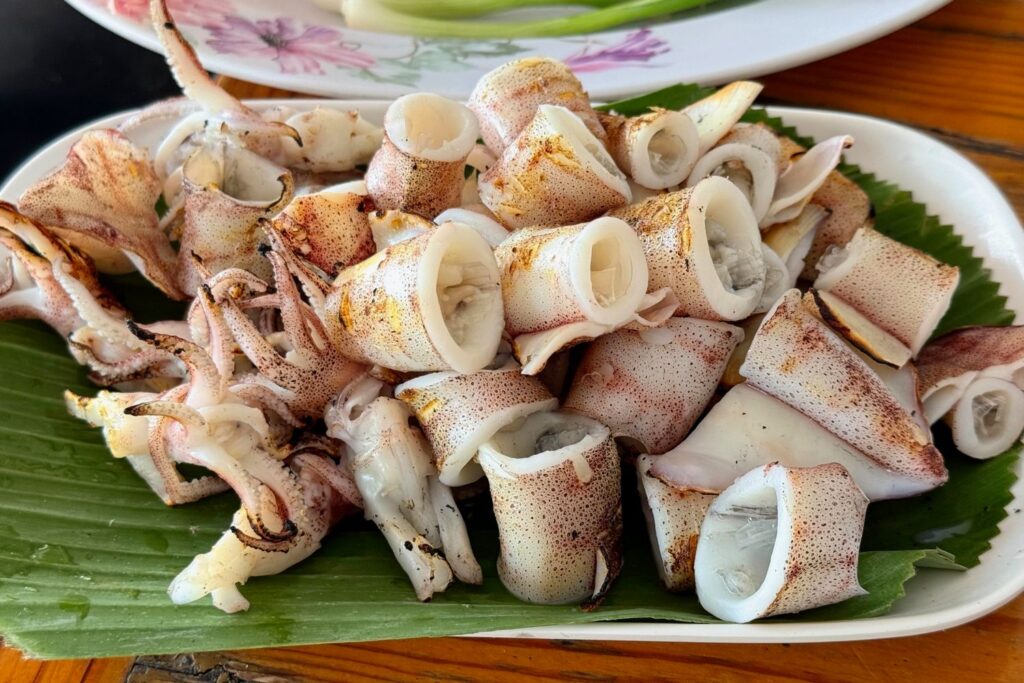
Staring at a menu that seems to go on for a hundred lines does not exactly make deciding easy. That is sometimes what it can feel like when trying to choose what to eat at a Thai seafood restaurant.
As Thai locals, we will introduce you to some beginner-friendly dishes to consider ordering when you visit a seafood restaurant in Thailand.
Introduction
Dear Travellers,
As travellers ourselves, we often look for what to eat based on what a destination is known for. Getting to eat the right thing in the right place is always one of the pleasures of travelling, and as Thai people, we would also like to introduce you to what we naturally order when visiting beachside towns or islands around Thailand.
In this list, we aim to give you a good “starter” selection of seafood dishes to order, especially if you are new to Thai-style cuisine.
Note: We are not claiming that every dish on this list is originally Thai, but rather that these are dishes we commonly enjoy eating in Thailand.
Although we call this a beginner-friendly list, many of these dishes are also among the most commonly ordered and well-loved choices. They are the kinds of dishes we grew up seeing our parents order for us as children, and today, they are still what we naturally gravitate towards when travelling with friends and family.
Staple Seafood Orders
These are the dishes that tend to appeal to almost everyone, with relatively familiar and easy-to-enjoy flavours. They are often our first picks when no one has a particular craving in mind or when we are not quite sure what to order.
In a group of friends, you can almost be certain that someone will suggest at least one of these dishes every time.
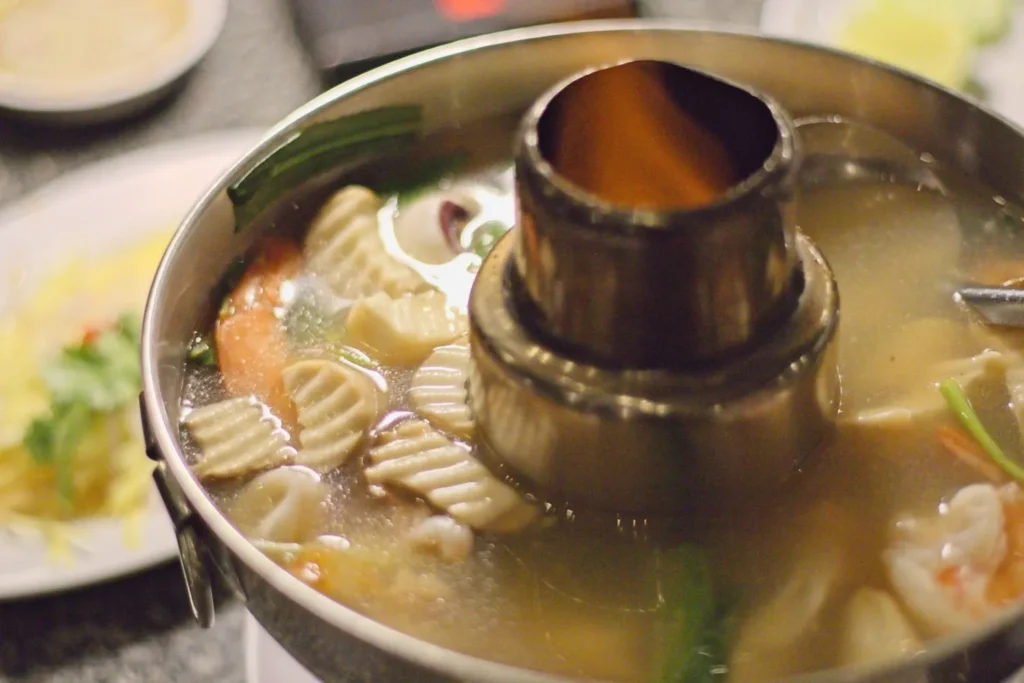
Probably the most popular choice, and deservedly so. Tom Yum has a straightforward but distinctive flavour: salty, spicy, and sour, with an aromatic blend of herbs and seasonings. We Thais enjoy this dish very much too, and it is one of the safest dishes to order for a group, as there is a good chance that everyone at the table will be happy to eat it.
There are two main styles you will commonly see: Nam Khon (น้ำข้น), with a richer and creamier broth, and Nam Sai (น้ำใส), the clear-broth version. Personally, we would recommend starting with the clear version.
Tip on eating: The broth is the main star here. Apart from the meat, seafood, and possibly mushrooms, many of the herbs and aromatics are there mainly to flavour the soup rather than to be eaten.
Our simple rule is: eat what you immediately recognise as edible. If you have to stop and examine something for a moment to figure out what it is, it is probably there to flavour the broth.
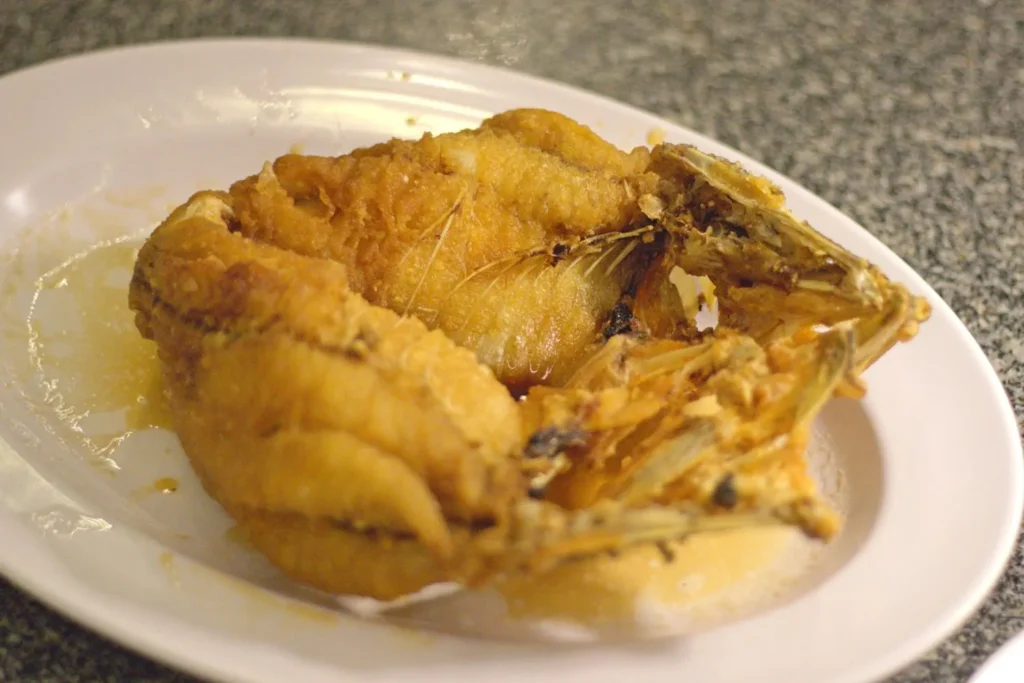
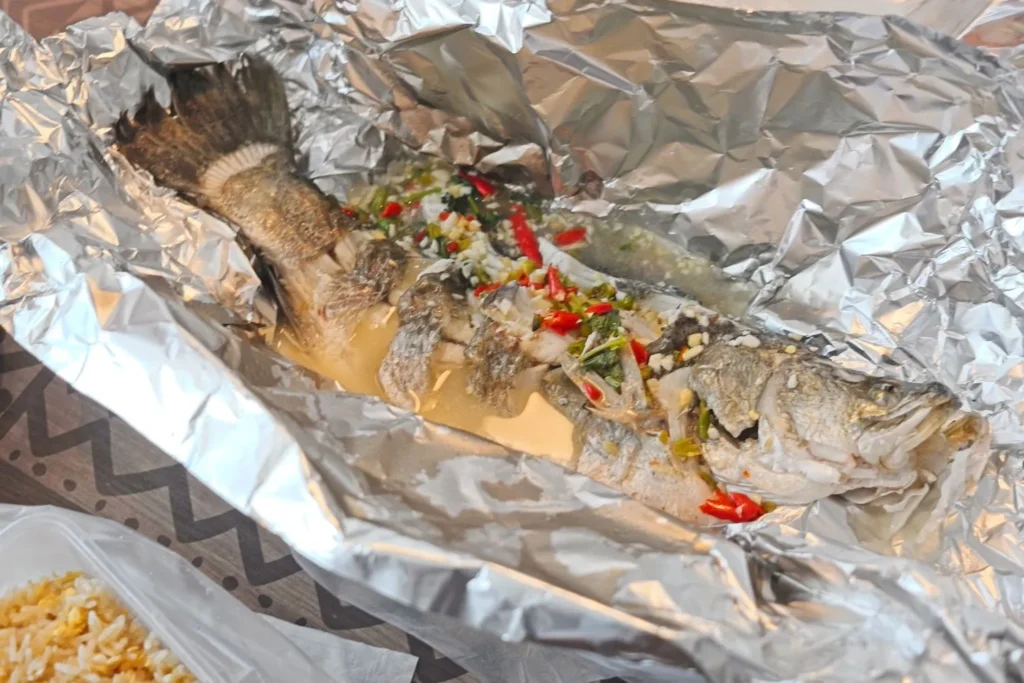
An obvious choice, and a good place to start if you are unsure what to order. Among the different fish available, sea bass is probably one of the most common choices and also the one we would recommend.
There are many ways it can be prepared, but two of our favourites are fried with fish sauce and steamed with lime and chillies. The fish-sauce version is probably the most straightforward choice, aside from simply ordering the fish fried as it is.
Fish dishes are most commonly served whole, and one fish is usually enough to share between up to five people, assuming you are ordering several other dishes for the table as well.
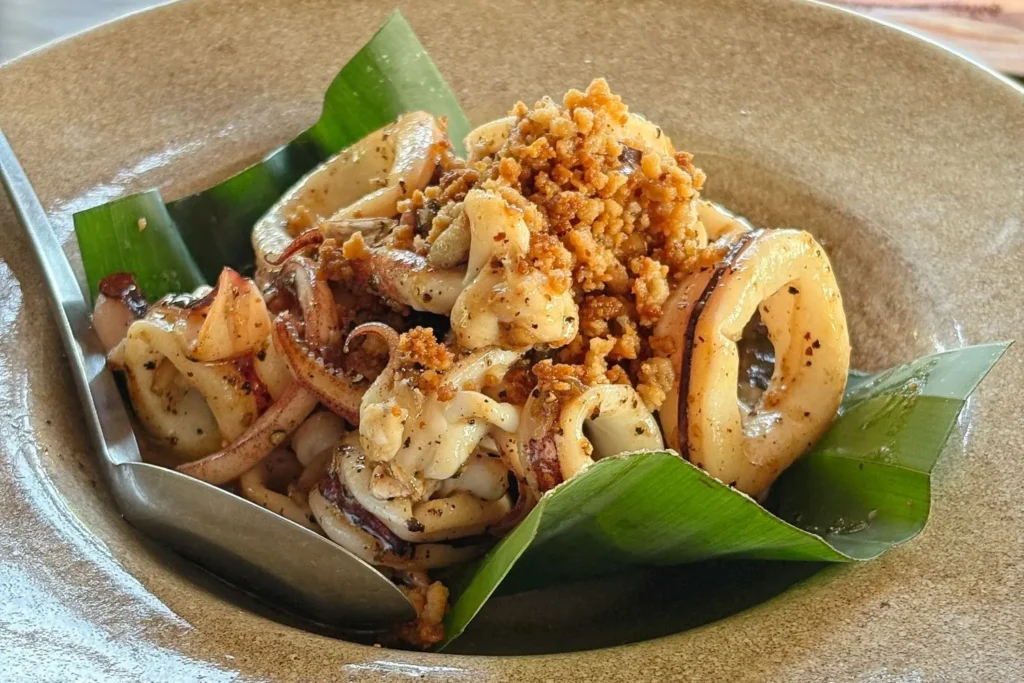
For stir-fried seafood, squid is one of the most common choices. Preparations we would recommend include stir-fried squid with garlic, squid ink, or salted egg.
For clams, our pick would be stir-fried clams with roasted chilli paste (หอยลายผัดพริกเผา), another very familiar dish at Thai seafood restaurants.
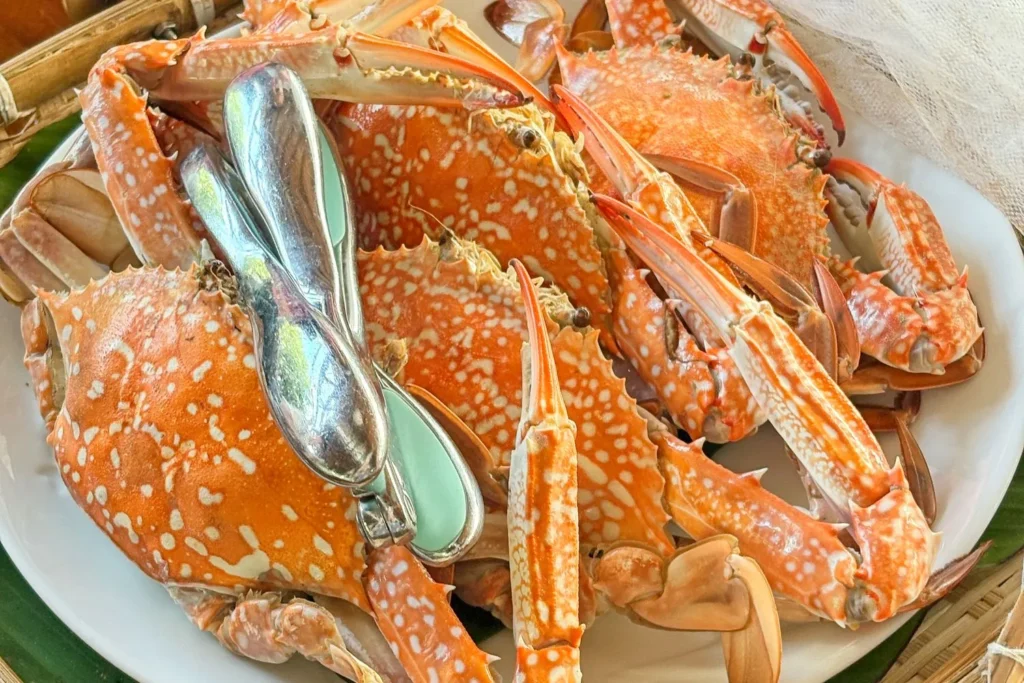
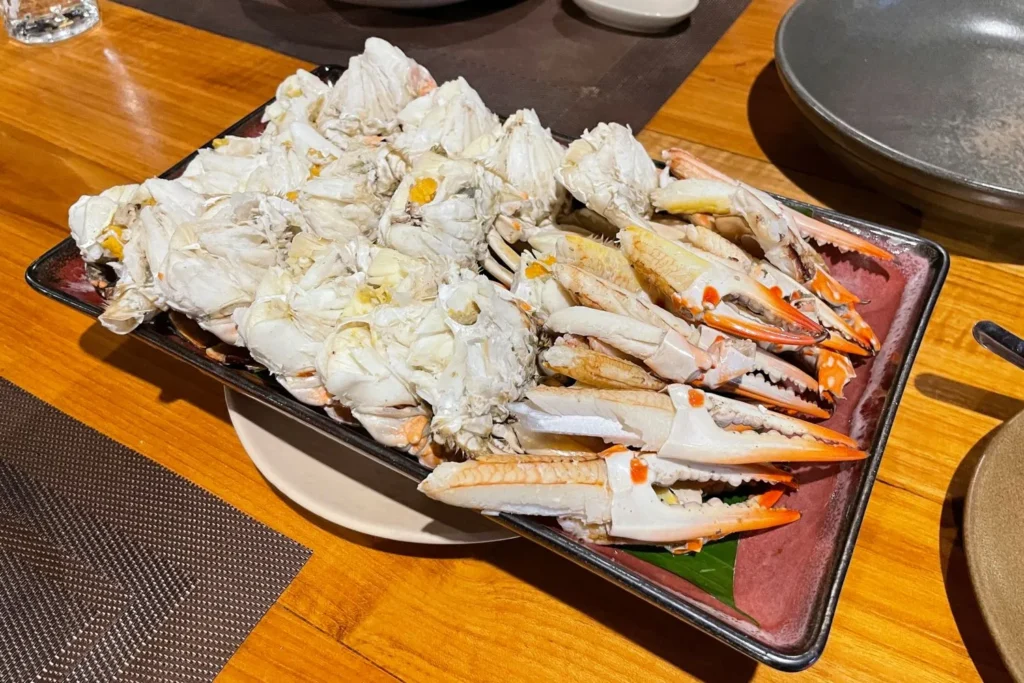
Steamed blue crab, to be more specific, is widely enjoyed in Thailand and is well worth trying. It is most commonly served whole, so you will have to crack and pick the crab yourself. It can feel a little difficult at first, but once you learn the basics, it becomes much easier. Just be prepared to get a little messy.
If you are lucky, some restaurants will prepare or partially crack the crab for you, making it much easier to eat.
Female crabs are particularly desirable when they are carrying roe. As you open the shell, you may find the yellow-orange roe inside, which is one of the parts we especially enjoy.
We normally eat steamed crab with Thai seafood dipping sauce, if you can handle the spiciness.
Compared with some parts of Japan, where blue crab may be treated more as a specialty or delicacy, in Thailand we tend to enjoy it in a much more casual way.
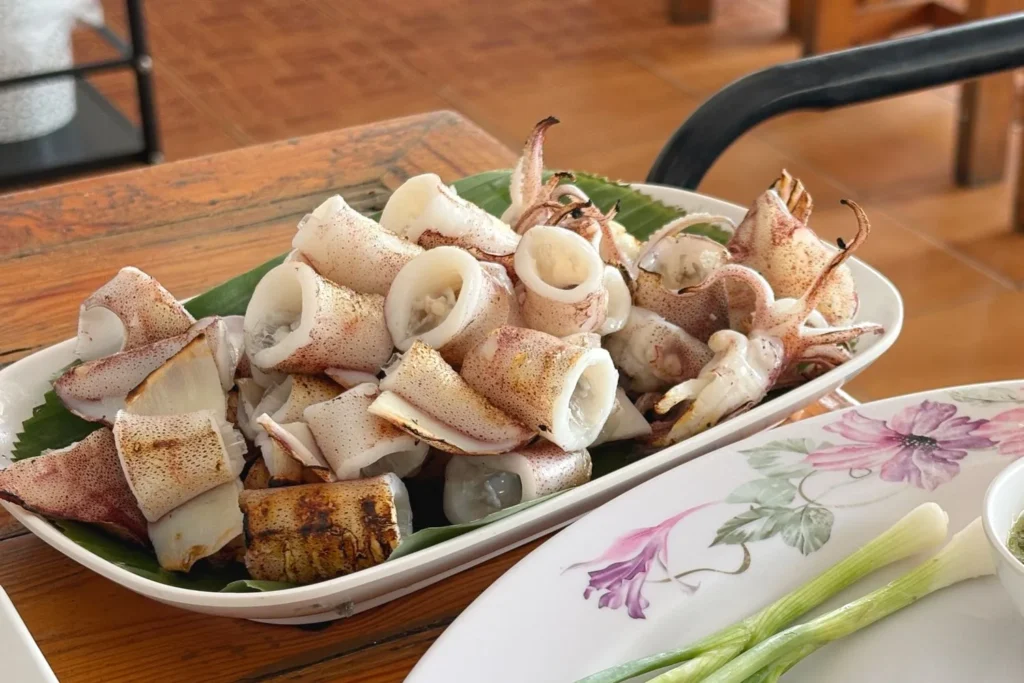
Similar to crab, other shellfish and squid are also popular choices. We would recommend grilled prawns, squid, and mantis shrimp.
Blood cockles, not necessarily beginner-friendly, are another favourite if you do not mind their appearance. As they are often served only lightly cooked, we would recommend ordering them from a restaurant you trust and making sure they are properly prepared, as shellfish can carry a higher risk of foodborne illness.
Again, we usually enjoy grilled seafood with Thai seafood dipping sauce, which will often come with the dish.
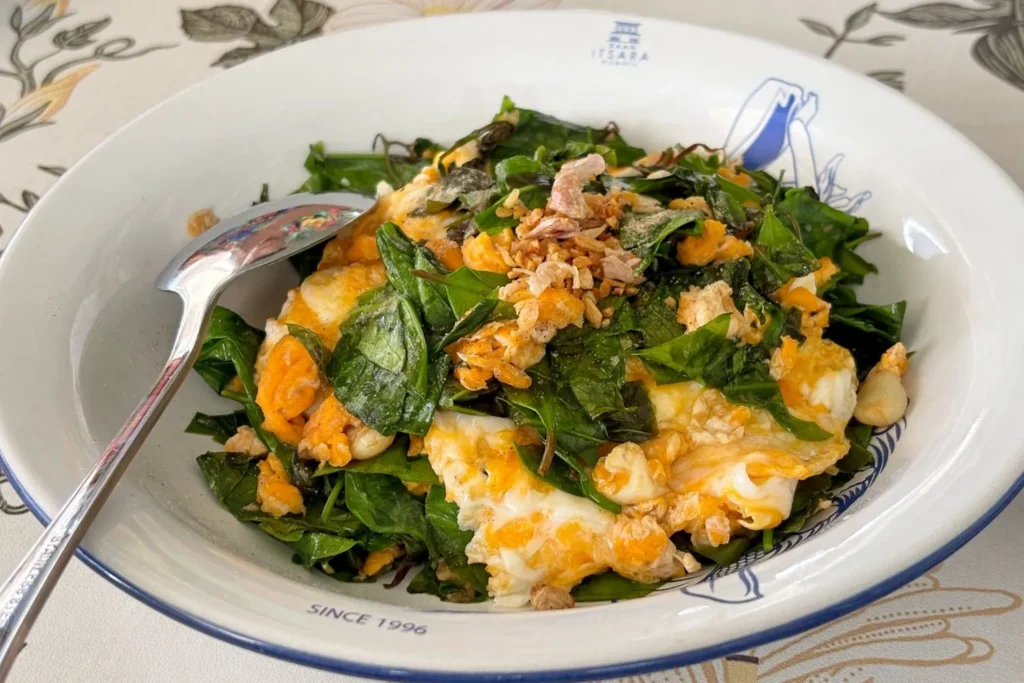
Not exactly seafood, but for us, a table does not feel quite complete without at least one plate of stir-fried vegetables. A dish filled almost entirely with vegetables may not sound like the most exciting thing to order, but these are surprisingly flavourful and work especially well alongside the richer seafood dishes.
A few we would recommend are:
- Stir-fried cabbage with fish sauce (ผัดกะหล่ำปลีน้ำปลา)
- Stir-fried morning glory (ผัดผักบุ้งไฟแดง)
- Stir-fried melinjo leaves with egg (ใบเหลียงผัดไข่)
Kid-Friendly
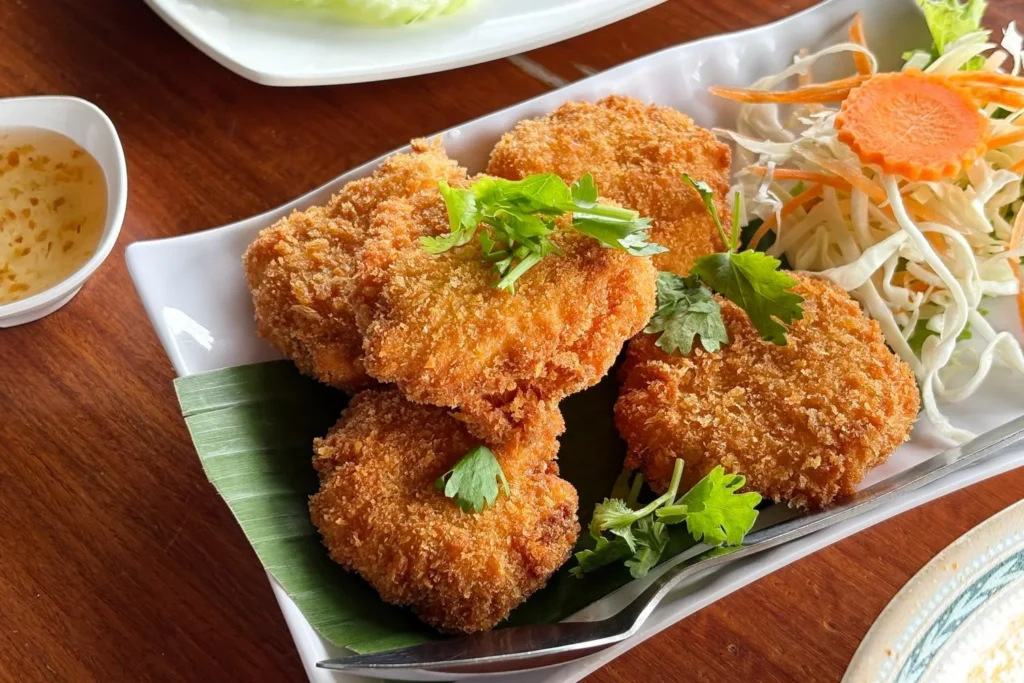
Growing up, this was one of our favourites, and the same was true for many of our friends. At its simplest, the dish is made from minced shrimp, a little seasoning, and finely ground aromatic herbs that blend into the mixture without standing out too strongly.
The flavour is relatively mild and clean, with a crisp outer layer and a soft interior.
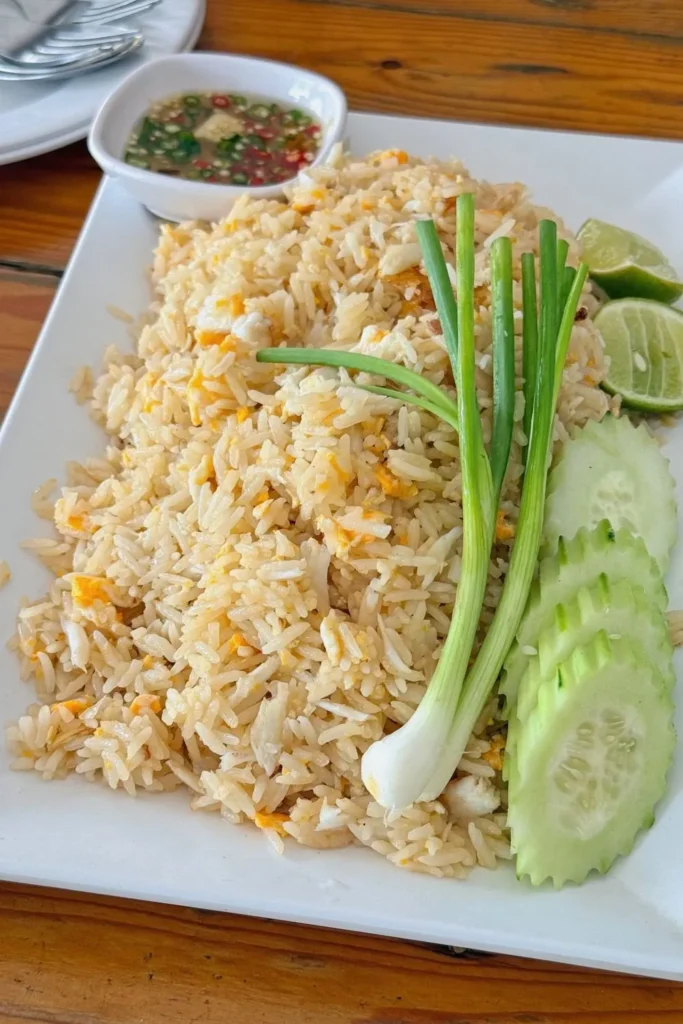
Fried rice is one of the most basic staple dishes, but we include it here because it is also one of the easiest to customise. Anything you do not want can usually be left out. One common request is “no vegetables,” which will often mean leaving out the spring onions, while an even simpler version with just egg and rice is also possible on request.
At a seafood restaurant, one of the most popular choices is probably crab meat fried rice.
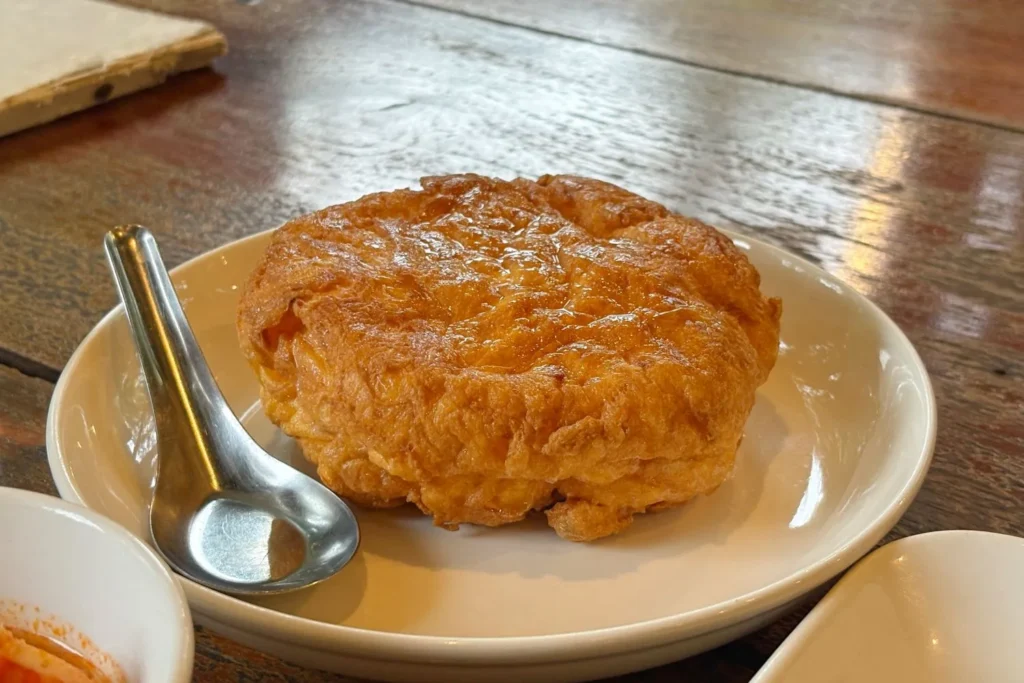
Not necessarily a seafood dish on its own, but a very versatile one. Thai omelets are often made with crab, shrimp, or other meats mixed into the egg, making them an easy addition to a shared meal, especially when dining with children.
The More Local Choices
This is where the flavours start to become a little more distinctive. Some dishes, such as som tum and yum, may already feel relatively familiar, while others, like gaeng som and certain curry-based dishes, have much stronger and more particular flavour profiles.
Many of these are the kind of dishes you need to try at least once to know whether you like them. Some may even take a little time to get used to before eventually becoming a favourite.
Not every Thai person enjoys every Thai dish, nor would we order all of them every time. But many are widely loved, and some are especially popular in particular regions of Thailand. Most of us probably have at least one or two personal favourites among them.
Some we would recommend:
- Gaeng Som / Spicy Sour Curry (แกงส้ม)
- Sun-Dried Squid (หมึกแดดเดียว)
- Pad Cha (ผัดฉ่า)
- Oyster Omelet, soft or crispy (ออส่วน)
How We Would Order
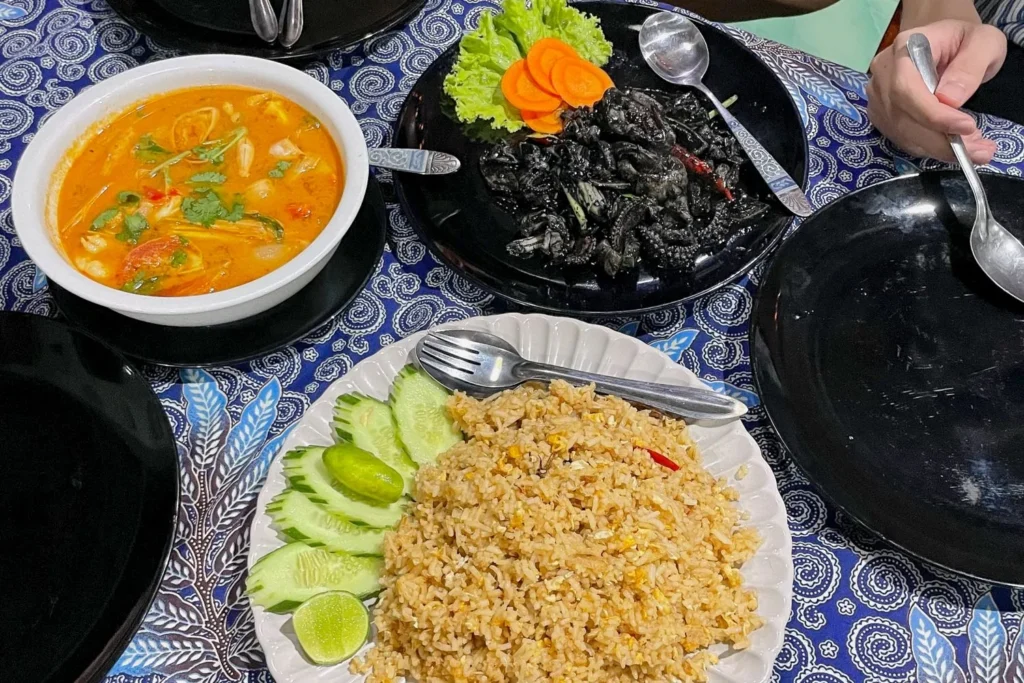
Thai eating culture revolves around sharing, so most dishes you see on the menu are designed for the table rather than for one person. Many are also meant to be eaten alongside rice.
Start with your choice of rice. At a seafood restaurant, fried rice is a particularly common choice. From there, the number of main dishes depends on how much you want to eat, but as a rough guide, you can consider ordering around one dish per person.
A typical order for us might include one soup, such as Tom Yum or another curry-based soup; one fish dish, such as fried or steamed sea bass; one seafood stir-fry, perhaps squid or prawns with garlic, salted egg, or curry powder; one grilled seafood dish, such as shellfish or squid; and occasionally a plate of stir-fried vegetables.
Other dishes such as Yum and Som Tum are also very popular, although their stronger flavours may take a little more getting used to.
For a group of four to five people, one rice dish, one soup, and around three other shared dishes will usually be a good amount.
A Starting Point for Thai Seafood
What we have recommended here is by no means everything you should try, nor is any of it a must-order. Rather, these are dishes that are widely enjoyed by Thai people and that we think make a good introduction to a Thai seafood meal.
There are many more dishes worth trying that we could not include here, and once you become more comfortable with the flavours, we would encourage you to explore beyond this list.
Across Thailand, seafood restaurants tend to share many of the same familiar dishes, so you will likely find most of what we have mentioned whether you are in Hua Hin, Pattaya, or on islands such as Koh Samui.
There are, of course, regional differences. Certain preparations are more common in particular provinces, while some species of fish and other seafood may be more readily available or at their freshest in certain areas.
We hope you will enjoy,
Travel Tegami