
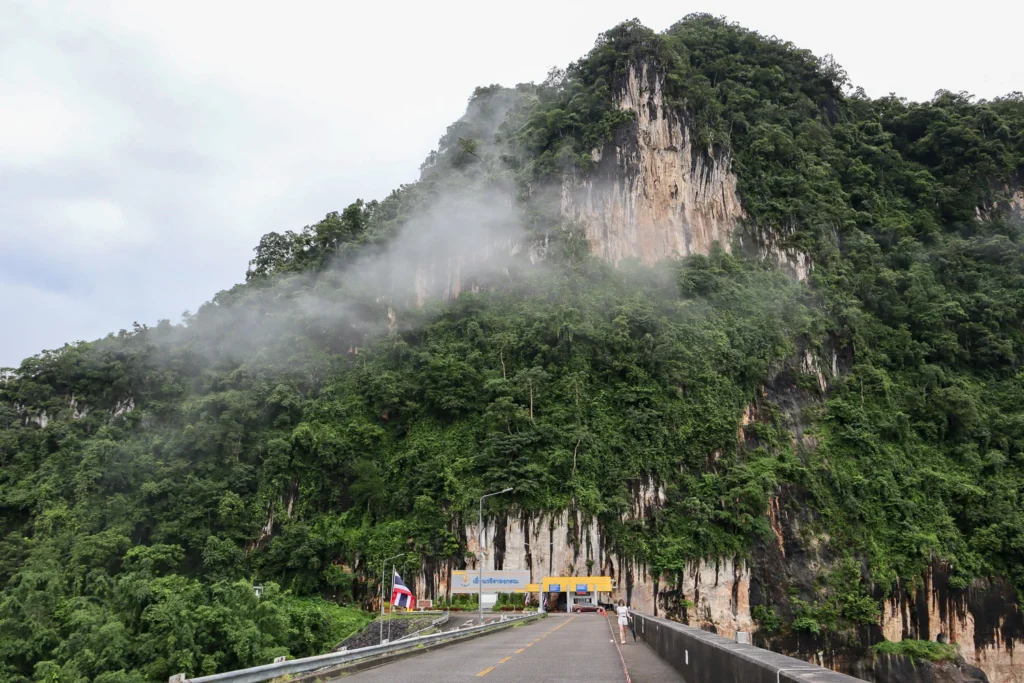
We spent almost a week exploring Kanchanaburi at a slower pace, discovering the waterfalls, dams, river attractions, and more of what the province has to offer. In this itinerary, we’ll take you through the route we followed and the hotels we stayed at along the way.
We’ve included only the places we genuinely think are worth visiting, along with a few practical notes on driving to and around Kanchanaburi, what to eat, and what the province is like during the rainy season.
Our 6-Day Kanchanaburi Itinerary at a Glance
Trip length: 6 days / 5 nights
Starting point: Bangkok
Transport: Self-drive (car or motorbike)
Season: Suitable for all seasons and adjusted to account for the rainy season
Main areas: Kanchanaburi Town, Erawan, Sai Yok, Baan Tao Taan
Pace: Relaxed road trip with several hotel changes
Accommodation: mid-range to luxury stays
Day 1
Bangkok → Mueang Kanchanaburi
Drive from Bangkok, A visit to a Retro City, Riverside hotel
Day 2
Mueng Kanchanaburi → Tha Kradan (Erawan)
Erawan waterfalls, Srinakarin Dam, Cafe stops, Local Diner, Floating hotel
Day 3
Tha Kradan → Death Railway
The Death Railway, Animal Feeding, Historic Kingdom, Local Diner
Day 4
Death Railway → Sai Yok (National Park)
Scenic Cafe Stops, Popular Diner, River Floating Hotel Experience
Day 5
Sai Yok → Thong Pha Phum → Mueang Kanchanaburi
Rural Scenic Spot, Dam visit, Sai Yok Noi Waterfall, Wellness Stay
Day 6
Mueng Kanchanaburi → Bangkok
Local Diners, Cafe Stop, Souvenirs
Why we think six days is a good duration to travel Kanchanaburi
Even though Kanchanaburi may still be known mainly for a few major attractions—and is not necessarily a place many Thai travellers choose for a longer trip—there is actually much more to explore than you might first expect. From waterfalls and mountains to caves, dams, scenic cafés, local cuisine, and more, the province has a surprisingly wide range of places to discover.
We had visited Kanchanaburi before for a shorter three-night stay, and at the time, we felt that we had missed many of the places we wanted to see. Some also felt too far away to comfortably fit into a day trip. For that reason, we designed this itinerary to cover more of Kanchanaburi and make the trip feel more “complete”—as though we had truly explored the broader parts of the province beyond its few most famous attractions.
Kanchanaburi also has quite a good selection of hotels and resorts. With six days, you can afford to spend more time enjoying the accommodation itself, taking in the hospitality and a little luxury, often at very good value if you choose carefully.
Our Kanchanaburi Road Trip Route
Bangkok → Kanchanaburi (Town Center Area) → Tha Kradan (For Erawan Waterfalls) → Sai Yok (Death Railway) → Sai Yok (National Park Area) → Thong Pha Phum (Optional but recommended) → Mueang Kanchanaburi (to reduce long drives) → Bangkok
- Bangkok city centre to Kanchanaburi takes around two hours by car, and slightly less when traffic is light.
- Most legs of our route within Kanchanaburi are around an hour’s drive from one another, usually about one hour and 10 minutes.
- We chose to spend only one night in each area to reduce the driving time between major locations. However, you can easily adjust the itinerary to stay more than one night in each place if you do not mind longer drives on certain days.
- The order of each visit can also be adjusted as you see fit. Most attractions within the same area can be switched around, and staying overnight in each part of the province gives you both the afternoon of one day and the following morning to explore nearby.
- This also gives you more flexibility in case of rain, which is something to expect during the rainy season, especially as many of the places on this itinerary are outdoors.
Day 1 - Kanchanaburi City
For the first day, after making your way out of Bangkok’s traffic and finally reaching Kanchanaburi, we recommend taking some time to settle into Mueang Kanchanaburi. Check in to your hotel, slow down a little, and explore the local places nearby.
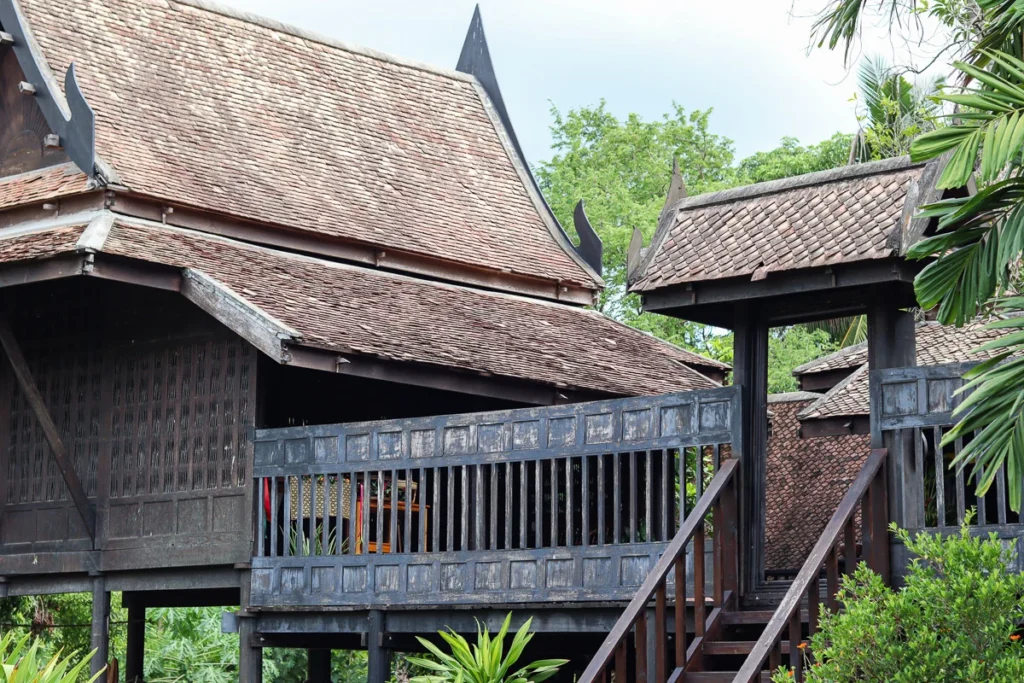
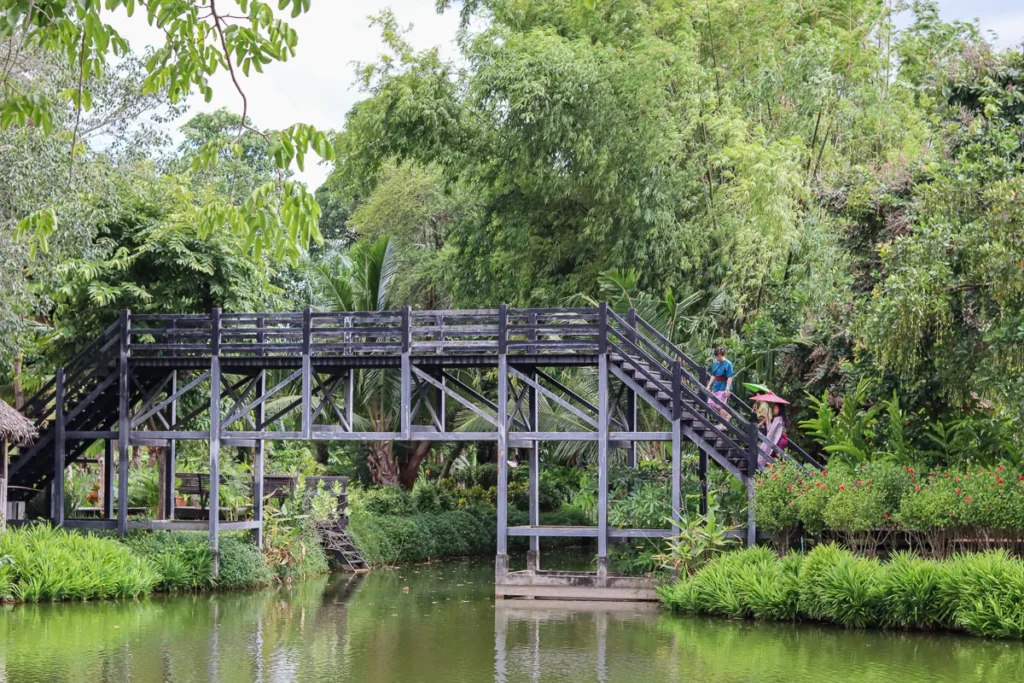
Mallika R.E. 124
One place just outside the town that we recommend visiting is Mallika R.E. 124, a large-scale model town recreating how Thai people lived in the past. The setting is based on the reign of King Rama V, around the year 1905.
Inside, you will find houses and buildings inspired by Thai architecture from over a century ago, along with traditional Thai desserts, shops, and other details designed to match the historical theme. There are more than 20 attractions to explore within the grounds, and we do think the place is thoughtfully designed and worth a visit.
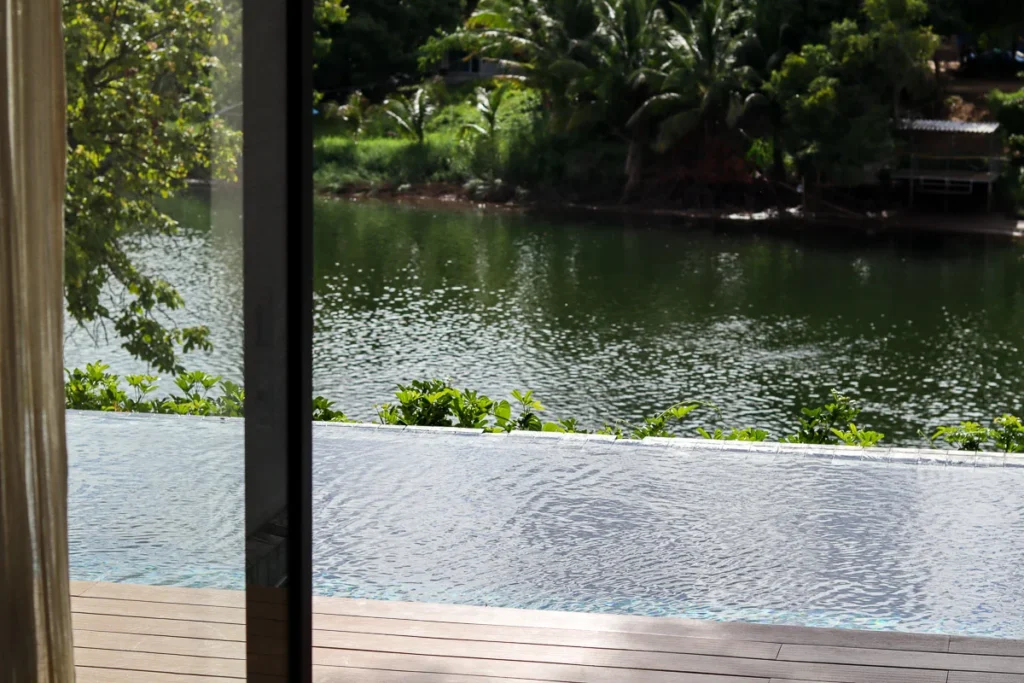
Afterwards, spend some time at one of the cafés beside the river, visit the famous Bridge over the River Kwai if you would like to, and simply enjoy exploring Kanchanaburi town centre.
For a hotel, we stayed at Tara Villa for the night
For Dinner, our hotel recommended Keeree Mantra Restaurant and Keeree Tara
Day 2 - Tha Kradan (Erawan)
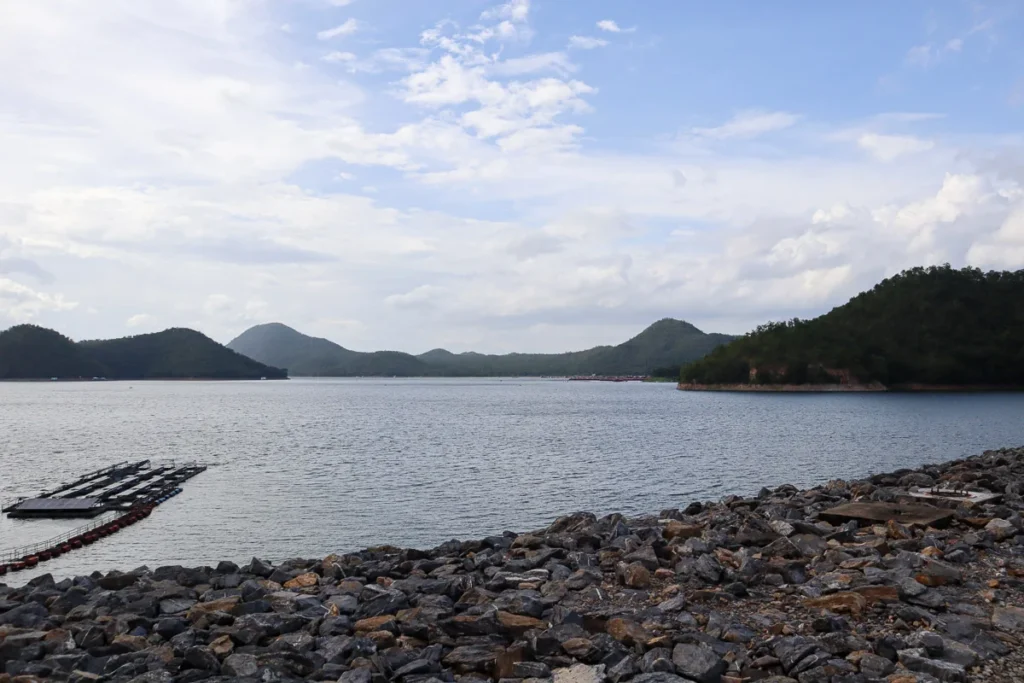
Drive up towards Srinakarin Dam for a visit to Erawan Falls. We recommend a stay at one of the floating hotels on the reservoir.
If the weather is good on this day of your trip, we recommend visiting Erawan Falls. If it is raining, you will still have another chance to visit on the morning of the third day.
Erawan Falls
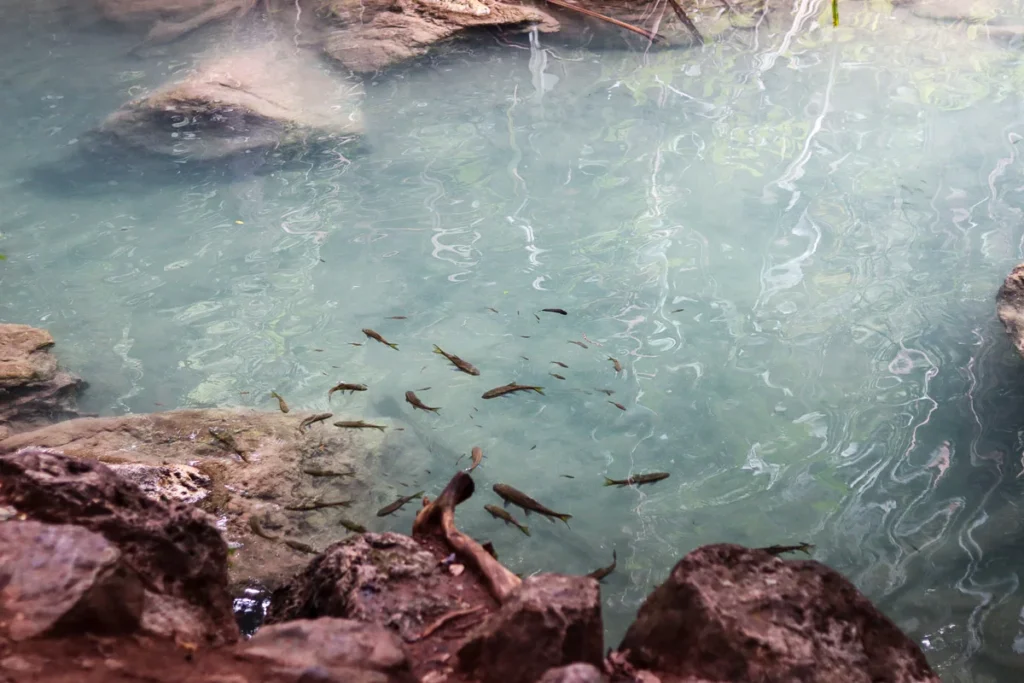
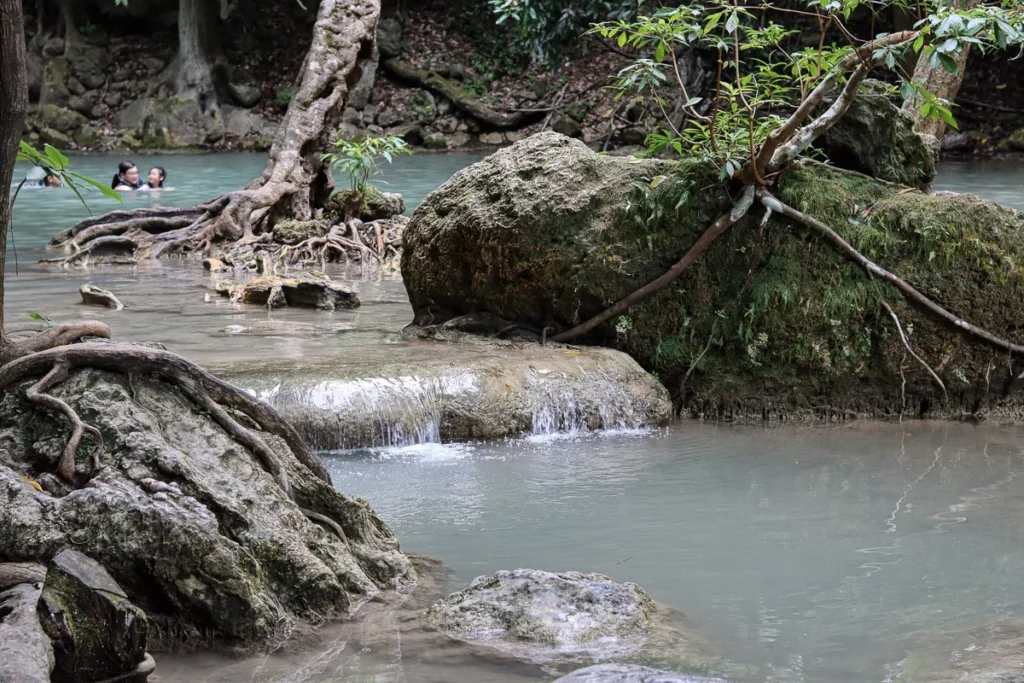
Despite its popularity, Erawan Falls is genuinely beautiful and well deserving of its place as one of Kanchanaburi’s main highlights. Hiking all seven tiers is also relatively manageable and takes around two hours if you do not stop for a swim. For our full 7-level Erawan experience, visit our Erawan Falls Guide.
Do note that Erawan Falls can become quite crowded during the high season and public holidays. Personally, we find one of the best times to visit is during the rainy season on a clear day, when the waterfalls are full, and the crowds tend to be much lighter.
This is also one of the main reasons we chose to spend a night nearby. If it happened to rain on the day we planned to visit, we would still have another chance the following morning rather than having to miss Erawan Falls altogether.
If you still have the energy afterwards, stop by the Srinakarin Dam Viewpoint for a few photos before heading to your accommodation.
For dinner nearby, we recommend: ร้านอาหารแควใหญ่
For a hotel, we stayed at Z9 Resort for the night
Day 3 - Death Railway (Lum Sum)
For those interested in the history of the infamous Tham Krasae section of the Death Railway and Hellfire Pass, this area works well as a stop between Kanchanaburi town centre and Sai Yok National Park. As we were travelling further into the province, we chose to stop here after visiting Erawan Falls, which is around an hour’s drive away.
For those who would rather not visit, particularly given the violent history associated with the area, there are still other places and activities nearby to explore. Many Thai people also choose to avoid the site because of superstitious beliefs, with some feeling that places connected to death and suffering may carry negative energy.
Tiger Temple (Animal Sanctuary) - animal feeding
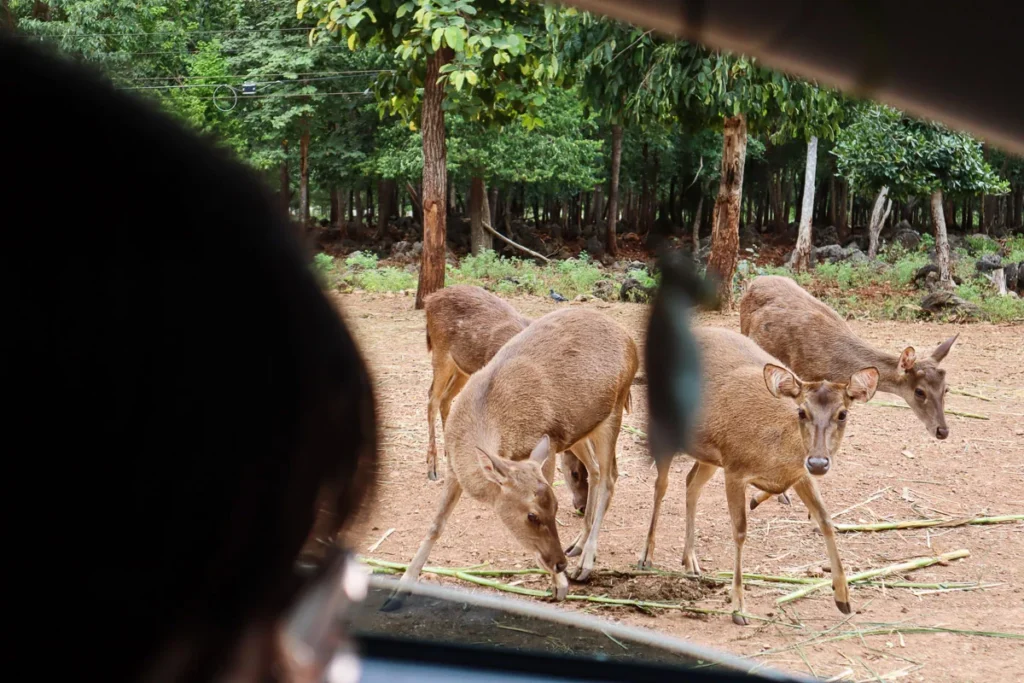
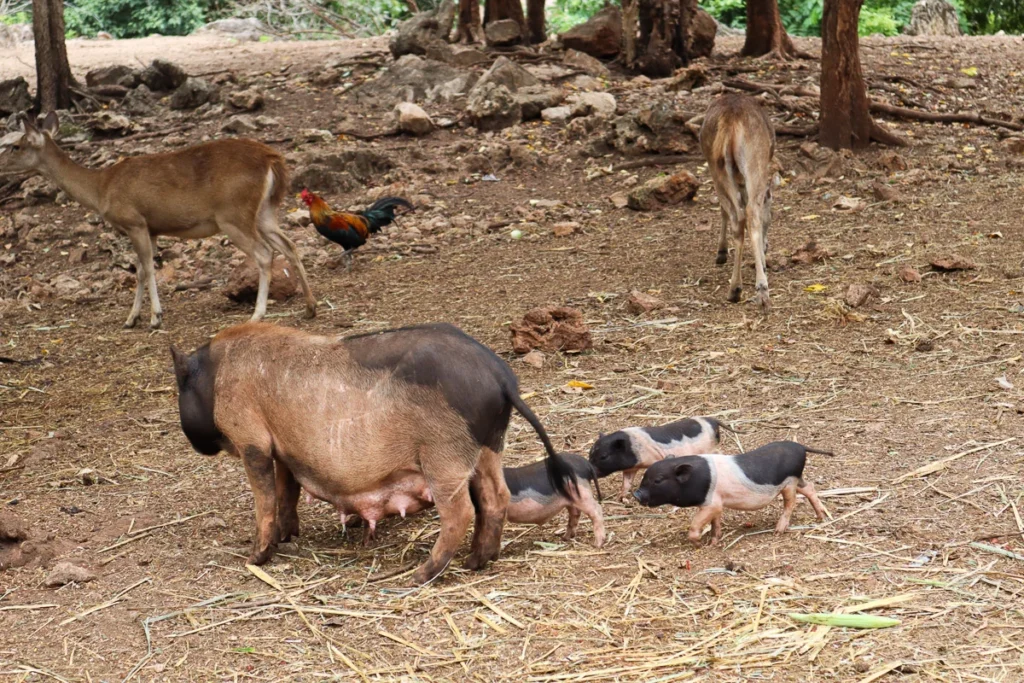
No entrance fee; vegetables can be purchased around the entrance for around 100 baht.
The site is an old temple ground that has since become a refuge for animals rescued from various places, including abandoned animals and those saved from slaughterhouses. Today, visitors can drive through the grounds in their own cars and feed the animals along the way.
It feels almost like an open safari, with cows, deer, wild boars, goats, a few horses, and other species roaming around the area. In the past, there were also tigers here, although they have since been transferred into proper care elsewhere.
Do note that the cows, especially, will swarm over your car and drool over it as well, so expect a dirty car afterwards. A tour car with a guide is also available if you would like; personally, we just drive our own car in there.
Mueang Sing Historical Park (เมืองสิงห์)
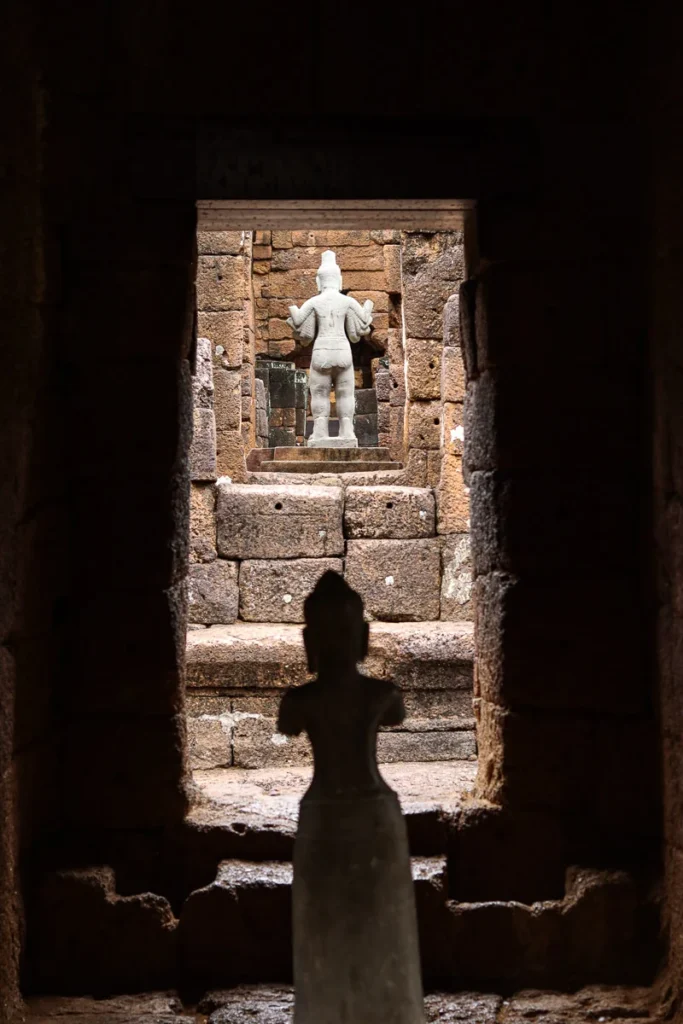
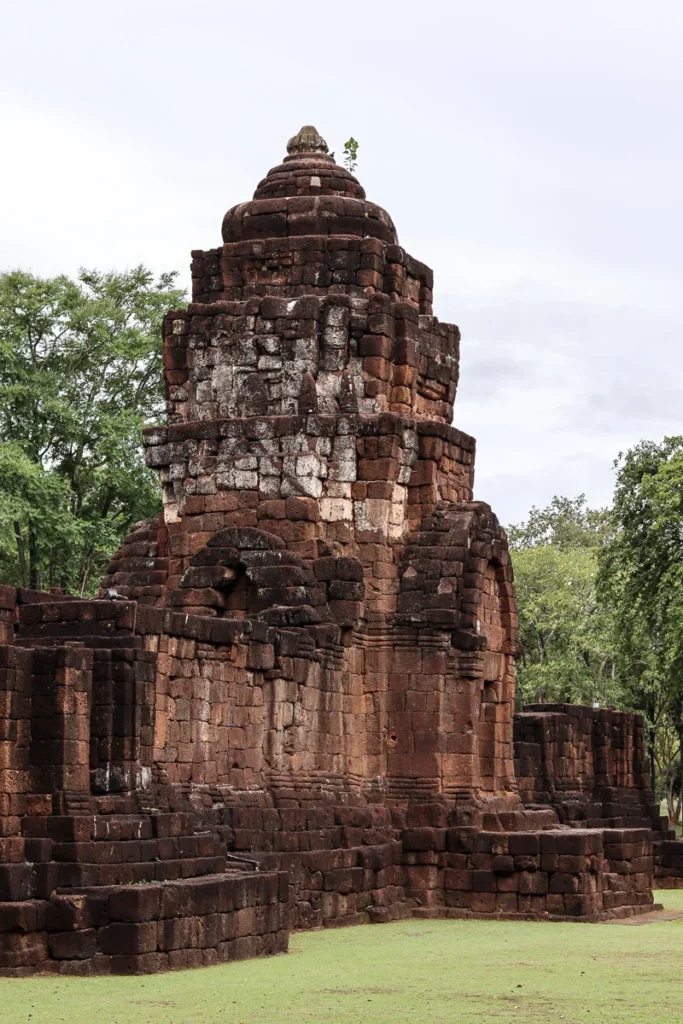
Entrance fees apply
Explore the historic remains of the Khmer Kingdom; the park is a vast area with multiple ruin sites.
They have also discovered prehistoric human remains near the river, adding another layer of history to the area.
Note: If you are visiting this place before or after the Death Railway Bridge, the map may suggest a path that eventually turns into a dirt road; we recommend sticking to the main road or the one along the river.
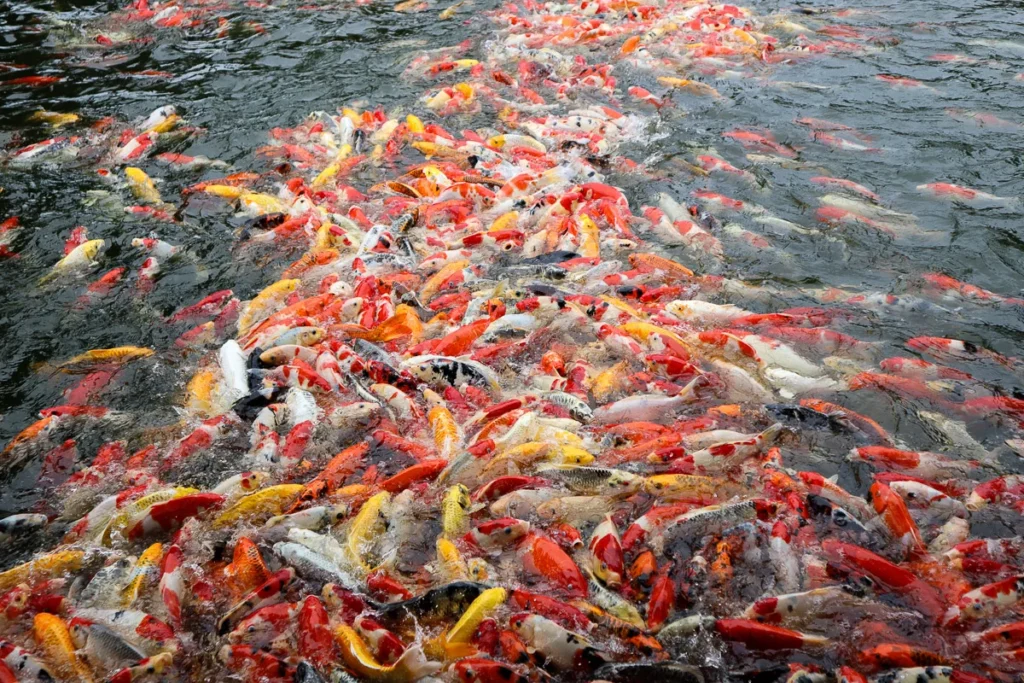
Na-non Cafe – Koi pond
A cafe recommended by the locals we met at our hotel, set on beautiful land with a large pond filled with Koi fish, a notable short stop.
For dinner, we recommend: Wangpho Restaurant
For a hotel, we stayed at Wanakan for the night.
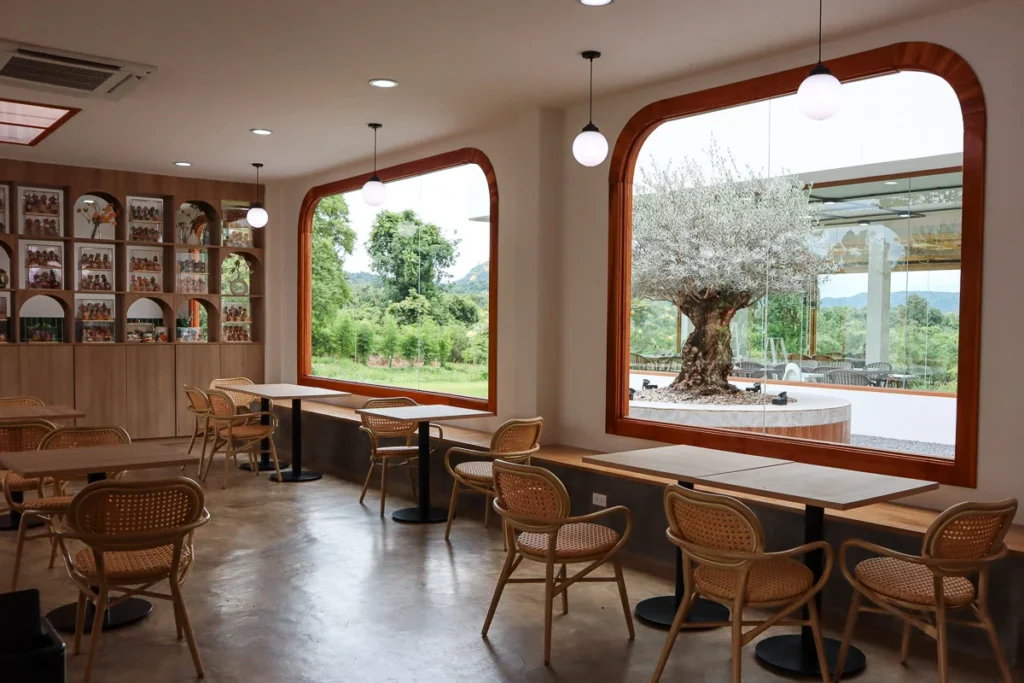
Day 4 - Sai Yok
Continue the journey further towards Sai Yok National Park. This part of Kanchanaburi is also one of the best areas to experience a stay at a floating hotel along the Khwae Noi River, something we would recommend trying at least once.
Riverside Floating Café: Hua Cha Tea House
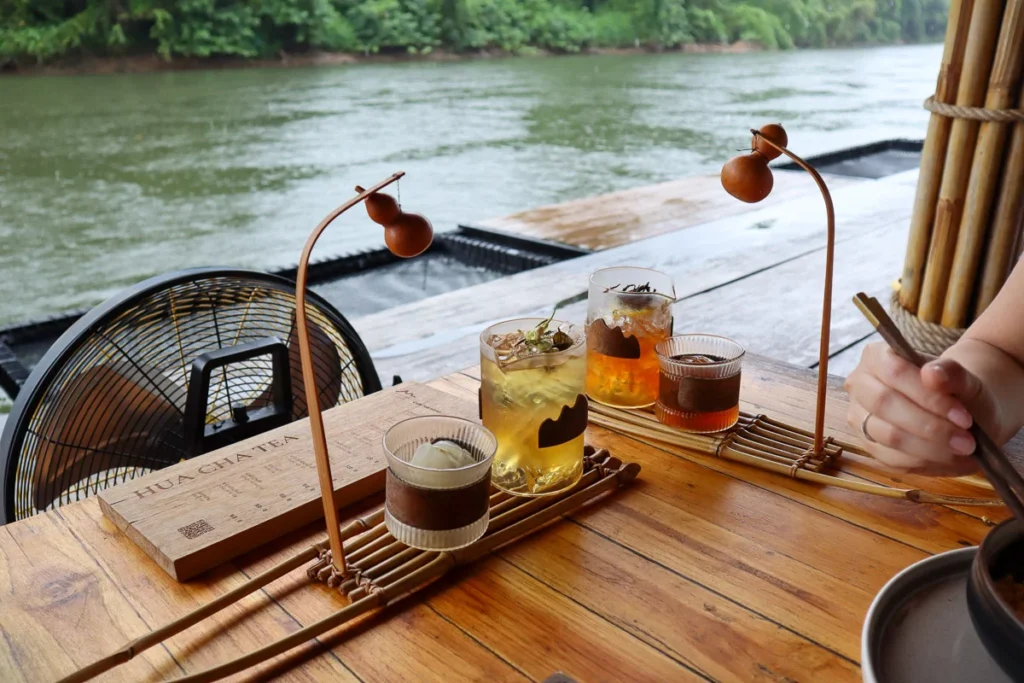
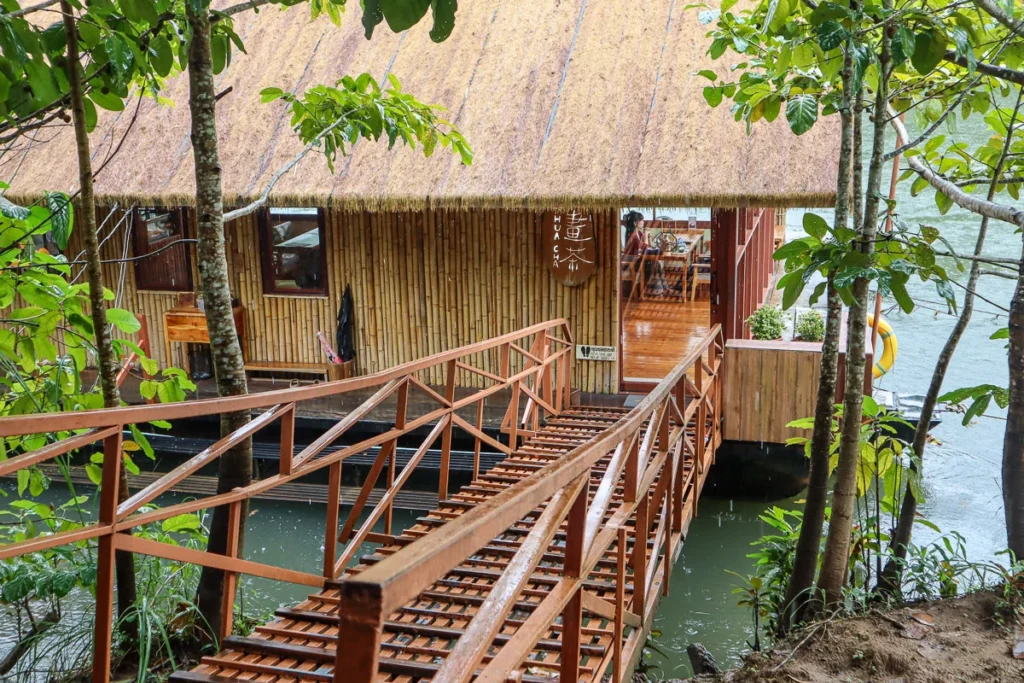
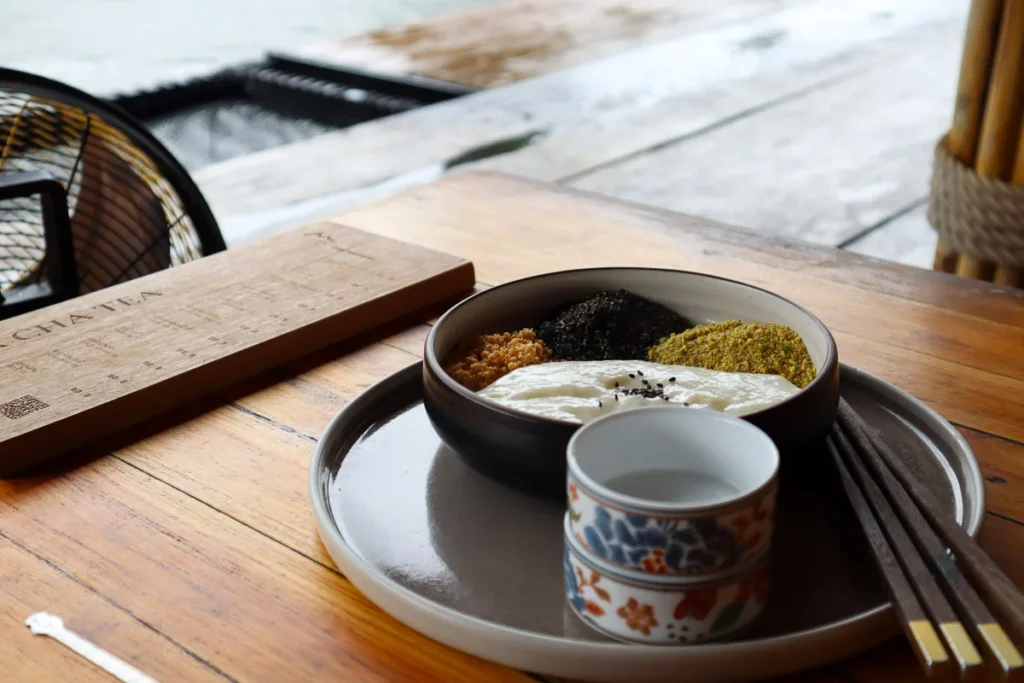
A very relaxing tea experience, with good food and great tea in a peaceful riverside setting. One of the best cafes in the area; we highly recommend Hua Cha Tea House.
Do note that it can become quite busy during the high season, as the café is fairly popular.
River Raft Experience
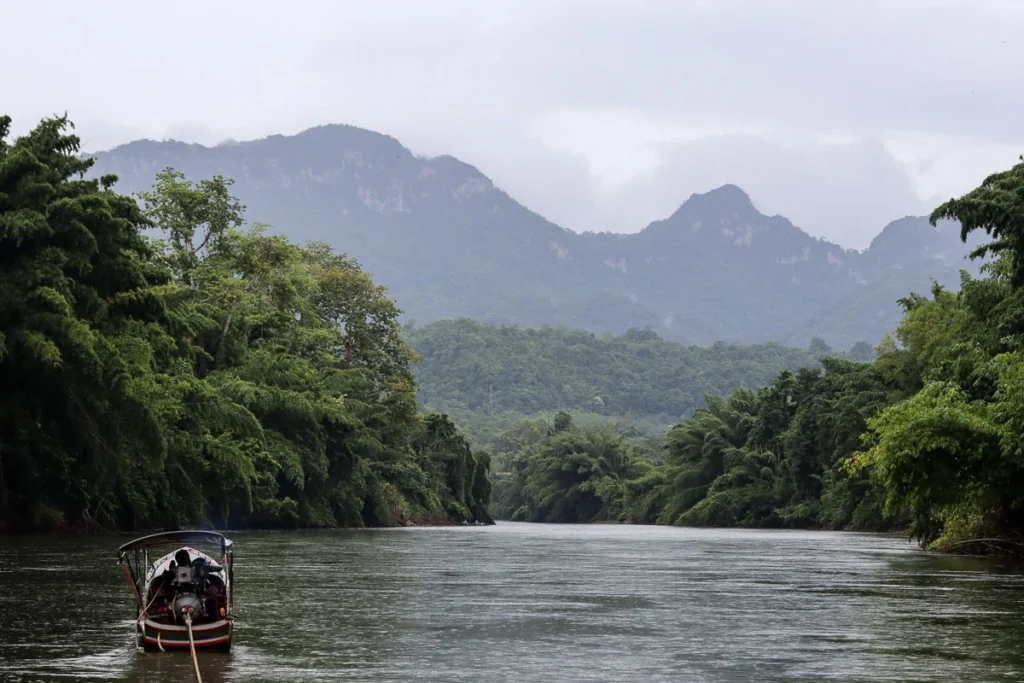
Enjoy the Khwae Noi River from the water, with raft experiences that take you along the river and allow you to float alongside the current. There are organised tours you can book for the activity, while some riverside hotels also include it as part of the stay.
We also visited Pha Tad Waterfall, but due to heavy rainfall, we decided to turn back. For those who want to visit, there may be no phone signal around there, depending on the provider, and prepare cash for the entrance fee.
Waterfalls around the area: Tad Sadao, Roi Chang Phueak, Pha Tad
Other notable spot: The Hindad hot spring
For dinner we recommend: มาสำราญ – Masamran Restaurant (Cherlynn)
For a hotel: We stayed at Cherlynn Resort Kanchanaburi for the night
Day 5 - Baan Tao Than
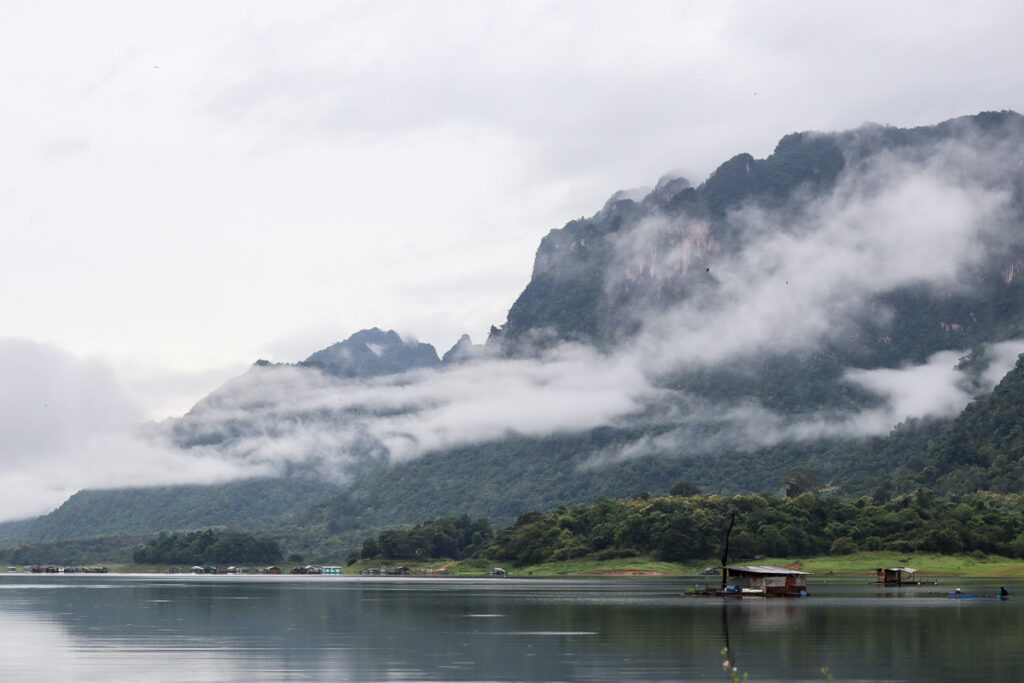
We highly recommend visiting Baan Tao Than, which is the furthest destination on this itinerary. The area has only recently gained more attention on social media, largely for its scenic views.
We did not stay overnight in the area, but instead chose to leave early in the morning, around 5 a.m., for the roughly one-and-a-half-hour drive. You can visit later in the day, but we recommend going in the morning for cooler temperatures, softer light, and a more comfortable experience before the sun becomes too strong.
Vajiralongkorn Dam
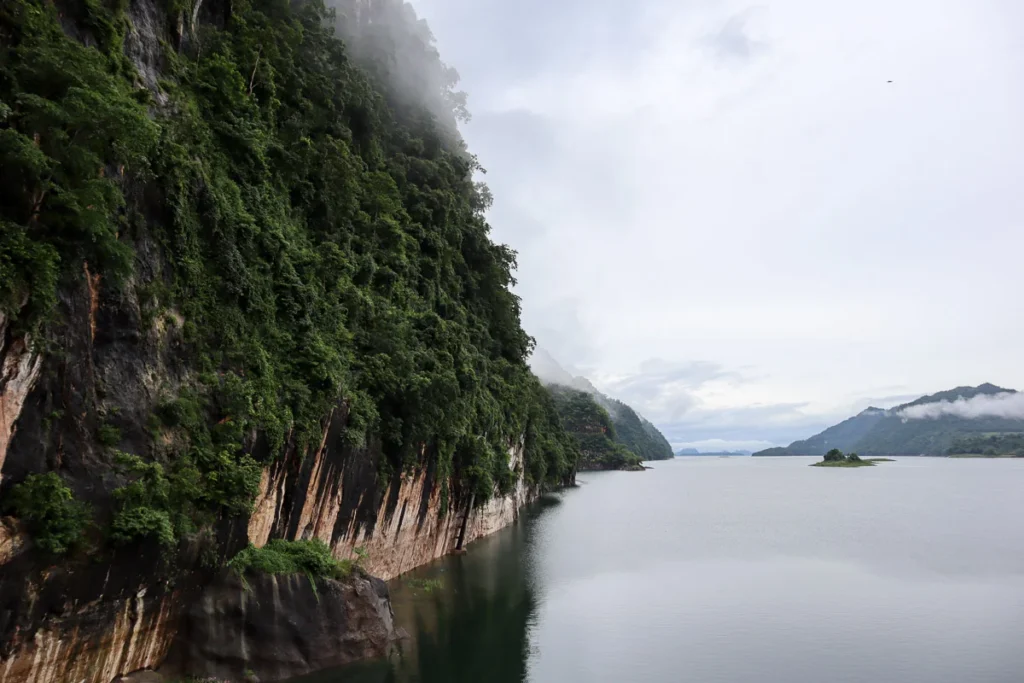
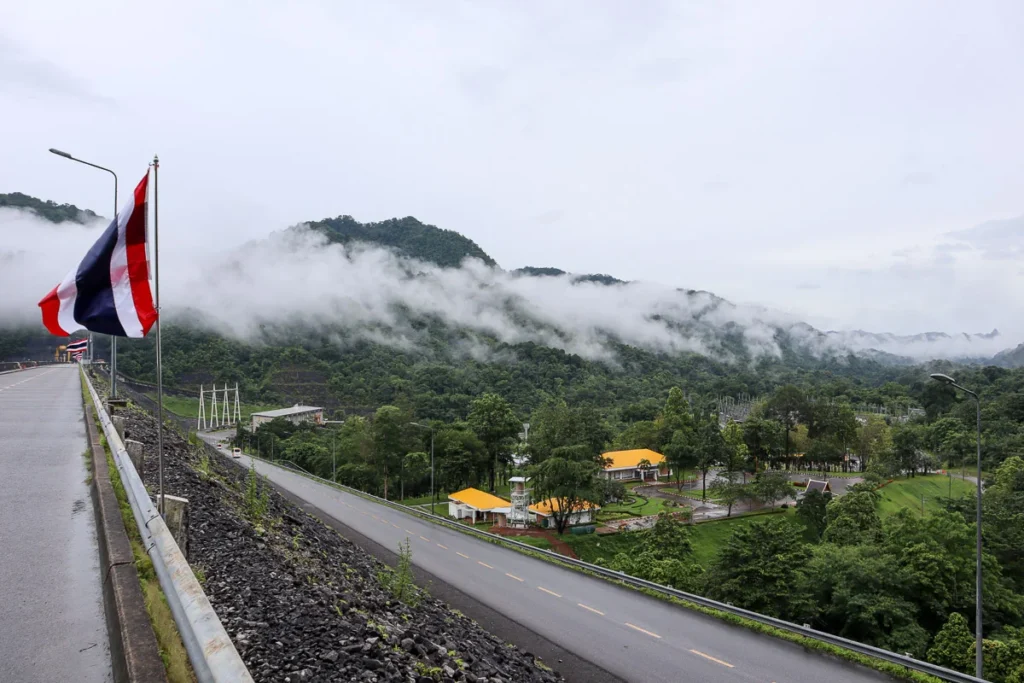
You will pass Vajiralongkorn Dam on the way to Baan Tao Than, and we think it is well worth a stop. In our opinion, it offers one of the grandest dam views in Kanchanaburi.
There is no long walk required, as the road leads directly up to the viewpoint. You can simply stop for the view, or take a short stroll around the area if you feel like spending more time there.
The area is generally quiet, which makes the experience even more enjoyable.
Sai Yok Noi Waterfall
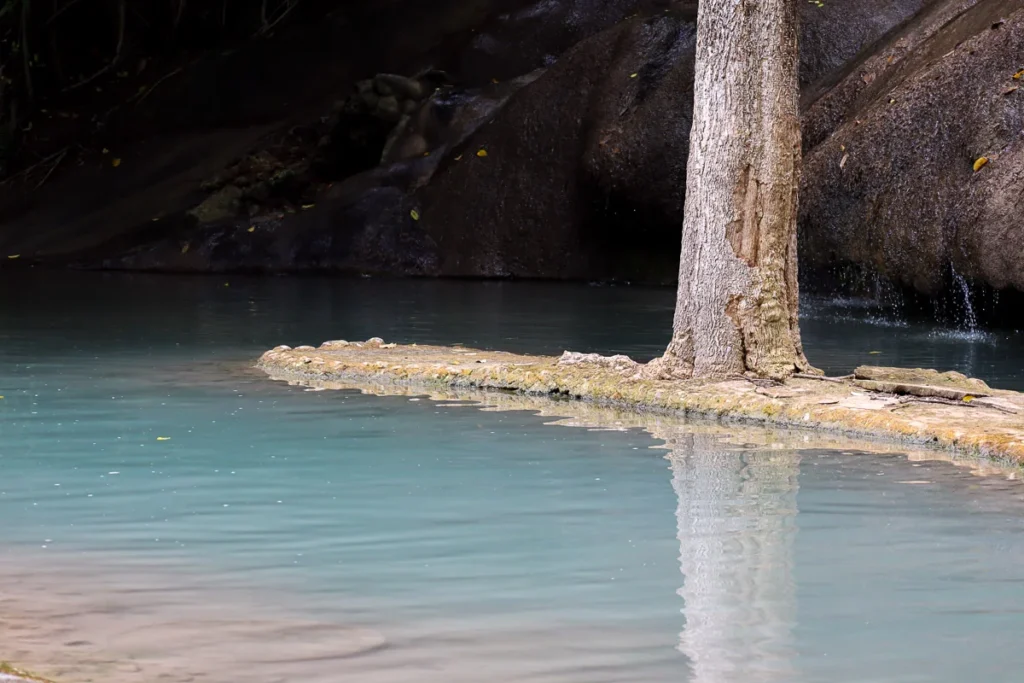
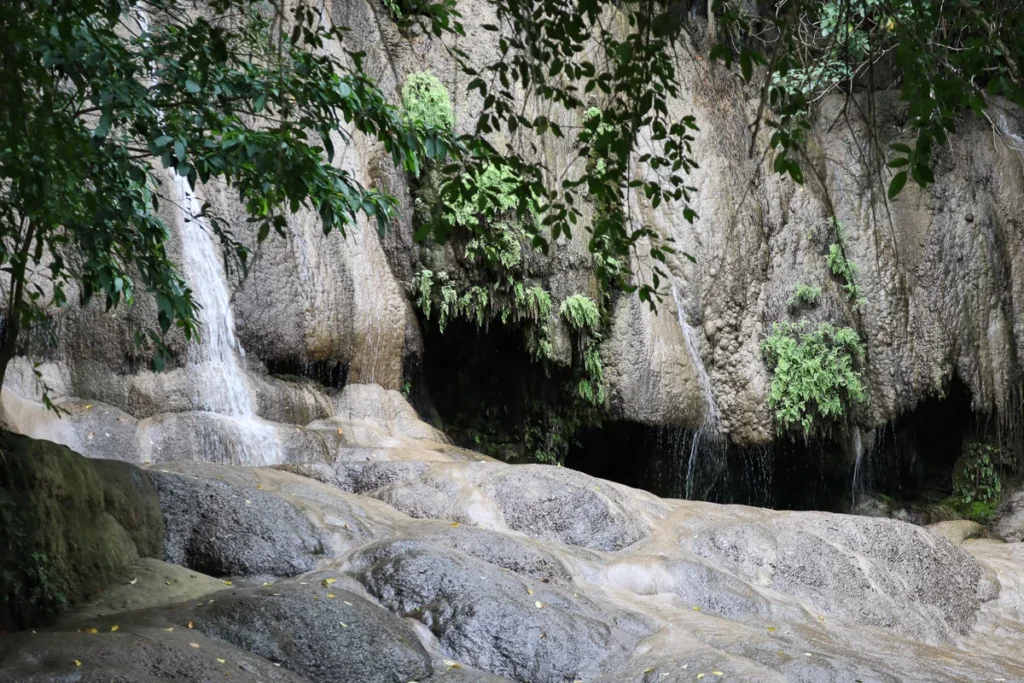
On the drive back towards Mueang Kanchanaburi, stop by Sai Yok Noi Waterfall, an easy and convenient place to visit along the route. The waterfall sits directly beside the main road, making it ideal for a short stop. You can also choose to swim or spend some time by the water if you would like.
For lunch, we recommend: Ice Pochana (Great Food & View), View on Google Maps
For dinner, we recommend: Glaze Dining by MITI
For a hotel, we stayed at MITI-TIKAAN for the night
Day 6 - Mueang Kanchanaburi
For the final day, we recommend taking things easy. Spend some time enjoying your hotel, or visit a few cafés around town if you feel like heading out. Two places we recommend are Long Time Ago Cafe Kanchanaburi for some drinks and Ko Kook for lunch.
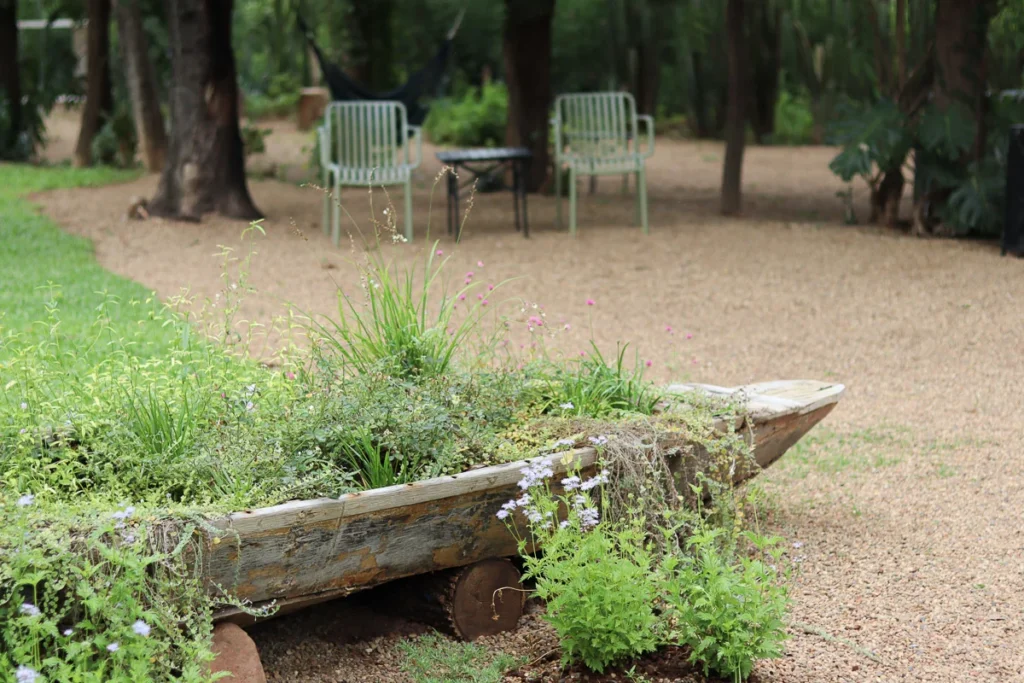
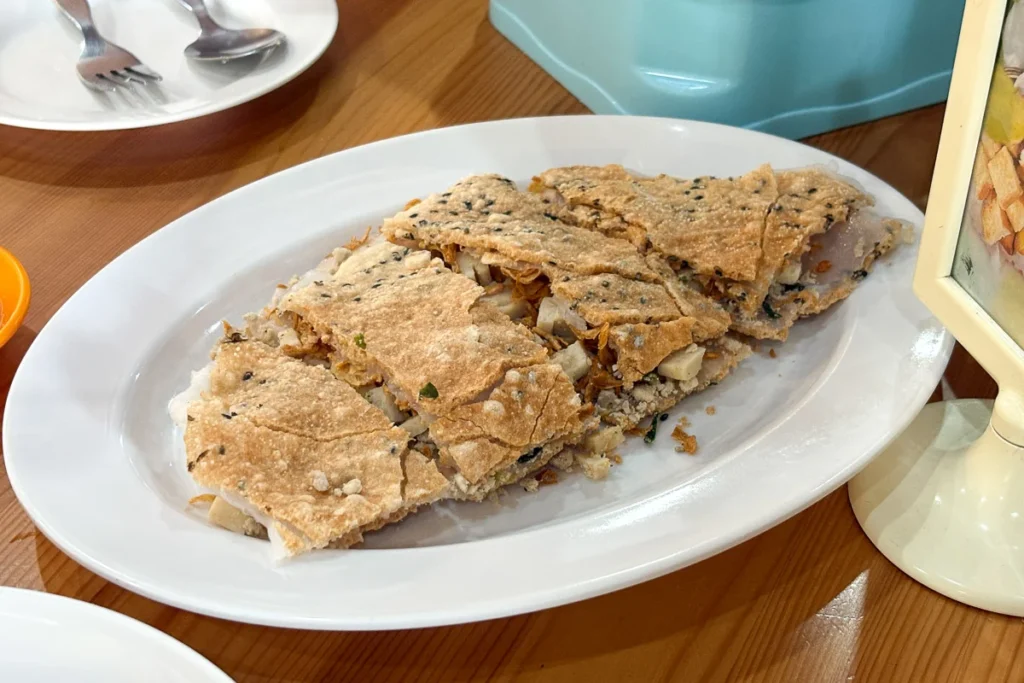
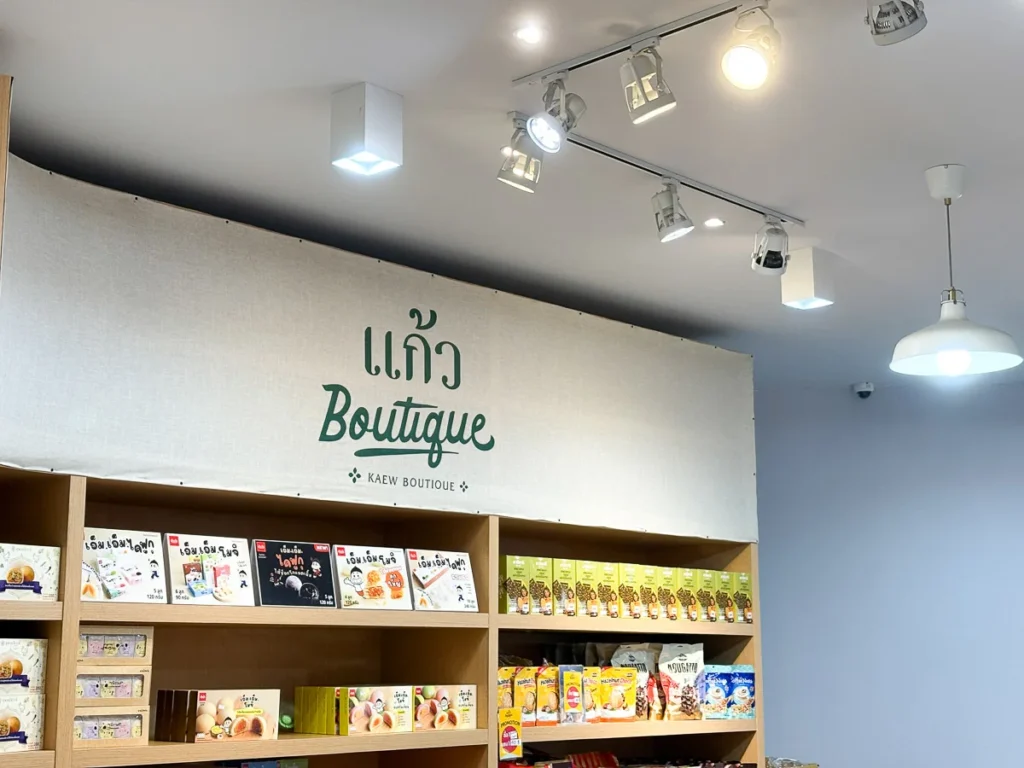
Before leaving via the M81 Motorway back to Bangkok, we also recommend stopping by Kaew Boutique to pick up some souvenirs.
Important Note: If possible, try to leave early enough to reach Bangkok before the evening rush hour, ideally before 4 p.m. Otherwise, traffic inside the city can easily add another hour to the drive, along with a fair amount of stress if you are not used to driving in Bangkok.
Where We Stayed During Our Kanchanaburi Road Trip (summary)
A summary of our stay that covers our route around a bigger part of Kanchanaburi Province.
Each overnight stop was planned around ease of travel, helping us reduce long drives while staying close to the main areas and attractions we wanted to visit.
Accommodation Style: Most of the places we stayed at ranged from around 3,000 THB per night for two people to around 10,000 THB per night. We would describe some as among the more comfortable options in their respective areas, while others fall more clearly into the luxury category. If these are above your budget, there are still plenty of decent alternatives in the same areas. For a more detailed look, visit our 5 hotels in Kanchanaburi recommendation.
1st Night: Tara Villa
Location: Mueang Kanchanaburi (Town)
Stay Type: Riverside
2nd Night: Z9 Resorts
Location: Srinagarindra Dam
Stay Type: Floating Hotel
3rd Night: Wanakan
Location: Thamkra Sae
Stay Type: Riverside
4th Night: Cherlynn
Location: Sai Yok
Stay Type: Floating Hotel (River)
5th Night: MITI Tikaan (Wellness)
Location: Mueang Kanchanaburi (Town)
Stay Type: Rice Field & Mountain View
What to eat in Kanchanaburi
In general, the Thai food you will find in Kanchanaburi is similar to what is commonly available in Bangkok. Familiar dishes such as tom yum, pad Thai, larb, and other Thai staples are easy to find. However, Kanchanaburi is also known for certain ingredients and dishes that are more commonly eaten in the province.
Note: Most of the dishes we recommend below are quite straightforward in flavour and easy to enjoy, but many can be very spicy. If you are not good with heat, we recommend asking for a less spicy version when ordering.
Popular Meats and Ingredients in Kanchanaburi
Kang Fish (ปลาคัง), or Asian Redtail Catfish (recommended)
A freshwater fish that is popular in Kanchanaburi, with thick skin and soft, meaty white flesh. We find the flavour quite mild and not particularly fishy.
Recommended dishes with kang fish include pad cha (ผัดฉ่า), luak jim (boiled fish served with dipping sauce), tom yum, and tom kha.
Deer Meat (Venison)
Venison is not one of the most common meats in everyday Thai cuisine, but we noticed that quite a few restaurants around Kanchanaburi serve it. The lean, slightly gamey meat works particularly well with stronger, spicy flavours.
A common dish to try is pad phed (ผัดเผ็ด), a spicy stir-fry with herbs and curry paste.
Wild Boar
Wild boar is another meat you will come across fairly often in Kanchanaburi. It is fatty, gamey, and has a firmer bite compared with regular pork. Personally, we find the texture a little too tough for our preference, but we would still recommend trying it at least once.
Popular dishes include pad phed (ผัดเผ็ด) and kra pao.
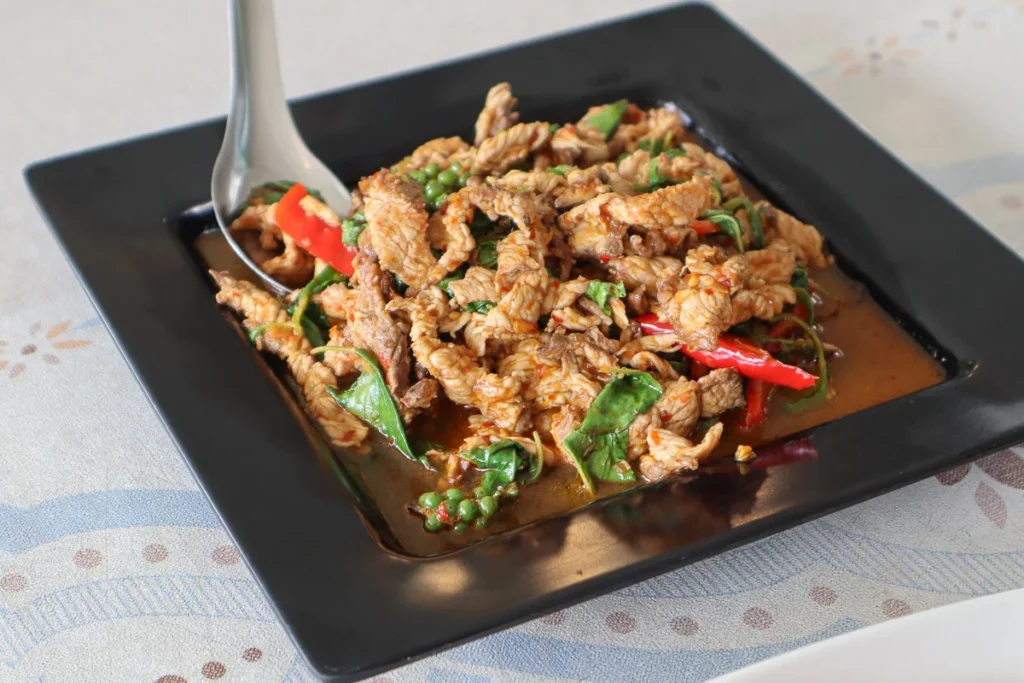
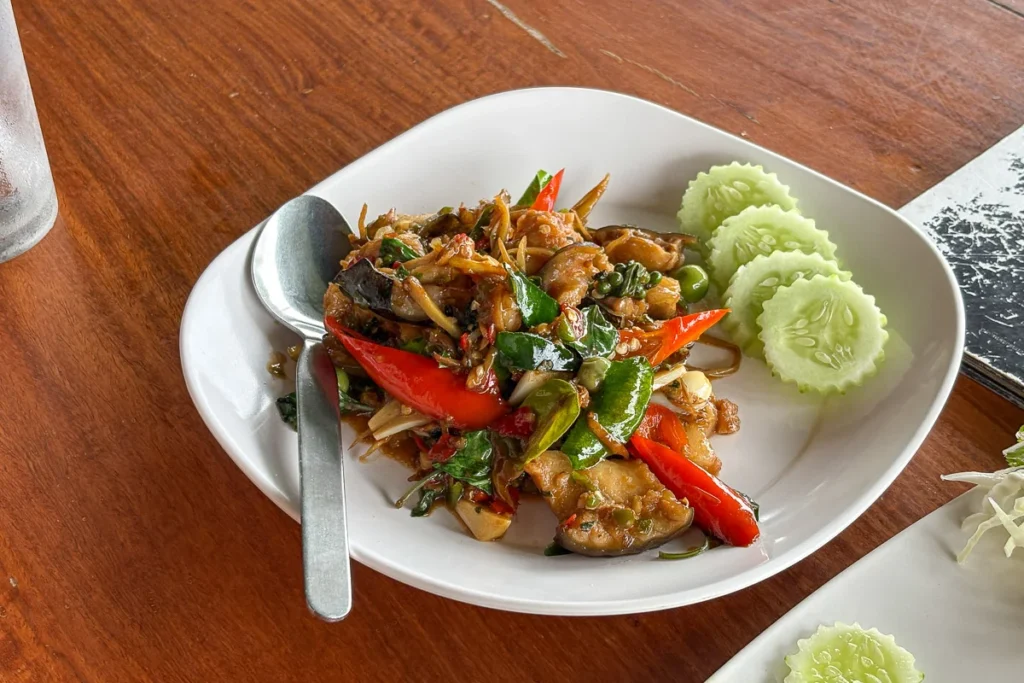
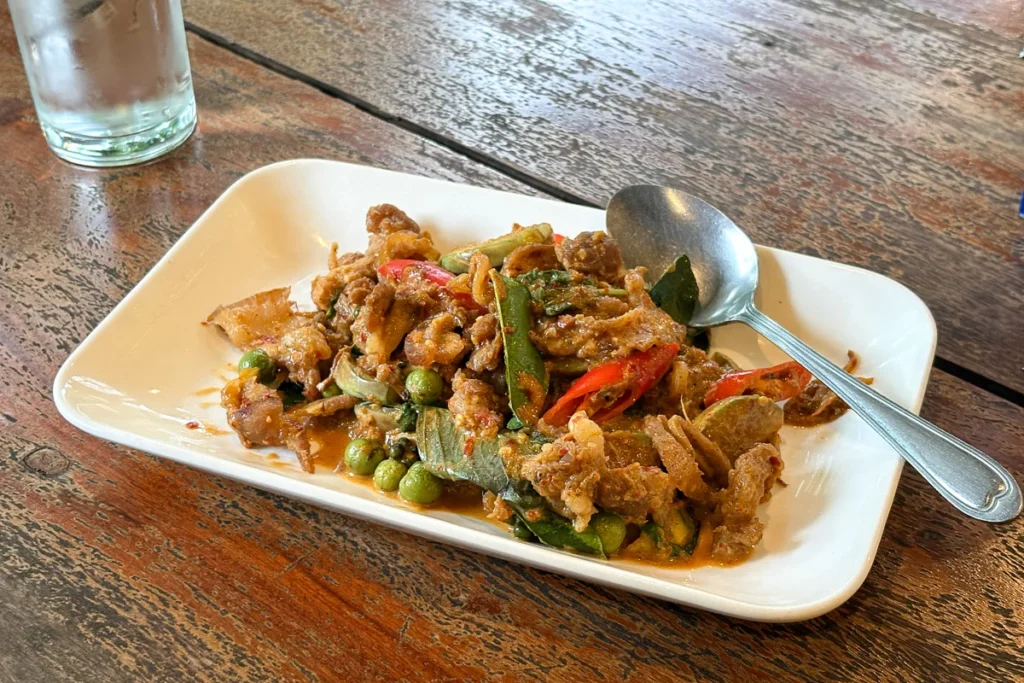
You will also likely notice a few restaurants around the province with the word “ป่า” (pa) in their names, which directly translates to “forest.” These restaurants often specialise in what Thais call ahan pa, or forest-style food, with ingredients such as catfish, frog, and wild boar, usually cooked with stronger flavours, herbs, and plenty of heat.
Most of these restaurants also serve familiar Thai dishes, so you can try something a little more adventurous alongside your usual favourites.
Driving in Kanchanaburi: What the Roads Are Like
Smooth paved roads and wide lanes are what you can generally expect when driving around Kanchanaburi. A typical rental compact car or sedan should be more than capable of taking you around most of the province with ease. You would only really need a four-wheel-drive vehicle if you plan to venture into more remote nature spots.
Driving From Bangkok to Kanchanaburi
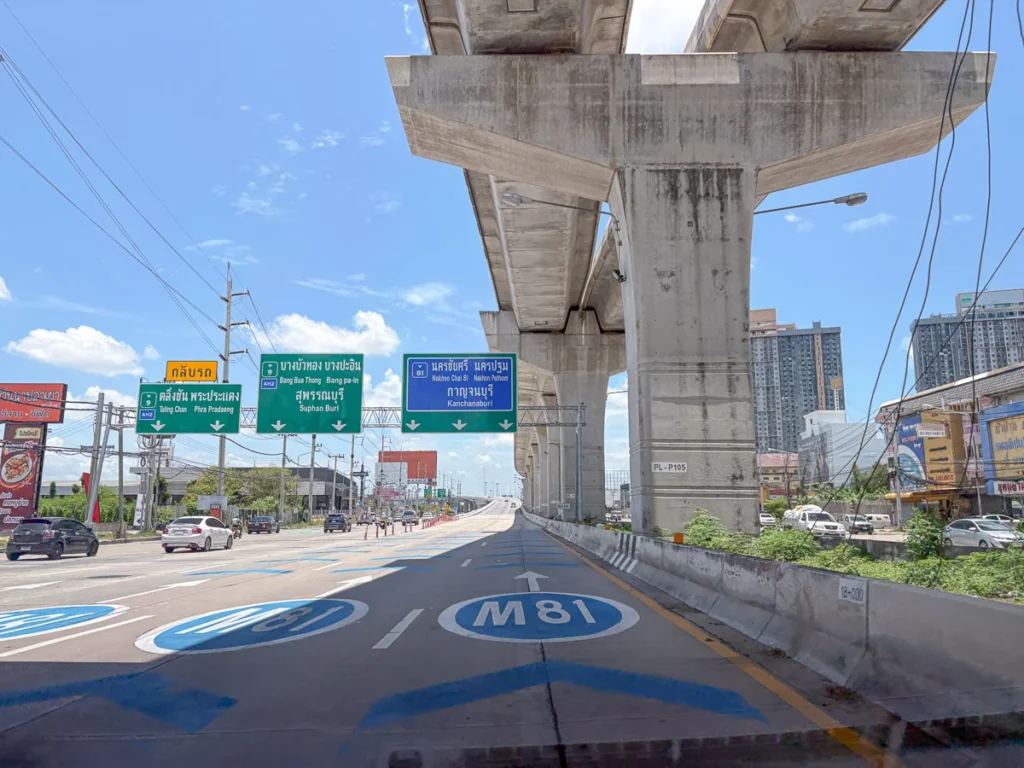
For the easiest and fastest drive from Bangkok to Kanchanaburi, we recommend taking the M81 Motorway once you reach Bang Yai. Motorbikes are not permitted on the motorway.
The M81 is a relatively new route connecting Bang Yai and Kanchanaburi. It runs for around 100 km and is essentially one long, straightforward drive, with a speed limit of up to 120 km/h for four-wheel cars. During weekdays and the low season, we have found the traffic to be very light, sometimes with barely another car around. Expect more traffic on weekends, public holidays, and during the high season, although it should generally still flow quite well.
M81 toll: Up to 150 THB one way for a four-wheel car travelling the full route to Kanchanaburi.
Navigation app: Google Maps — recommended, and also what Thai people normally use when driving in Thailand.
How to Pay the M81 Toll
There are two main ways to pay when exiting the M81: a traditional cash toll booth or the barrier-free M-Flow lane.
If you prefer to pay cash, simply follow the signs towards the staffed toll booths when approaching the exit.
If you use M-Flow, the motorway automatically records your licence plate as you travel. Follow the M-Flow lane when exiting and drive through without stopping. You do not need to be a registered M-Flow member to use it, as the toll can be paid afterwards.
After exiting, give the system a little time to register your journey, then visit the official MFlowThai website or app and search using the car’s licence plate number. You will also need to select the province in which the plate was issued—for example, a rental car from Bangkok will most likely have กรุงเทพมหานคร written beneath the registration number.
Payment can be made online at the MflowThai Website, including by QR code, or at a 7-Eleven Counter Service. Your rental car company may also be able to help if you have any difficulty making the payment.
Important note for international travellers: Thai licence plates use Thai characters, so entering the registration number may be a little challenging. We recommend taking a clear photo of the licence plate. You can then copy the Thai characters from your phone or use an image translation tool to help identify them and copy the characters from there.
At the time of our trip, there were no fuel stations directly along the M81, so we recommend filling up beforehand. The motorway does have rest stops, although the facilities were still fairly basic during our visit, with temporary toilets available.
Driving in Kanchanaburi
Driving around Kanchanaburi is relatively easy. The road conditions are generally very good, and there are not too many winding mountain roads to deal with. In fact, we find Kanchanaburi to be one of the easiest provinces in Thailand to drive around.
The roads are usually wide, even as you travel further towards Sai Yok National Park, Vajiralongkorn Dam, and beyond. As long as you stick to the main roads, they should connect you to most of the places you will want to visit.
If you are worried about the overwhelming number of motorcycles you often see in Bangkok, there is much less to worry about here. You will generally see only a few motorcycles on the road, and those you do encounter often keep closer to the side.
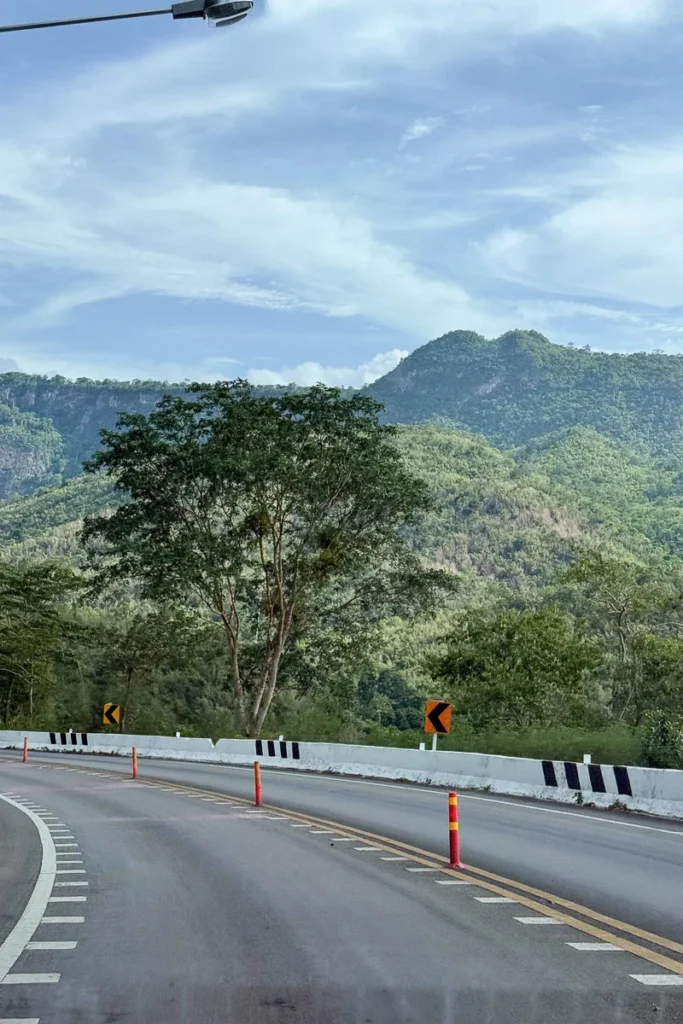
Warning: Although it is rare, when driving through more local areas away from the main roads, navigation apps may occasionally suggest routes that turn into dirt roads or even cut through local fields. In these cases, we recommend turning back. If your destination is relatively popular or clearly connected to a main road, there is usually a better route.
Important: You may occasionally spot what looks like an incredible viewpoint in the mountains and see what appears to be a road leading up to it—but that does not necessarily mean the road is suitable for a normal car. Some routes become rough dirt roads further into the mountains and may require a four-wheel-drive vehicle, pickup truck, or a car with higher ground clearance. For more popular viewpoints, you may also be able to hire a local driver nearby to take you up.
The further you travel away from Kanchanaburi town centre, the more scenic the drive tends to become.
What Kanchanaburi Was Like in the Rainy Season
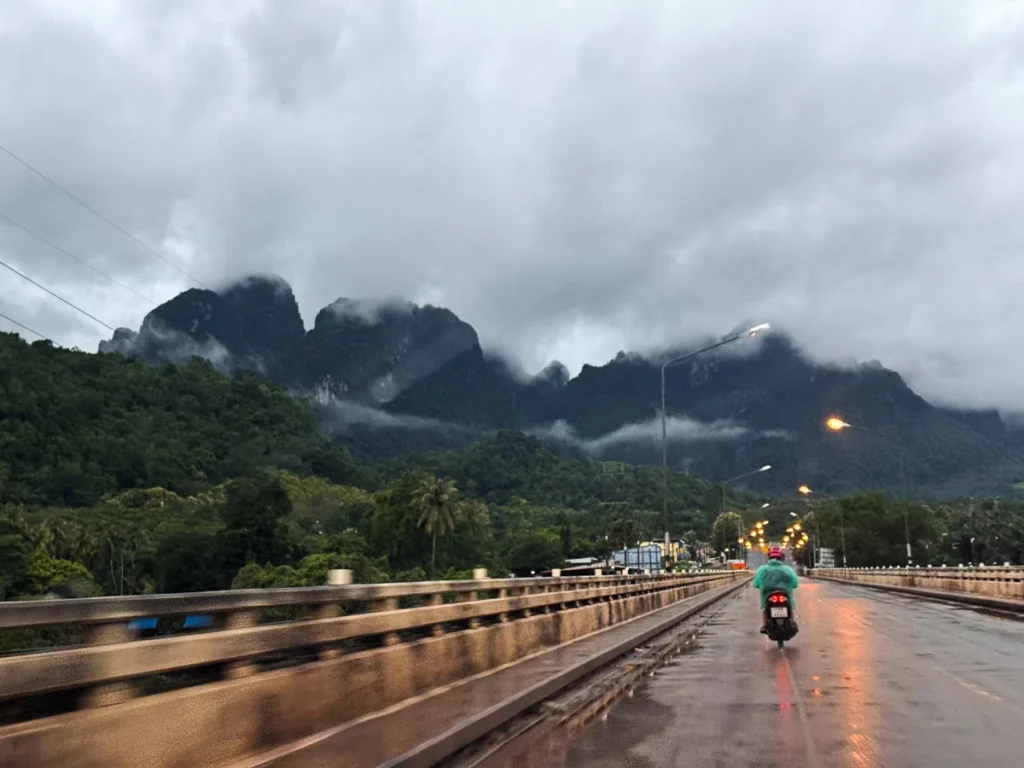
If you are concerned about whether the province is travelable during the rainy season, the short answer is yes.
The likely scenario
- Most of the time, the rain will come in short intervals, thirty minutes to an hour.
- A whole day of rain does exist, but many times it will be light rain for the most part.
- We find that mostly it is just cloudy, and sometimes it never rains in your area.
- Four in six days of our latest trip, the rain was not a problem at all, only brief ones during our drive and stop by the time we arrived.
The Benefits
- Fewer tourists
- More enjoyable walks at the attractions
- Cheaper hotels
- Not too much sun when it is cloudy
How Much Time Do You Really Need in Kanchanaburi?
- A one-day trip is too short; we would not consider it ideal, even if you only have one specific place in Kanchanaburi that you want to visit.
- 3 days and 2 nights is what we would describe as a good amount of time to see a few places without rushing too much.
- 4–5 days is a great duration for visiting most of the popular attractions at a more leisurely pace, while still leaving some time to enjoy your riverside accommodation.
- 6 days, as we did, gives you more freedom to travel further into Kanchanaburi, visit most of the major attractions, and still have time to explore a little on your own.
- More than 6 days is also very doable, and if you have the time, we could even recommend it. We could easily have spent another night around Sai Yok National Park and explored more of the surrounding area. With a longer trip, you can also venture further to places such as Pom Pi, Mon Bridge, or Pilok Mine.
Of course, if there is somewhere you really want to visit, and you only have limited time, a shorter trip is still possible. You may end the day tired, but at least you will have reached the place you came to see. Personally, however, we would never recommend forcing too much into an itinerary; seeing fewer places with a good mindset and a ready body will often allow you to appreciate each place much more.
Note: For more adventurous activities such as hiking, we recommend checking the best season to visit and factoring the additional transportation and time needed into your itinerary.
For more itineraries in Thailand, also visit our 5-day itinerary in Samui. For another popular destination not too far from Bangkok, visit our guide to Hua Hin & Cha-am.
May you have a great vacation,
Travel Tegami