
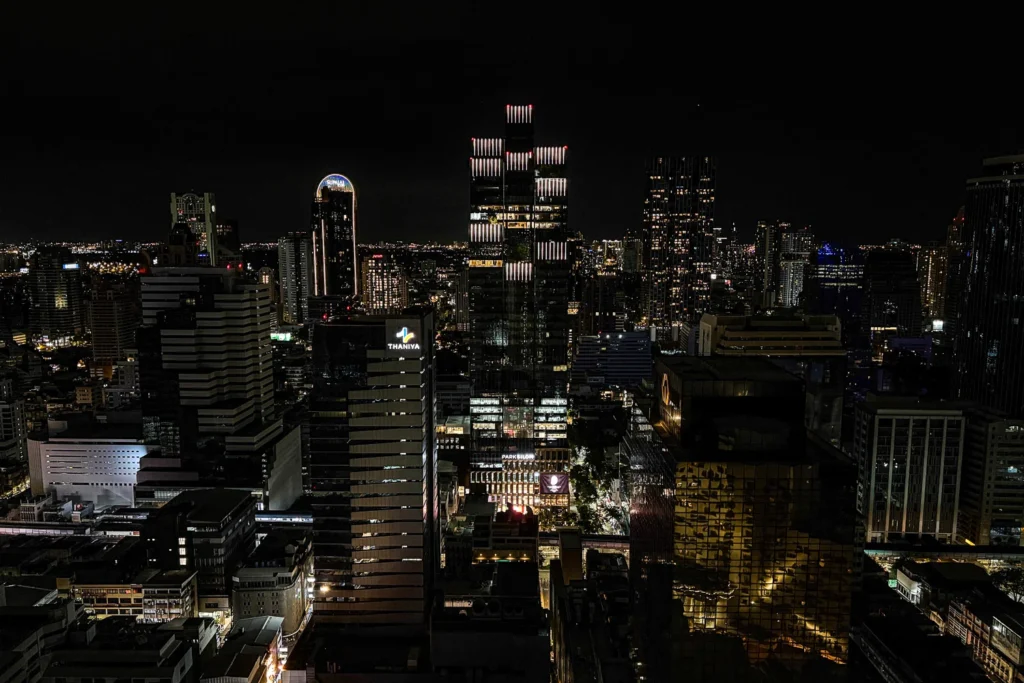
As someone living in Bangkok, Silom has always been a place we pass through often or find ourselves spending time in quite naturally. As one of the busiest and most developed areas in central Bangkok, there is always something new to discover. If you want to experience the side of Bangkok defined by high-rises, busy streets, and a modern urban setting, Silom is one of the best places to see it.
Beyond simply dropping by from time to time, we have also spent a significant part of our lives in the area—both living nearby and commuting here on a daily basis.
About Silom
Dear Travellers,
The area is a major office hub, which in turn has encouraged countless restaurants, coffee shops, and retail businesses to open nearby. Beyond the office workers who commute here every day, Silom also draws a large number of students. The area is home to, and surrounded by, several well-known schools in Bangkok, many of them long-established all-boys or all-girls Christian private schools. Chulalongkorn University, one of Thailand’s most prestigious universities, is also only a station away.
With so many office workers, students, and parents passing through each day, Silom has naturally become one of the busiest areas in Bangkok.
Most notably, Silom sits directly opposite Lumphini Park and has recently become home to one of Bangkok’s newest major shopping destinations, Dusit Central Park, which has brought even more visitors into the area. For those interested in exploring Bangkok’s shopping malls, we also recommend visiting our Bangkok shopping mall recommendations for more suggestions.
How to Get to Silom
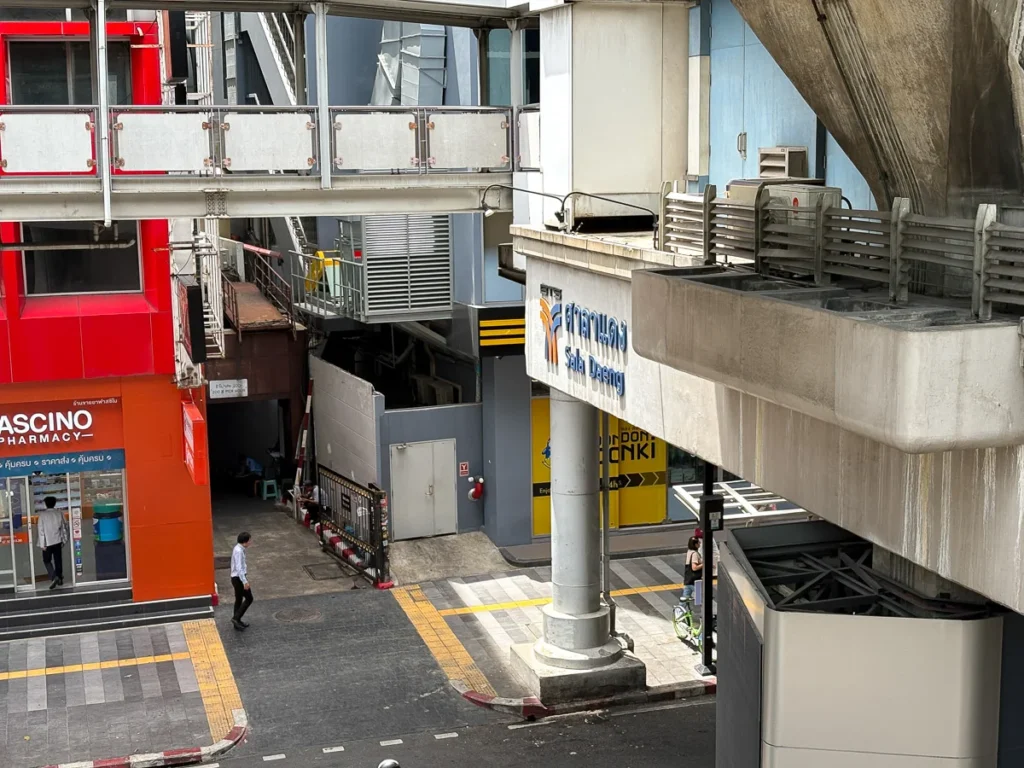
Silom is easy to reach, as it sits along the major Rama IV Road and is well connected by taxi and Grab, although traffic can become quite heavy during rush hour.
If we look at Silom as a whole, rather than only the increasingly popular area around Sala Daeng, the neighbourhood can roughly be divided across four major BTS stations.
BTS Sala Daeng sees the most foot traffic, as it stops right in what we would consider the main part of Silom, where many of the area’s attractions, restaurants, and things to do are concentrated. The wider Silom area is then covered by Chong Nonsi, Saint Louis, and Surasak stations. Sala Daeng is also connected to MRT Silom, making it an interchange between the BTS Skytrain and MRT Metro and giving this part of the city some of the most convenient public transportation coverage in Bangkok.
BTS Chong Nonsi mainly serves the large number of office workers in the area, including employees of major international companies and several of the Big Four accounting firms located around Silom and neighbouring Sathorn. Visitors will also find the famous King Power Mahanakhon nearby, known for its distinctive architecture and rooftop views, along with plenty of cafés and restaurants scattered around the station.
BTS Saint Louis, just one stop away, covers a similar office-heavy part of the neighbourhood, while Surasak marks the outer end of the Silom area. Both stations are used largely by regular commuters travelling to the offices and schools nearby.
If you enjoy walking
A 15-minute walk will take you to Samyan, a popular area among Chulalongkorn University students, with plenty of affordable and local food options.
A half-hour walk in a straight line, and you will reach the neighborhood we locally refer to as “Bang Rak”, an older neighbourhood known for its long-standing, family-run restaurants.
Fun Fact: Bang Rak is actually the district that Silom is part of. However, in everyday local use, when we say “Bang Rak,” many of us are usually referring to the area closer to the river, where the older neighbourhood is concentrated. If you are interested in this area, look for “Central Bangrak” on Google Maps.
What to Do in Silom
Explore the Main Street & the Surroundings
Modern restaurants and cafés line the streets, especially around Sala Daeng BTS Station. As you walk through the area, you will pass small shops for some light shopping, places to pick up desserts and drinks, and the occasional street food cart along the way.
You will also find Silom Complex, a Central shopping mall in the area and a convenient place to escape the heat, grab something to eat, or do some quick shopping.
Explore the Cafés and Restaurants Around
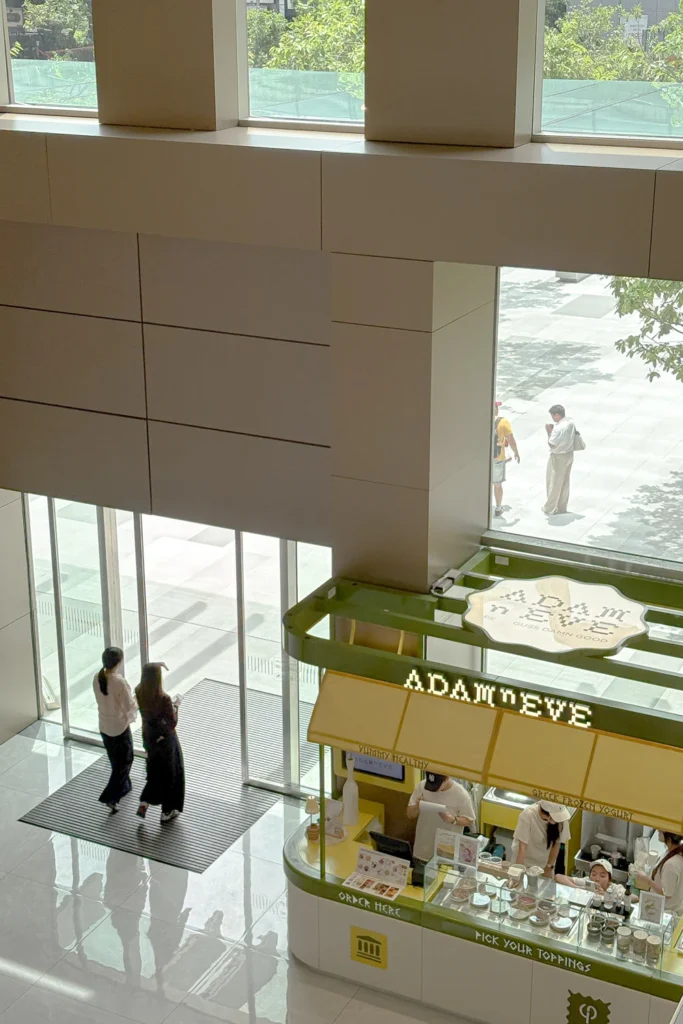
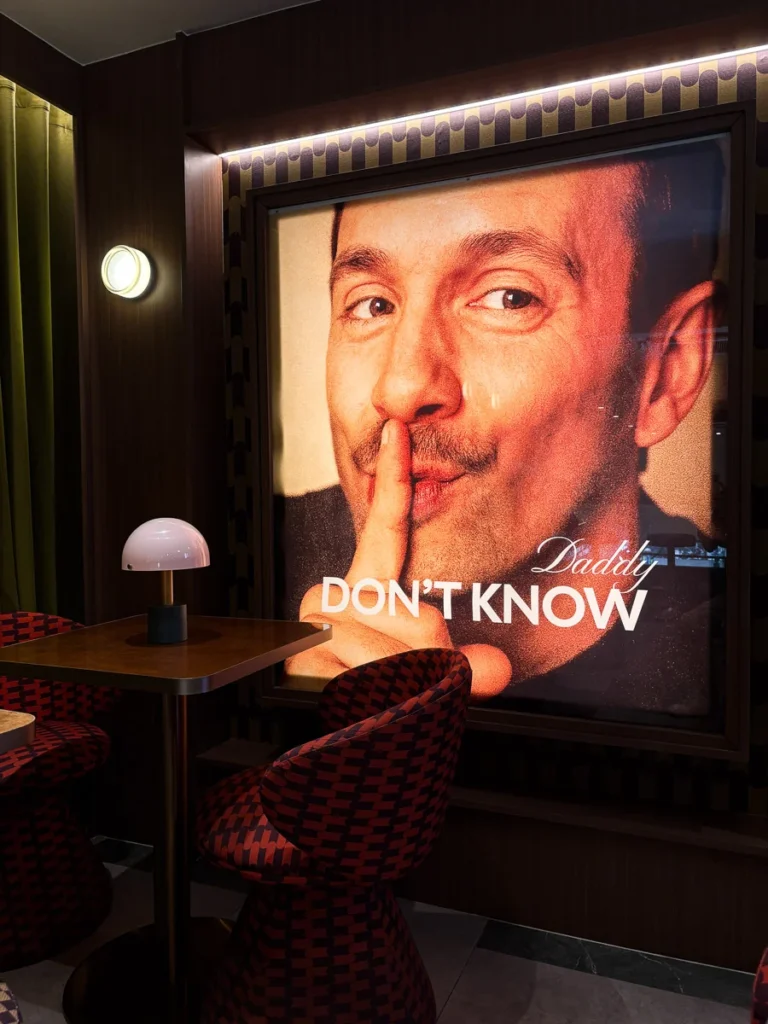
There are plenty of cafés and restaurants to discover around Silom.
Some of our favourites include:
- Daddy Don’t Know Gelato House
- La Dotta Coffee and Pasta
- Luka Cafe
Several office buildings also have lower floors that are open to the public. Buildings such as Park Silom are filled with good restaurants and cafés, giving you somewhere to eat or take a break away from Bangkok’s heat. You will find a similar mix inside several office buildings around Chong Nonsi Station as well.
Thaniya Road & Night Life
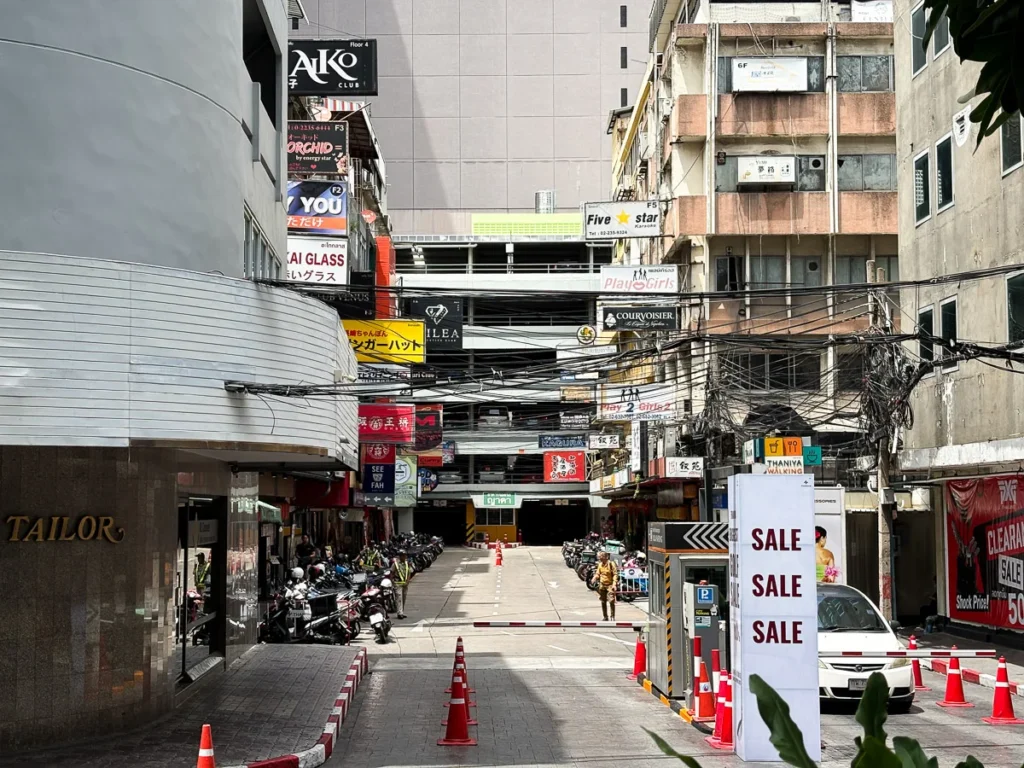
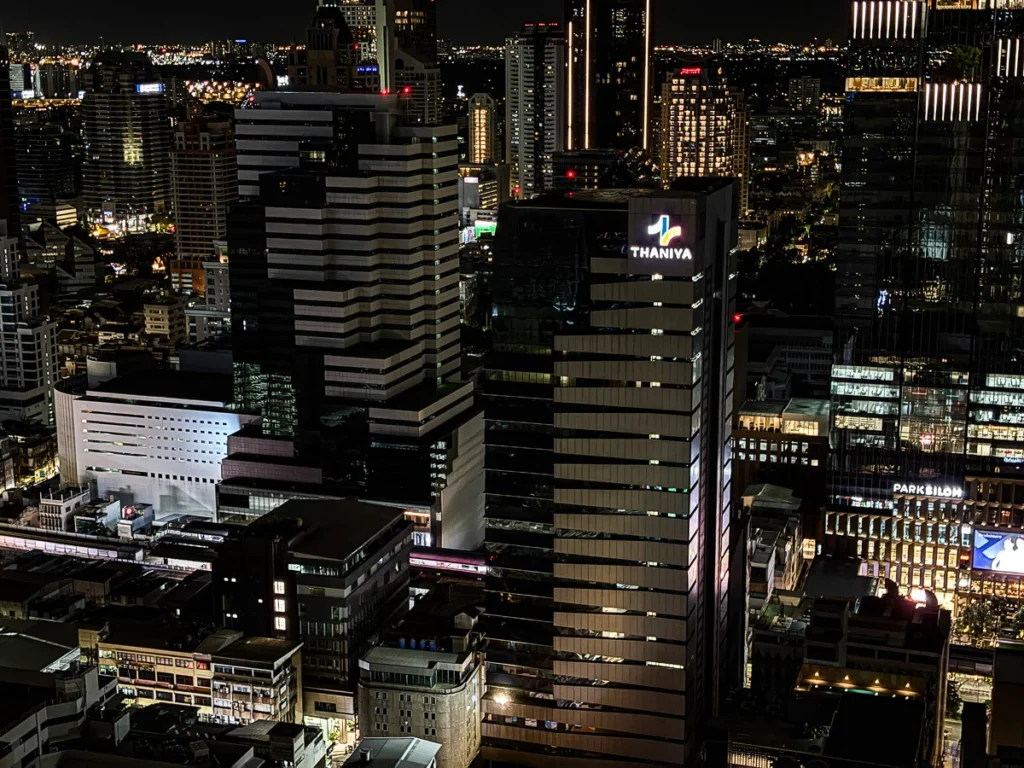
Right next to the station is Thaniya Road, a small Japanese district lined with countless Japanese restaurants. During the day, you can explore the restaurants tucked along the main street and its surrounding alleys.
At night, the area takes on a different character, as izakayas, bars, and clubs begin to light up the street. Next to Thaniya is also the infamous Patpong Night Market. During the day, the surrounding area is a good place to find street food, while at night it becomes much livelier and more adult-oriented.
Note: The Thaniya and Patpong roads are not family-friendly at night.
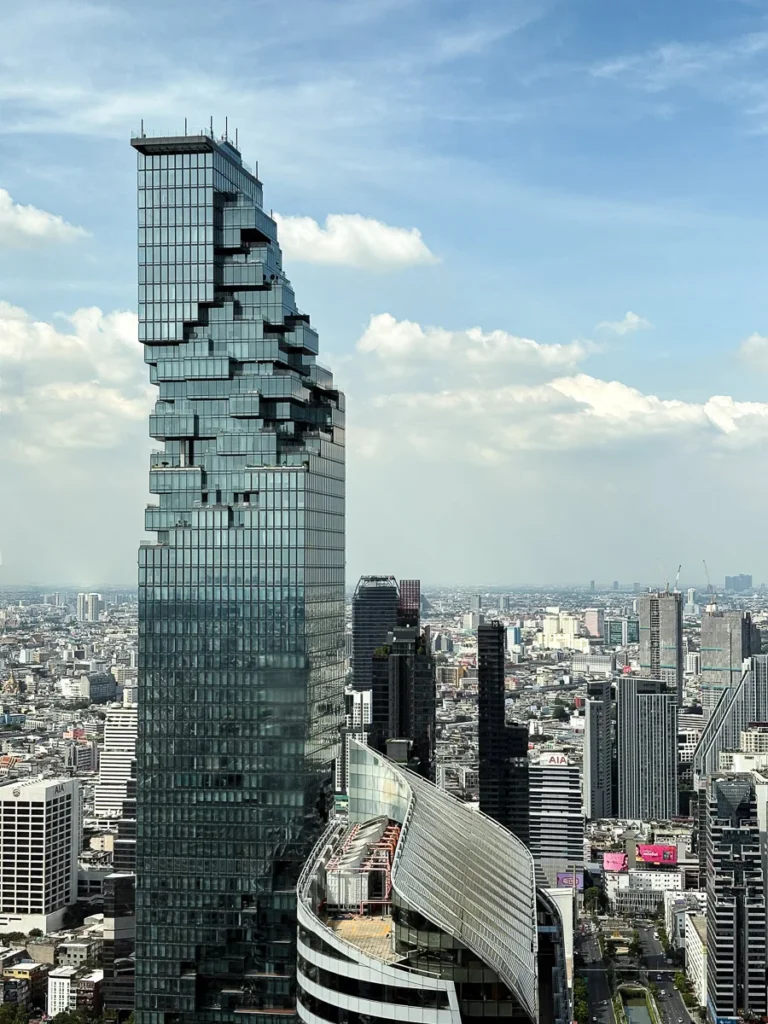
Explore The Landmarks like Dusit Central Park & Mahanakhon Building
Despite their popularity, for those who may be a little sceptical about visiting major tourist attractions, we do think both the Dusit Central Park and King Power Mahanakhon rooftops are worth seeing at least once. Dusit Central Park is especially easy to recommend, as you can simply wander through the shopping mall and enjoy the rooftop park area free of charge. Shopping malls are, arguably, one of the places Thai people most enjoy spending time in.
What It Is Like to Stay in Silom
For those looking for a longer-term stay in the area and wondering whether Silom is a good place to live, we also have experience staying in condominiums right next to Silom.
Where to Stay in Silom
If you are looking for a longer-term stay, we would recommend renting condominiums around Sala Daeng Station or along Rama IV Road, as we have found these areas to be the most convenient.
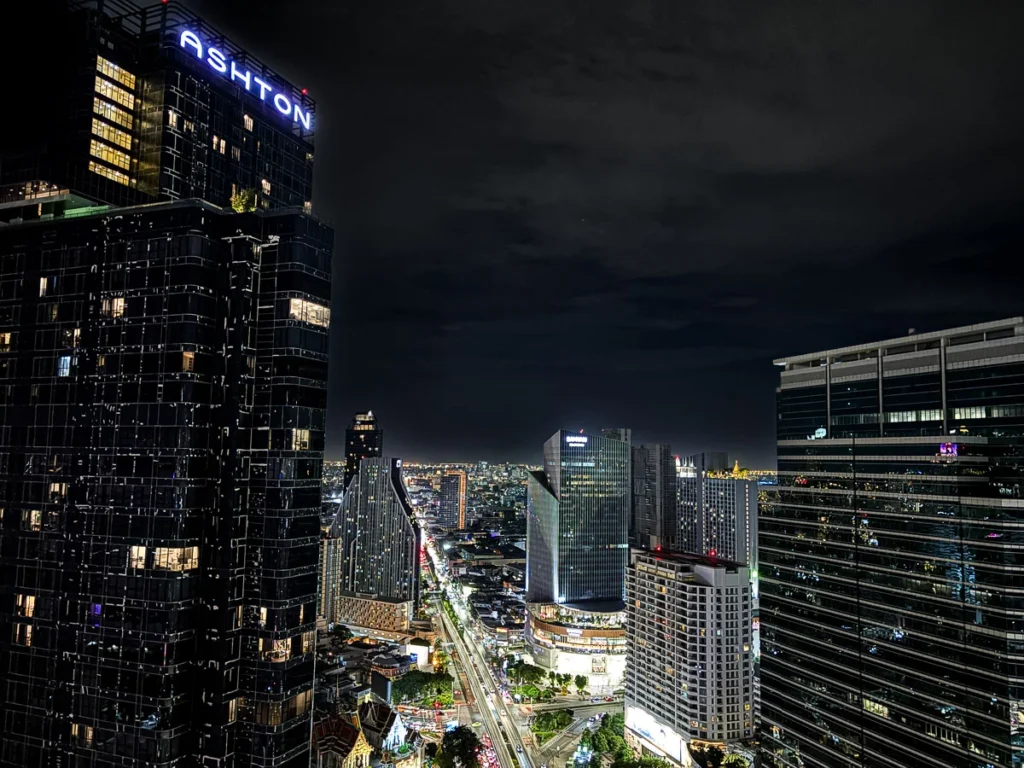
It is also worth considering places just outside Silom itself. Somewhere between Samyan and Silom MRT can work particularly well, as both areas remain within walking distance. We often find ourselves walking between the two depending on what we are looking for. Condominiums like Ashton Chula-Silom and the newly built Culture Chula are good examples of what we mean.
Everyday Convenience and Walkability
Sala Daeng BTS is where you would consider the ‘center’ of the area. For those living near other stations like Chong Nonsi, Saint Louis, and Surasak, it will be no more than three short stations away.
When it comes to convenience, Silom has almost everything you will need. Silom Complex and Dusit Central Park cover clothing, cosmetics, and most everyday shopping needs.
Choices for Food
Food availability is also excellent. For better-value groceries, we would recommend Foodland at Park Silom or the Patpong branch, while convenience stores are scattered throughout the area. When it comes to restaurants and coffee shops, there is simply no shortage throughout Silom, with plenty of both Thai and international options.
Walkability
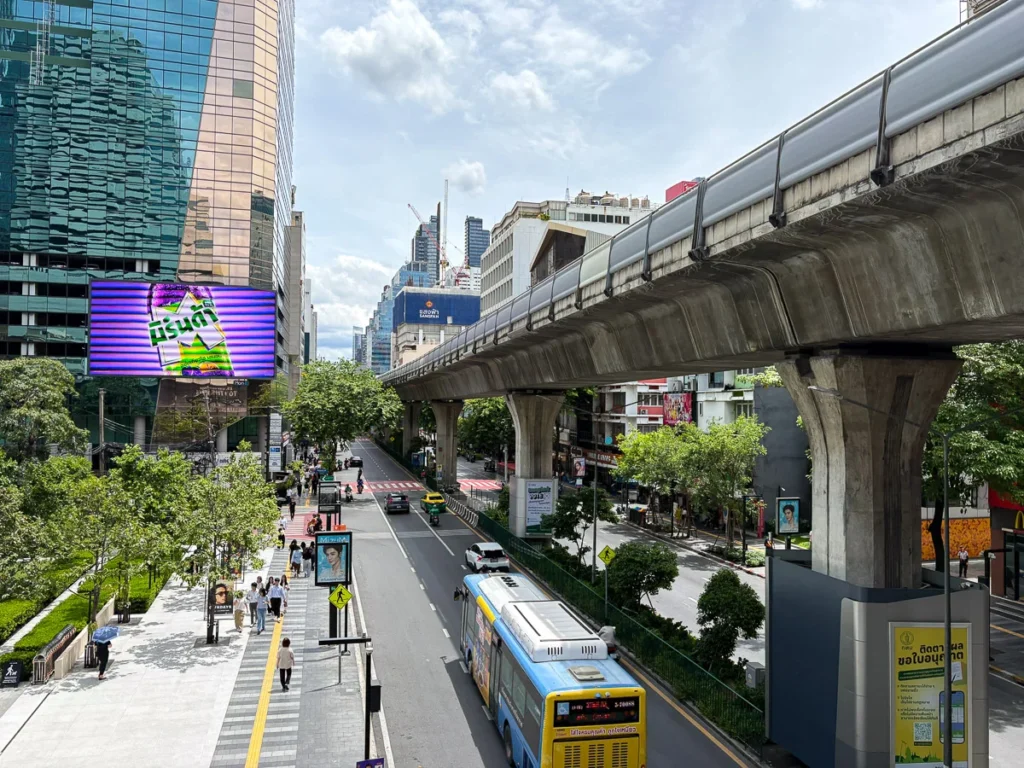
Walkability is generally good, with relatively wide footpaths, especially along Rama IV and Silom Road. There are also smaller roads and alleyways cutting through the neighbourhood, which can shorten the walk between certain areas. You will likely find that most places are clustered within a 15-minute walk, especially near Sala Daeng BTS.
Lumphini Park across the road is perfect for a morning or late evening run. Chulalongkorn Hospital is also right across the street, in case of emergency.
Nightlife and noise are generally not much of a problem unless you live particularly close to places such as Patpong. We have also found walking around at night quite safe, as the main streets are well-lit and there are usually people around.
Other Considerations
Do note, however, that Silom is an area with heavy foot traffic and road traffic, so crowded stations and traffic jams during peak hours are something to expect.
Another thing to consider is rent. As usual, the more conveniently located the property, the higher the price tends to be. In that case, looking slightly further out towards the river and away from the major roads—namely Silom, Sathorn, and Rama IV—can still be a good option, preferably somewhere within easy reach of a BTS station for convenient transportation.
Who Is Silom Best Suited For?
For those considering basing themselves here, we would divide our recommendation by the purpose of your stay.
For Digital Nomads
The large number of cafés around the neighbourhood gives you plenty of places to sit and work. If your work or business also brings you into Silom regularly, it can be one of the most convenient areas to stay.
For Exchange Students at Chulalongkorn University
We could also argue that Silom is a better option for a longer-term stay than Samyan if you are able to afford the rent, even though it is slightly farther from the university grounds. There is simply more to see and do in Silom. The trade-off is a slightly higher cost of living, while Samyan has a greater abundance of cheaper food and street food options.
For Those Exploring Bangkok
For those simply looking for a convenient base for exploring Bangkok, Silom is also a strong choice, as you have access to both the BTS and MRT. Location-wise, it sits quite comfortably between several parts of the city you may want to visit, with ICONSIAM and the riverside areas on one side and Sukhumvit on the other. Popular central areas such as Siam and CentralWorld are also not far away.
Visit our Bangkok Transportation Guide for more on how to get around the city.
Is Silom Worth Visiting?
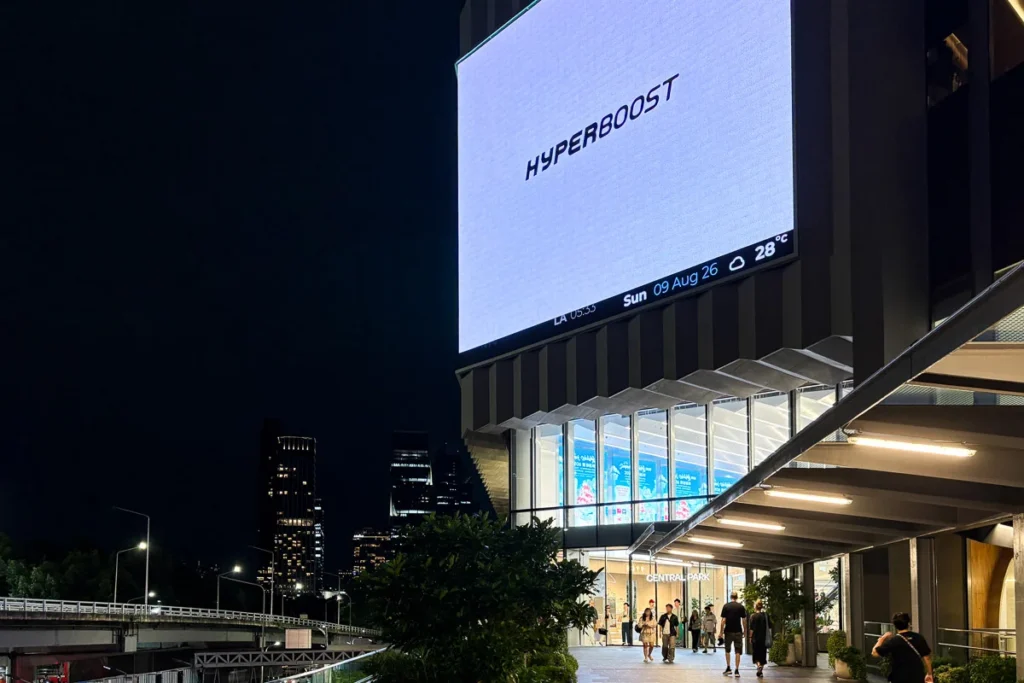
Simply put, we would say yes. It is one of the most developed neighbourhoods in Bangkok, although whether it is worth visiting will still depend on the purpose of your trip and your budget.
We would not necessarily call it a must-visit for those already staying in other highly developed areas such as Sukhumvit or Siam. Shopping malls, cafés, and modern restaurants are already abundant in those neighbourhoods, so visiting Silom may feel somewhat similar to the experience you are already having elsewhere in the city.
That said, for returning visitors looking for a change of atmosphere, Silom can be a good area to base yourself. Spending a day exploring the neighbourhood can also be enjoyable, or you can simply stop by after a walk through Lumphini Park for a meal, coffee, or some light shopping.
Compared with Siam or Phrom Phong, Silom feels more strongly shaped by office life and daily commuters, and less like an area developed primarily for leisure purposes, even with the recent addition of Dusit Central Park. Because of that, some travellers may find its constant movement and busyness less suitable for a quiet, laid-back stay.
We hope we were able to give you the information you need about Silom, whether you are planning a visit, simply want to learn more about the area, or are considering living here. For more area guides like this, also visit our guide for the Sukhumvit to Siam area.
We hope you will enjoy,
Travel Tegami